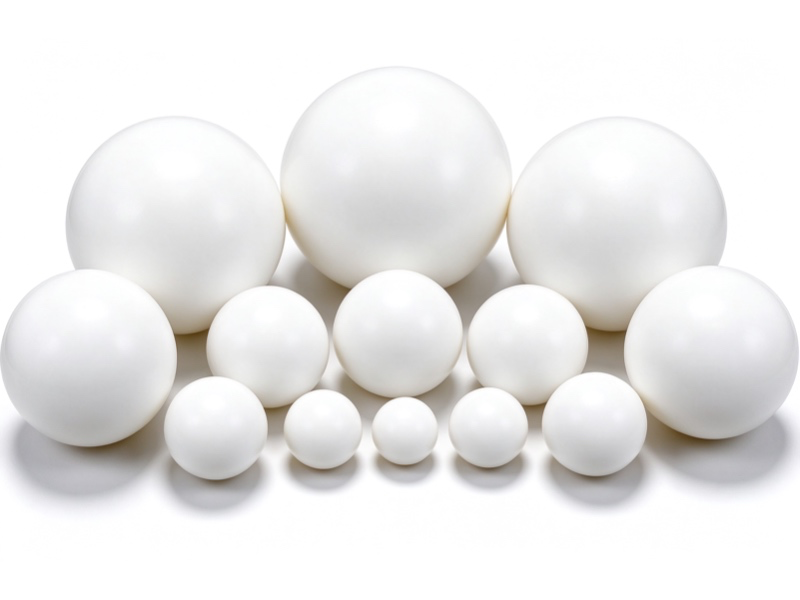
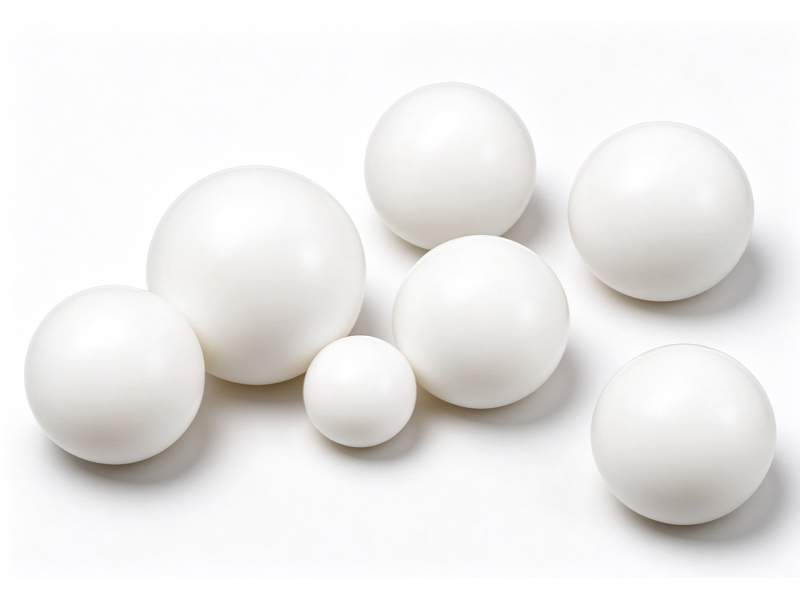
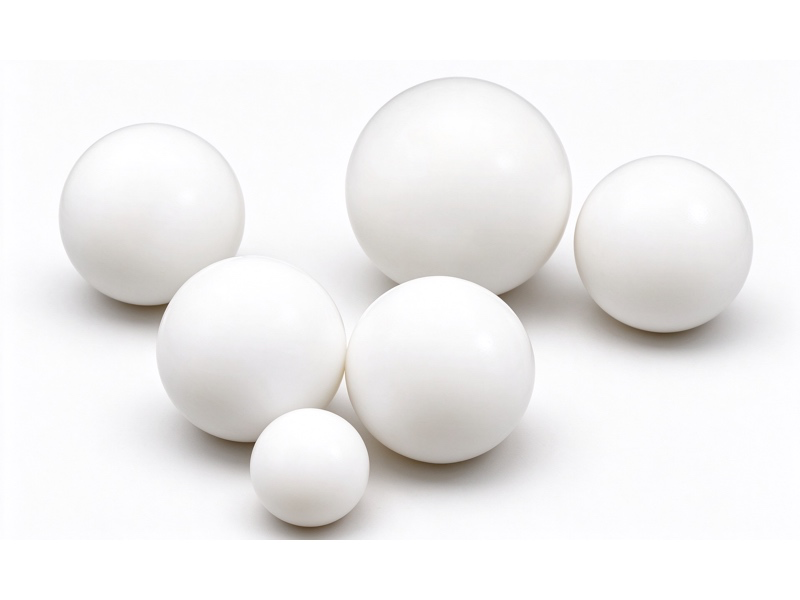
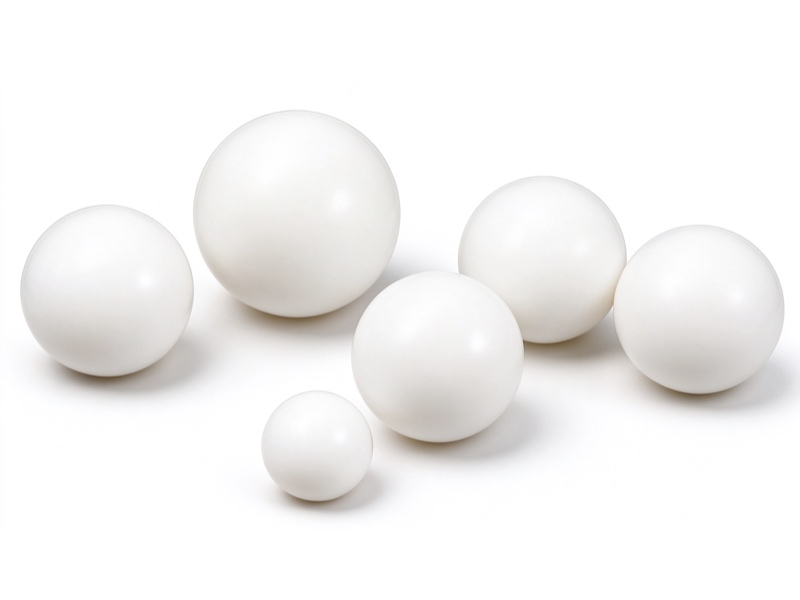
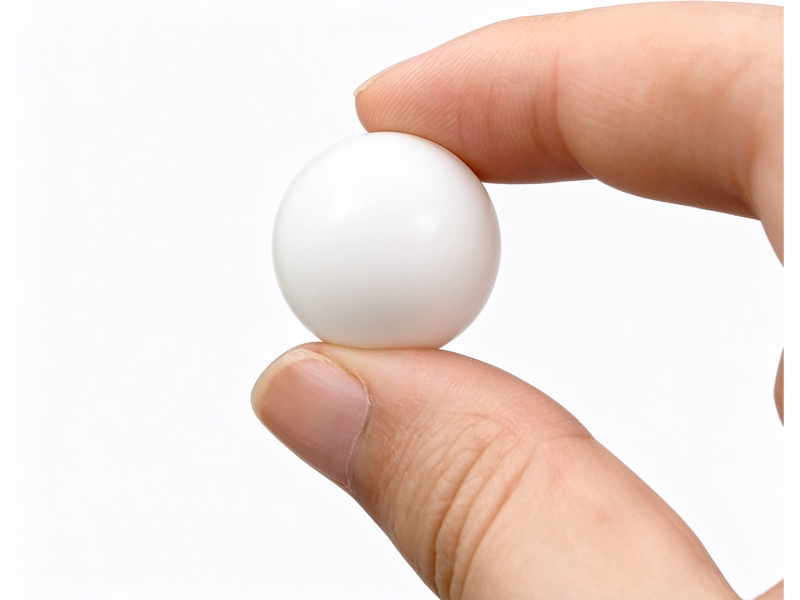
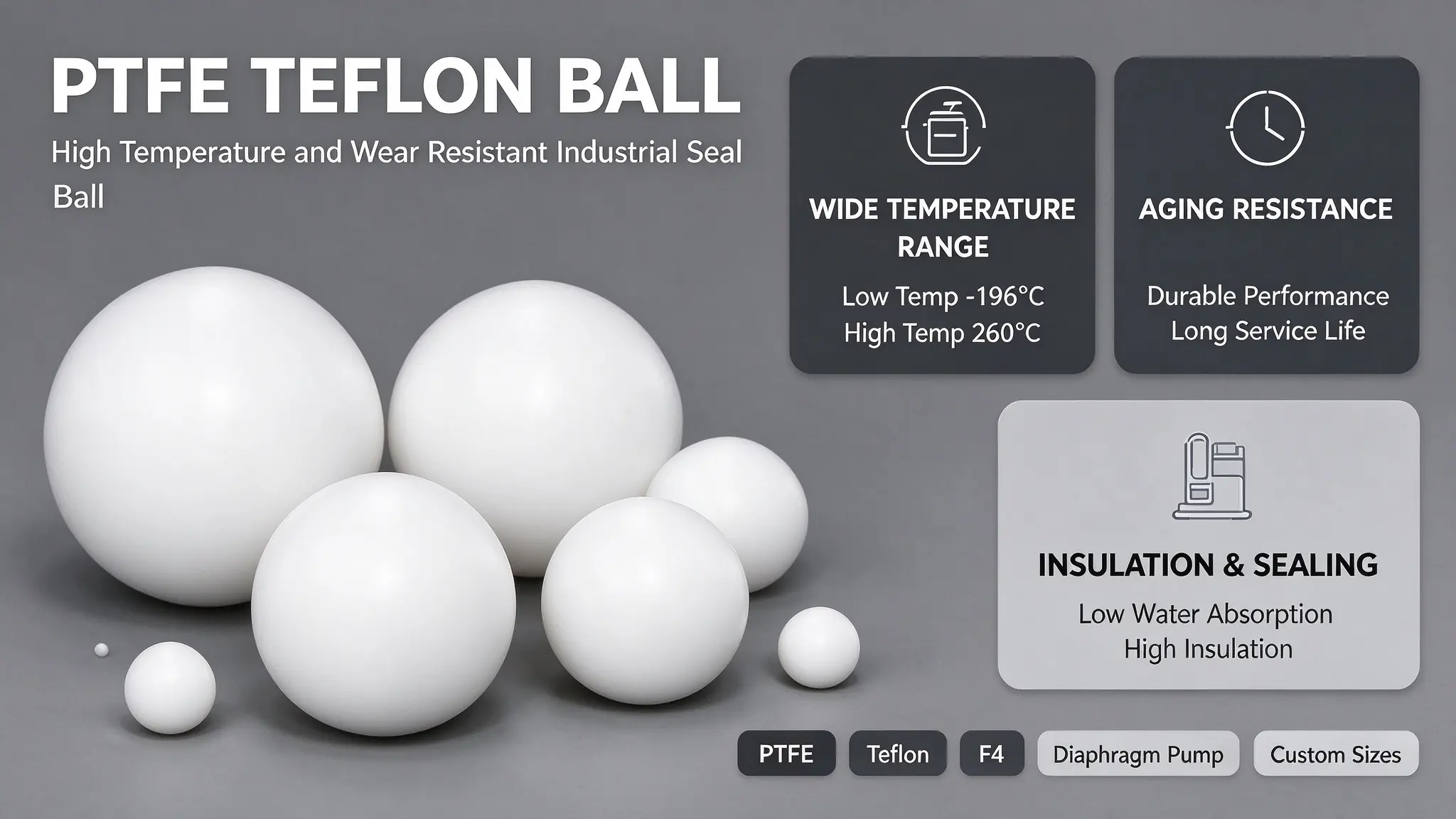
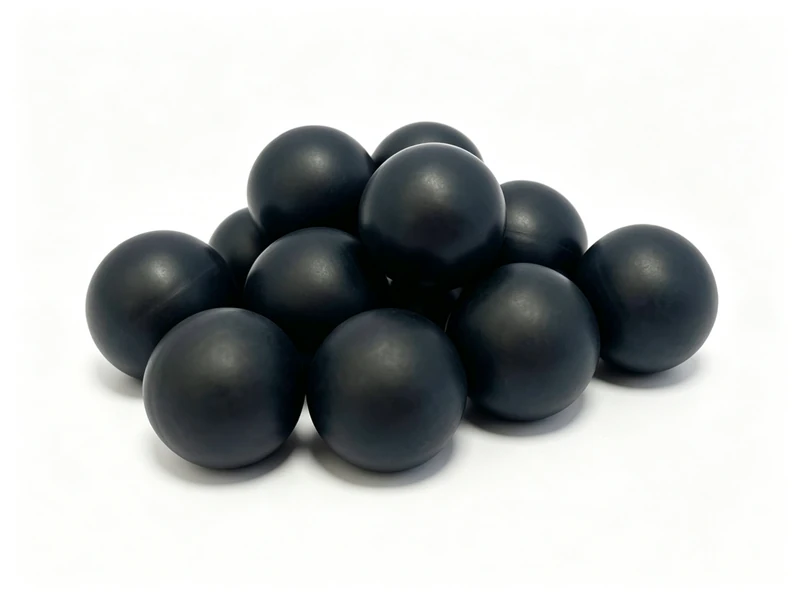
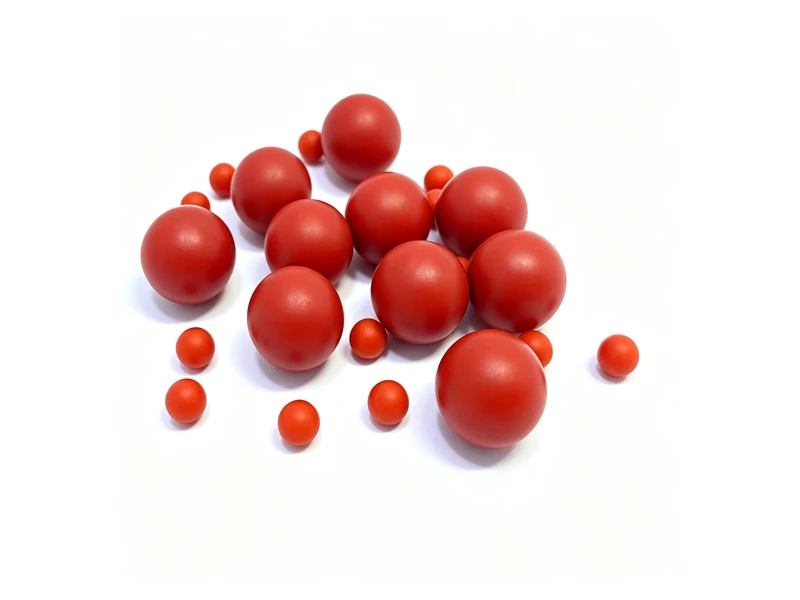
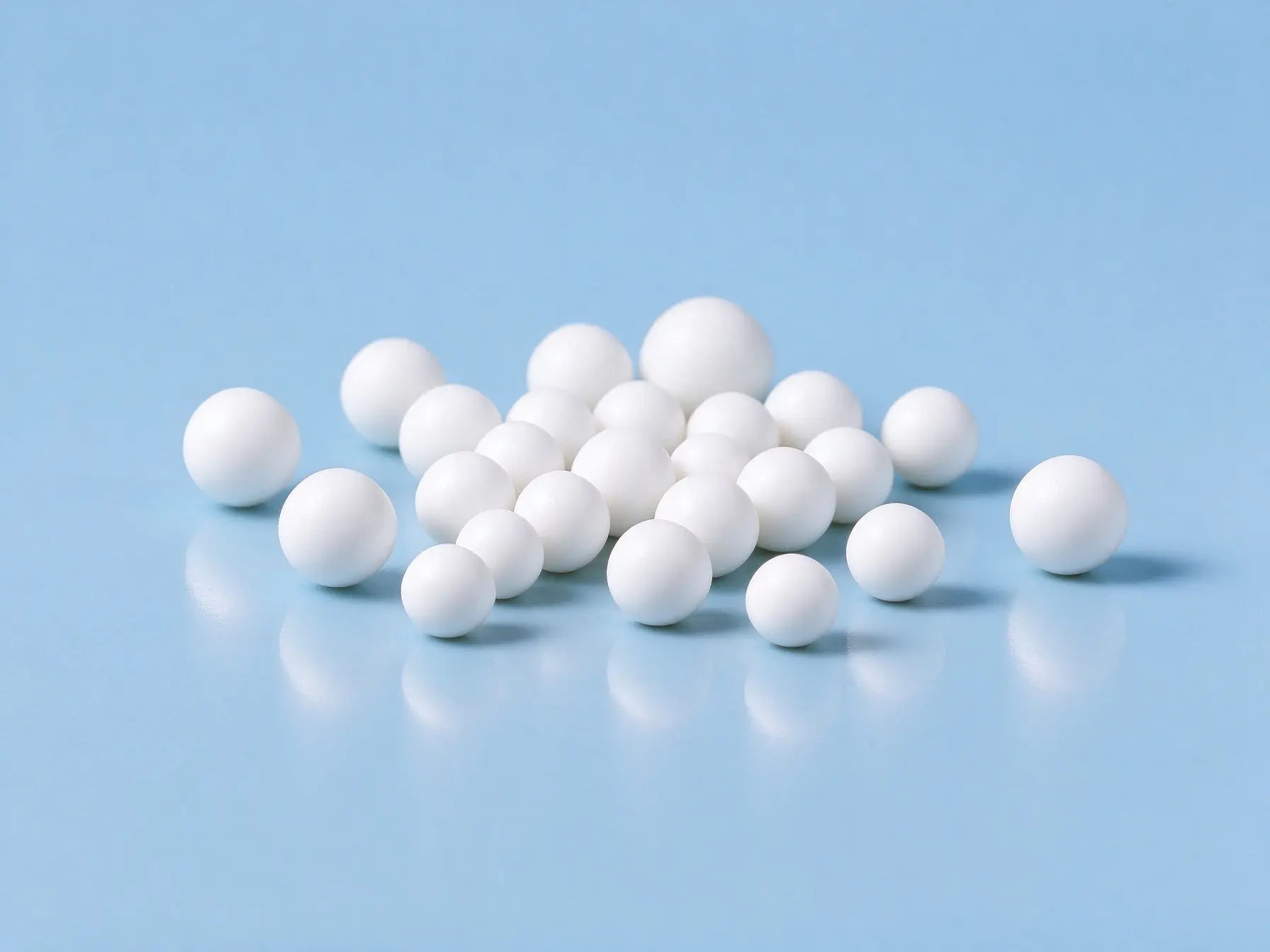
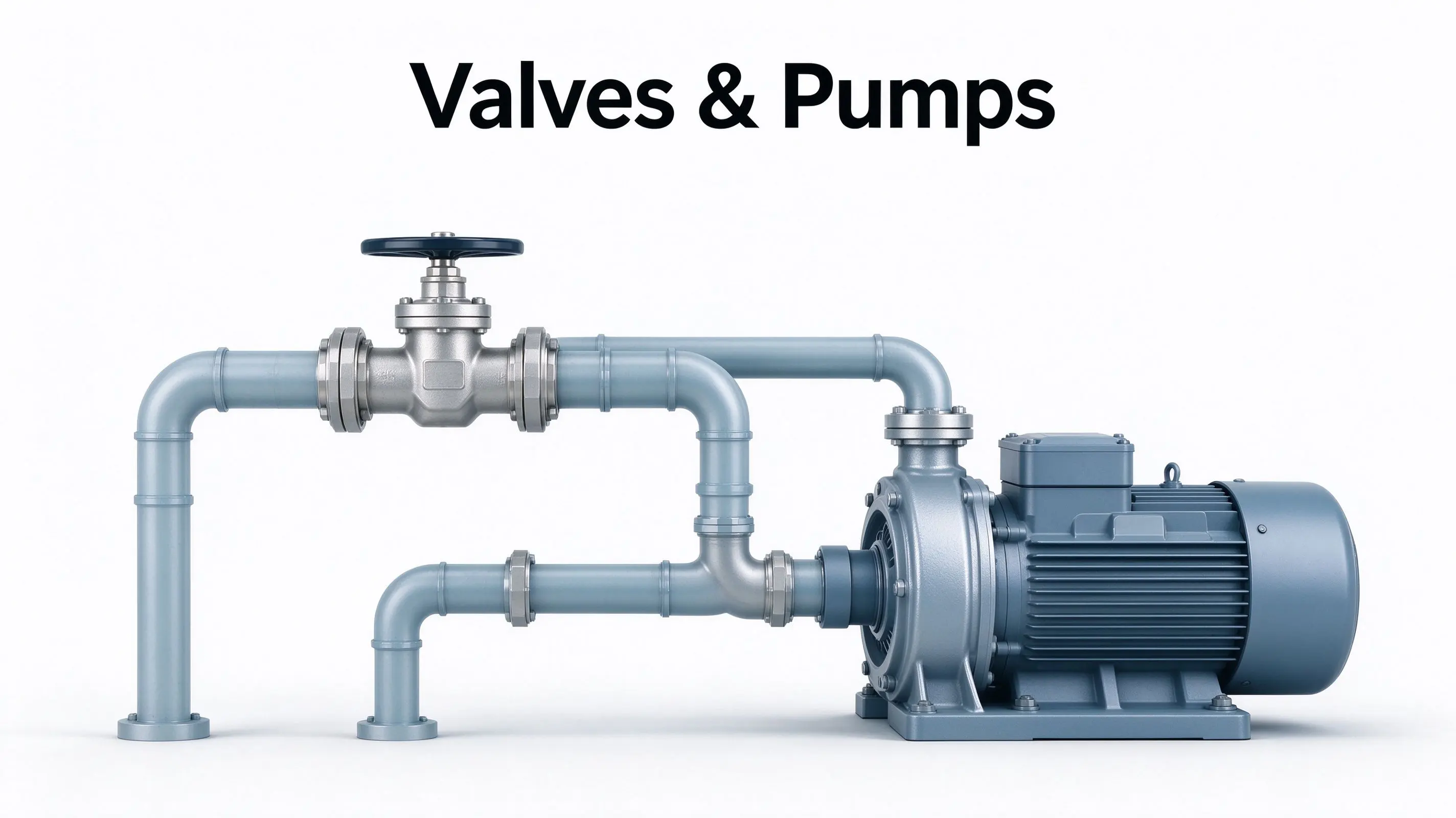
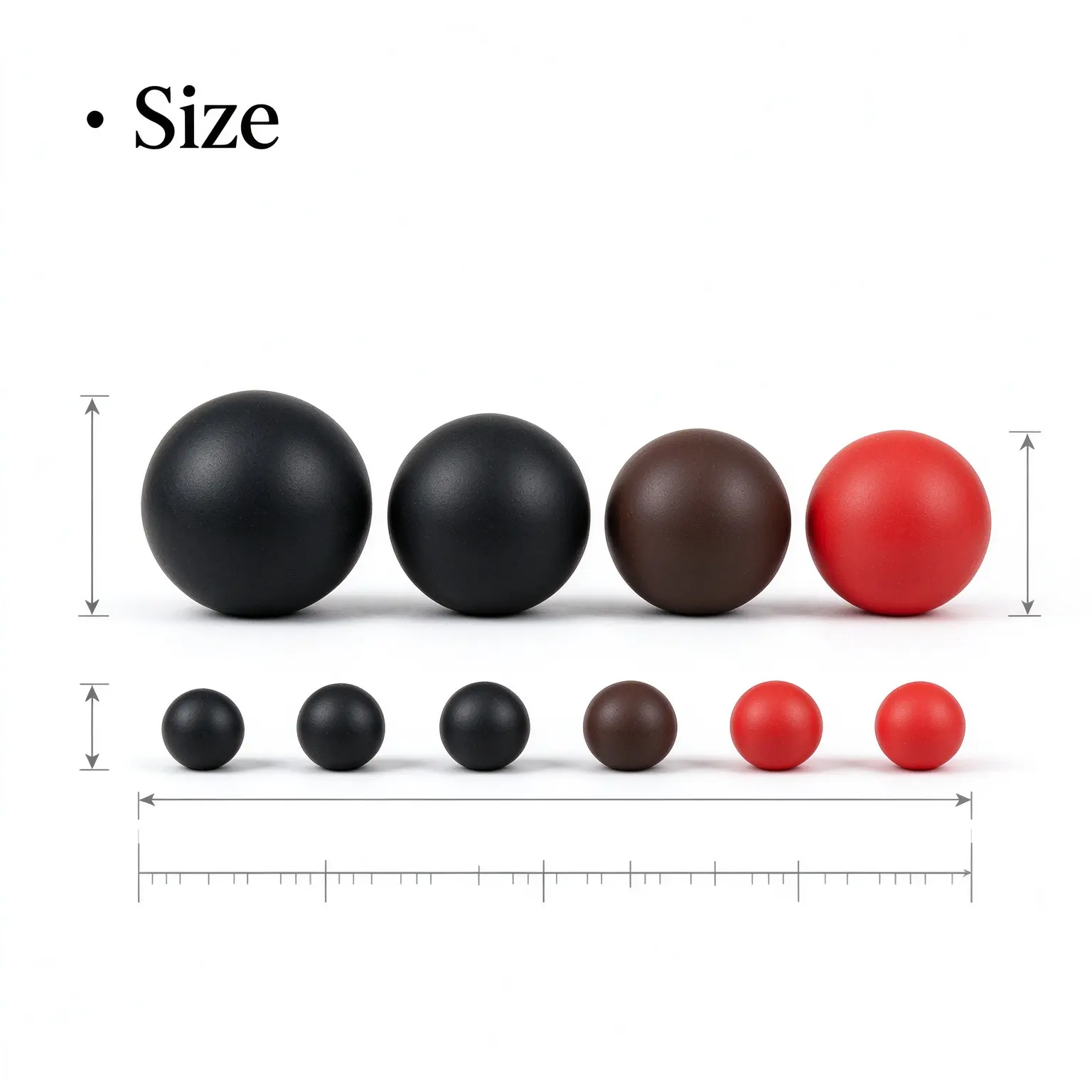
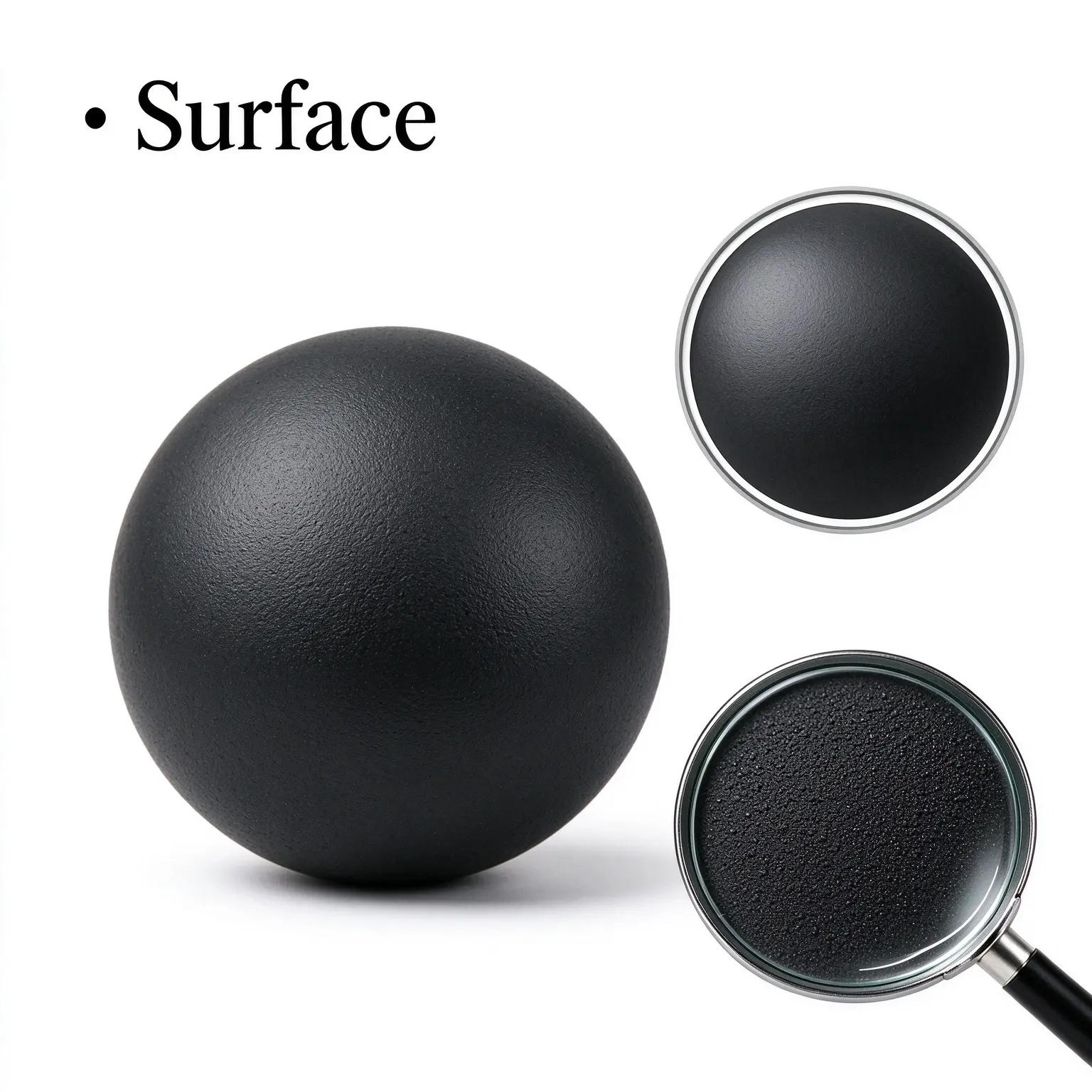
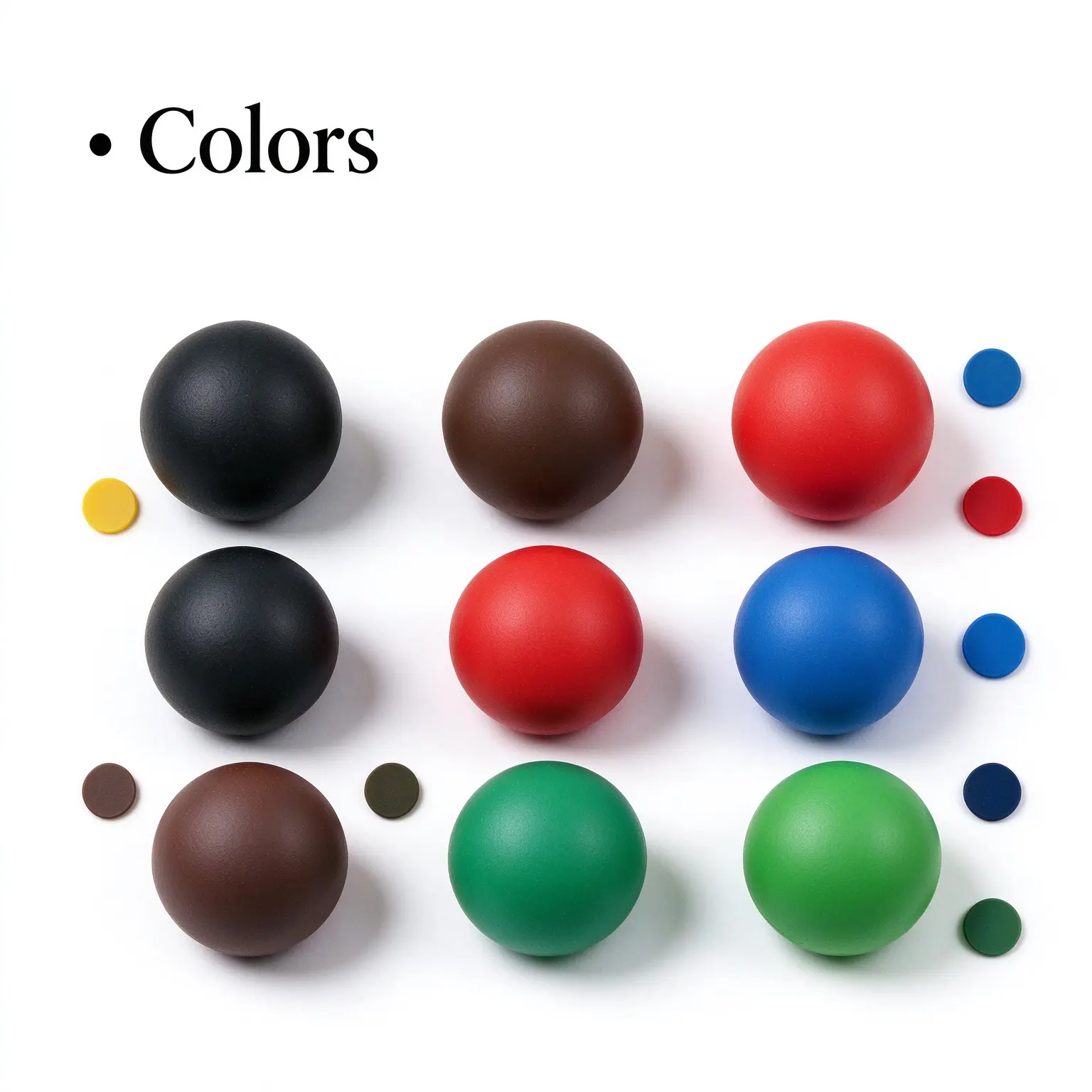
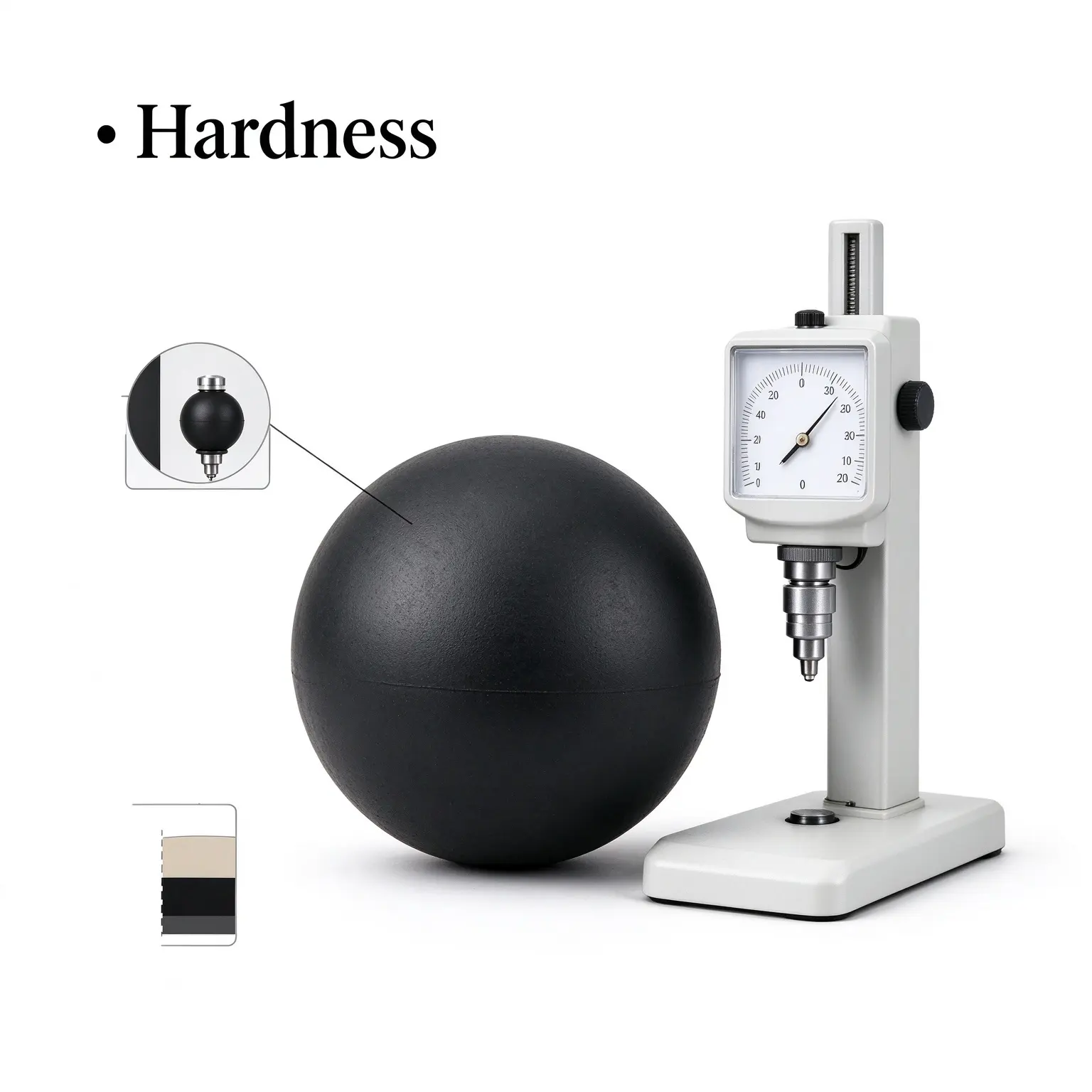
Our PTFE balls are made from high-quality polytetrafluoroethylene and designed for diaphragm pumps and industrial applications. These Teflon balls offer excellent high-temperature resistance, chemical resistance, low friction, and wear resistance. As a professional PTFE ball manufacturer and supplier, we provide custom PTFE balls, machined Teflon balls, pump valve balls, and chemical-resistant plastic balls in various sizes and specifications. Our PTFE pump balls are ideal for diaphragm pumps, chemical pumps, fluid control systems, and industrial sealing applications, with custom machining services available to meet specific requirements.
PTFE Solidpelotas de goma' Características
PTFE has top-tier physical properties (insulation, temperature resistance, corrosion resistance, self-lubrication), but its mechanical properties are relatively weak (moderate strength, prone to creep, poor wear resistance). Therefore, the PTFE balls or seals used in the market are often modified PTFE (with added fillers) to compensate for its mechanical shortcomings.
chemical industry, machinery, electronics, electrical appliances, military and aerospace, and environmental protection.
Coefficient of Friction
Extremely low, typically 0.05 – 0.2
Cantidad mínima de pedido
1 piece for stock size (sample order accepted), custom size according to size (100pcs ,300pcs ,500pcs ,ect)
Personalización
Size, color, hardness ,material and packing (OEM/ODM)
Embalaje
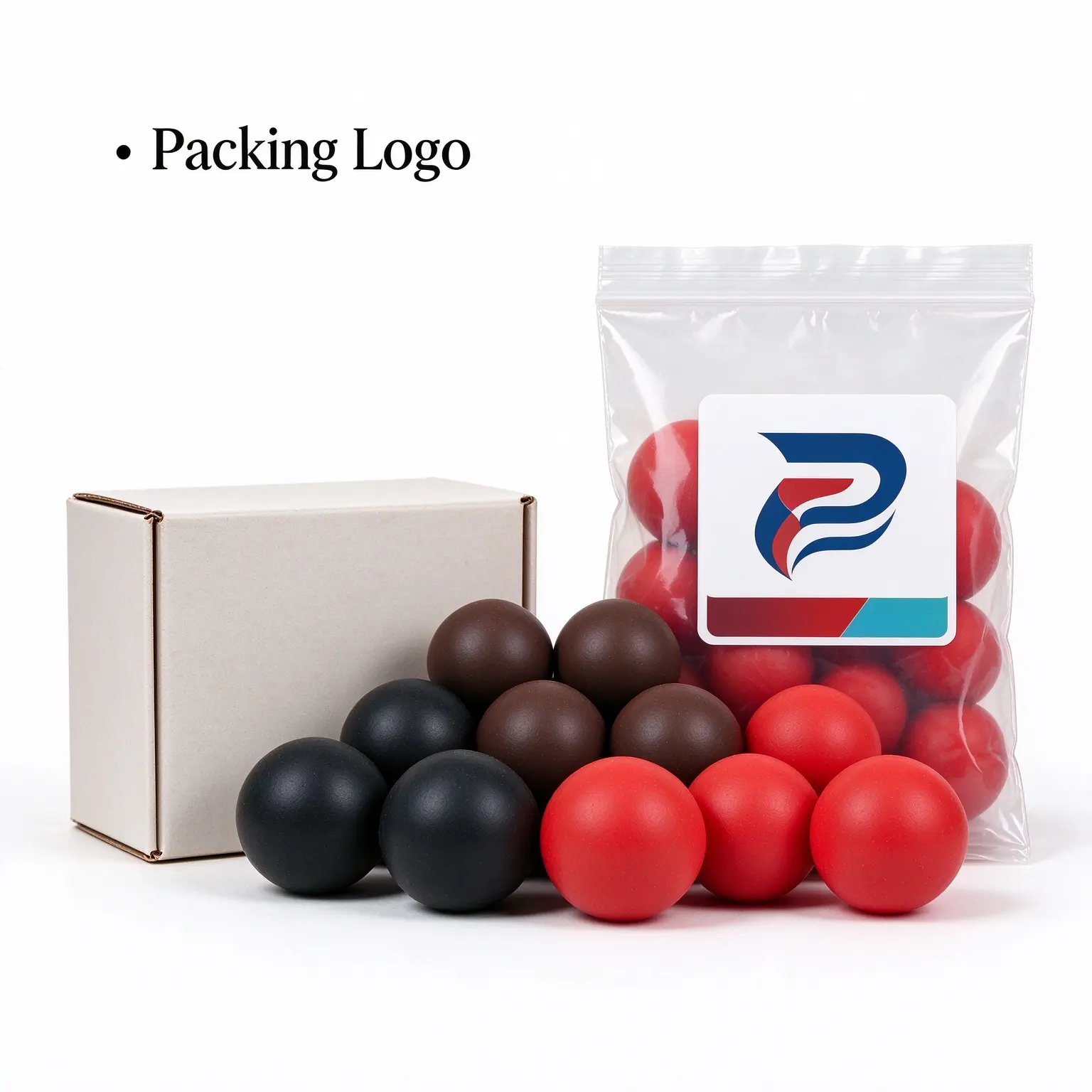
PE bag / carton; custom logo and label supported
Sample
Disponible
Lead Time
Samples 3 days; bulk production per quantity
Brand
Jinnai BALLS (OEM/ODM orders welcome)
Different material rubber balls
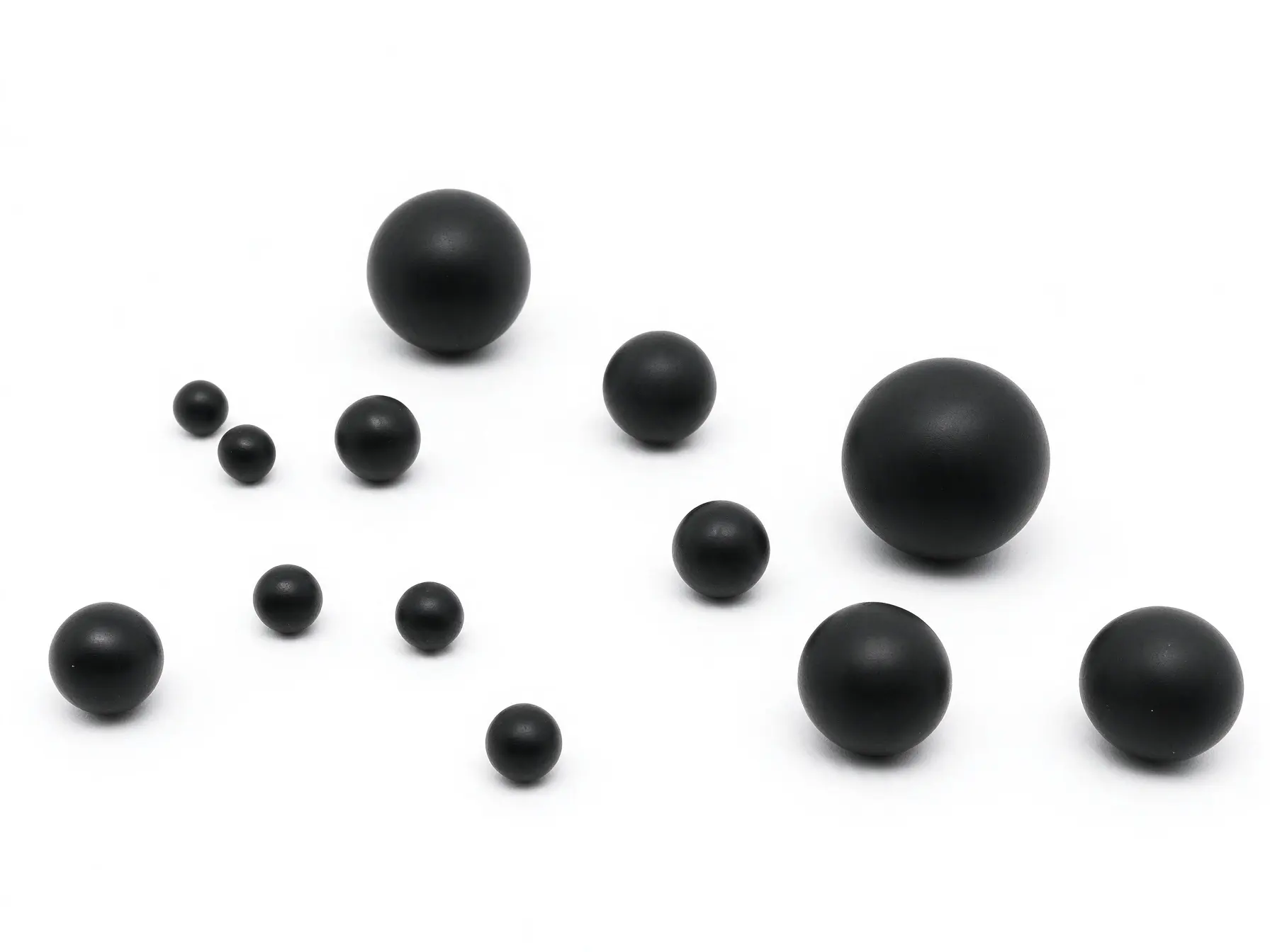
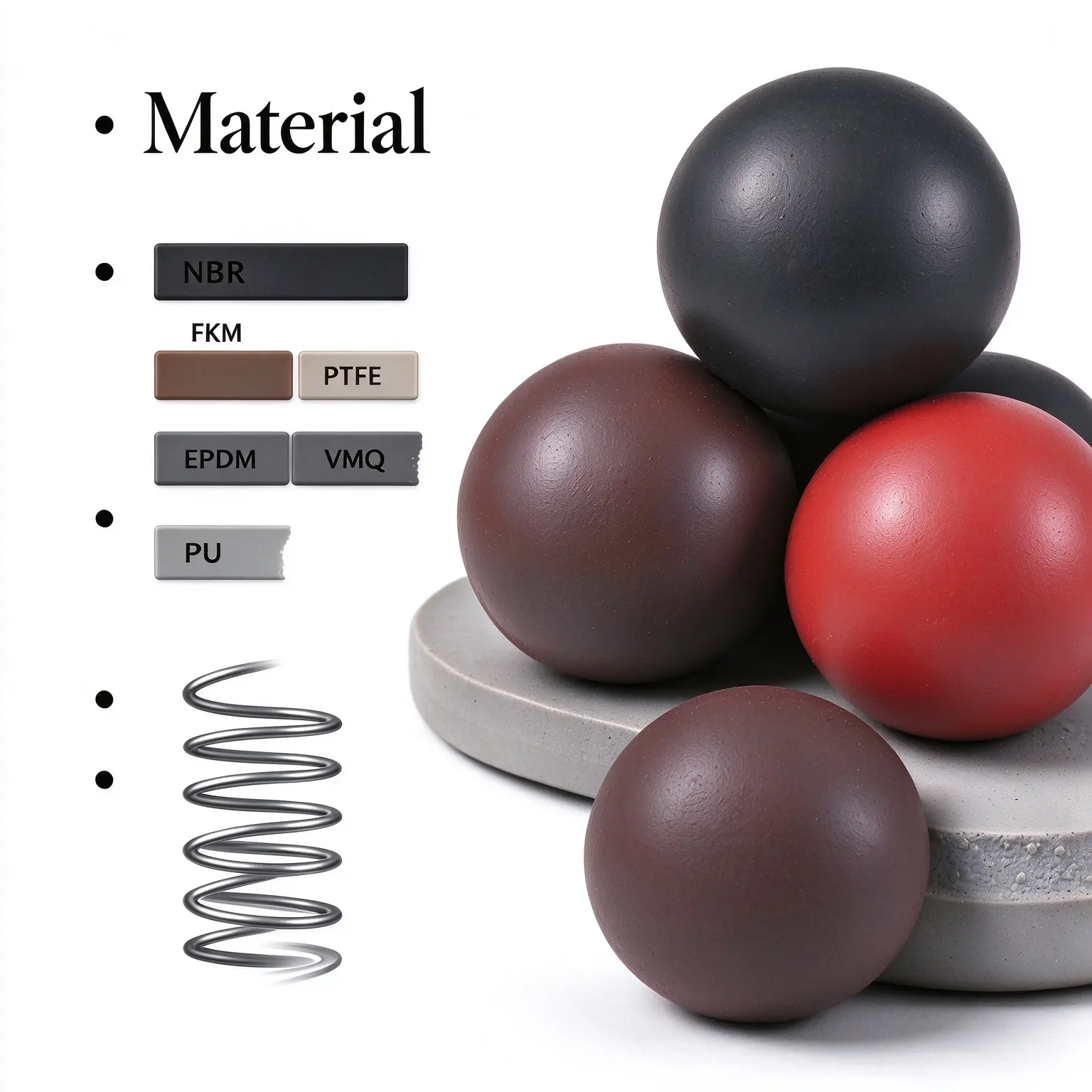
Our Rubber Ball Offerings Cover FKM, PTFE ,FFKM, NBR, EPDM And Silicone VMQ, Supporting Operating Temperatures Ranging From -50°C Up To +320°C. Every Compound Provides Distinct Advantages Against Oil, Chemicals, Heat And Cold. These Solid Rubber Balls Are Widely Used In Valve, Pump And Pipeline Sealing. We Can Customize Materials, Sizes And Tolerance Standards To Fit Your Exact Working Scenarios.
NBR(Buna-a,Niteile Rubber)
Oil&Water, Wear,Low temperature Resistance
Temp Range -40℃-120℃
Color Black
Hardness 50/60/70/80/90 Shore A
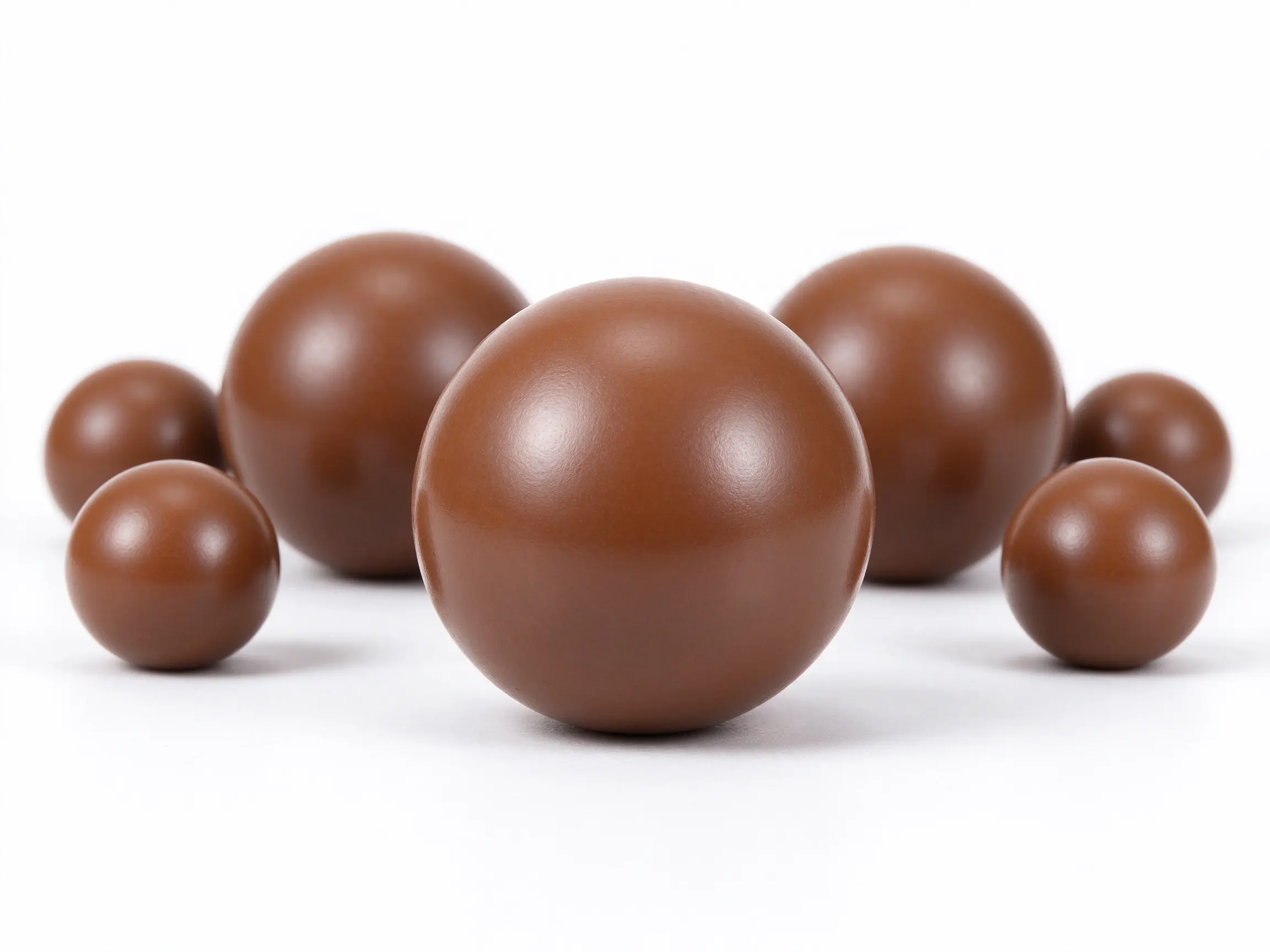
FKM (FPM,Viton,Fluoro Rubber)
Oil & Hydraulic Fluids, Chemical, High Temperature Resistance
Temp Range -20℃-220℃
Color Black Brown Green
Hardness 70/75/80/85/90 Shore A
EPDM Rubber (EPM)
Cooling Liquid & Brake Fluid,Ozone,Hot Water & Steam Resistance
Temp Range -45℃-150℃
Color Black
Hardness 40/50/60/70/80/90 Shore A
VMQ(Silicone Rubber)
Heat & Low Temperature ,Ozone ,Aging &Weather Resistance
Temp Range -55℃-204℃
Hardness 40/50/60/70 Shore A
PTFE (Teflon,Polytetrafluoroethylene) Excellent Electrical Insulation, Chemical & Corrosion Resistance, Low Friction Temp Range -200℃-260℃ Color White Hardness 50~65 Shore D
PTFE balls applications
Valves & Pumps:Used as check valve balls and non-return valve sealing balls
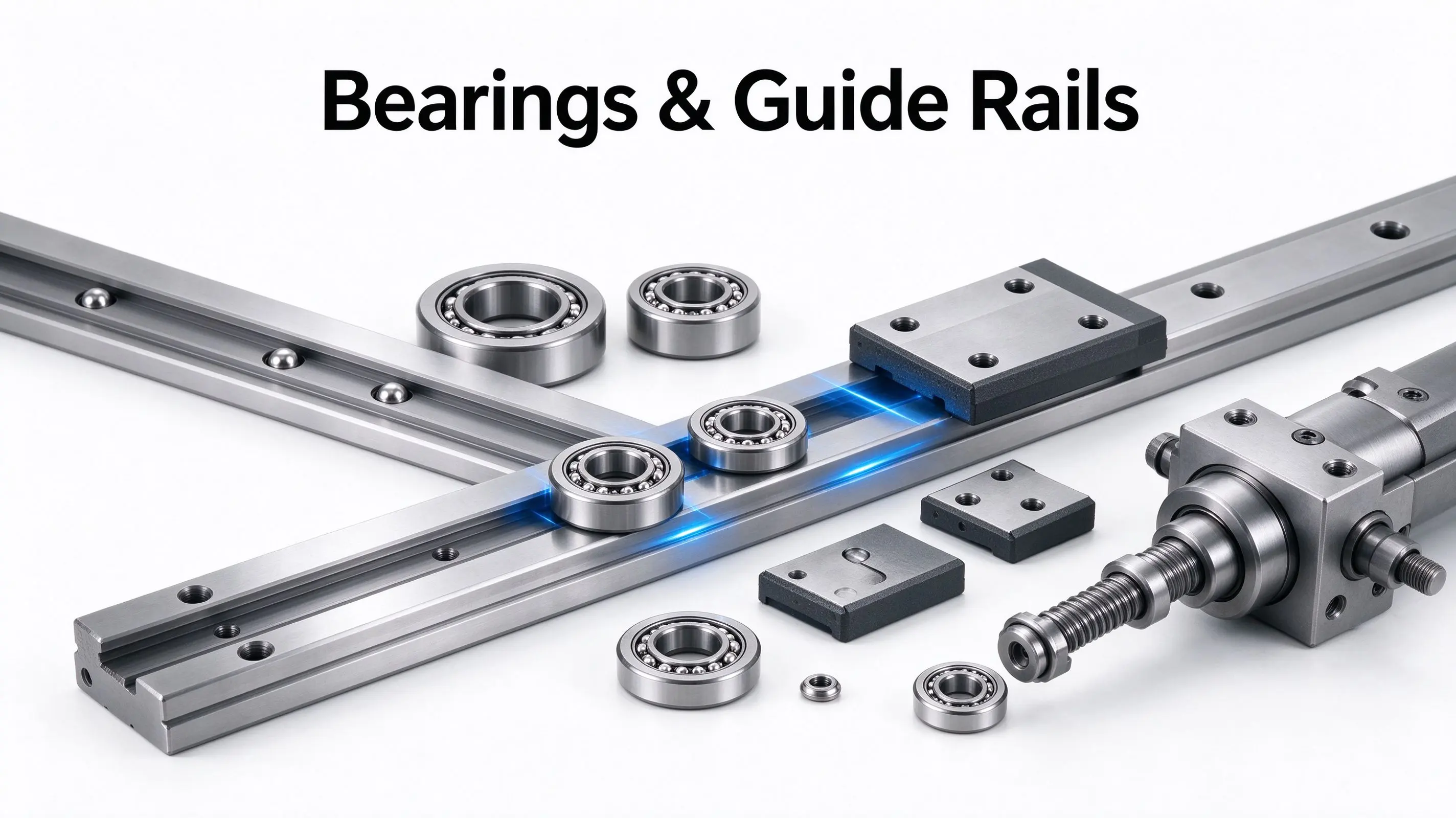
Bearings & Guide Rails:Used in oil-free self-lubricating bearings, sliders, and guide rails due to its extremely. low friction coefficient.
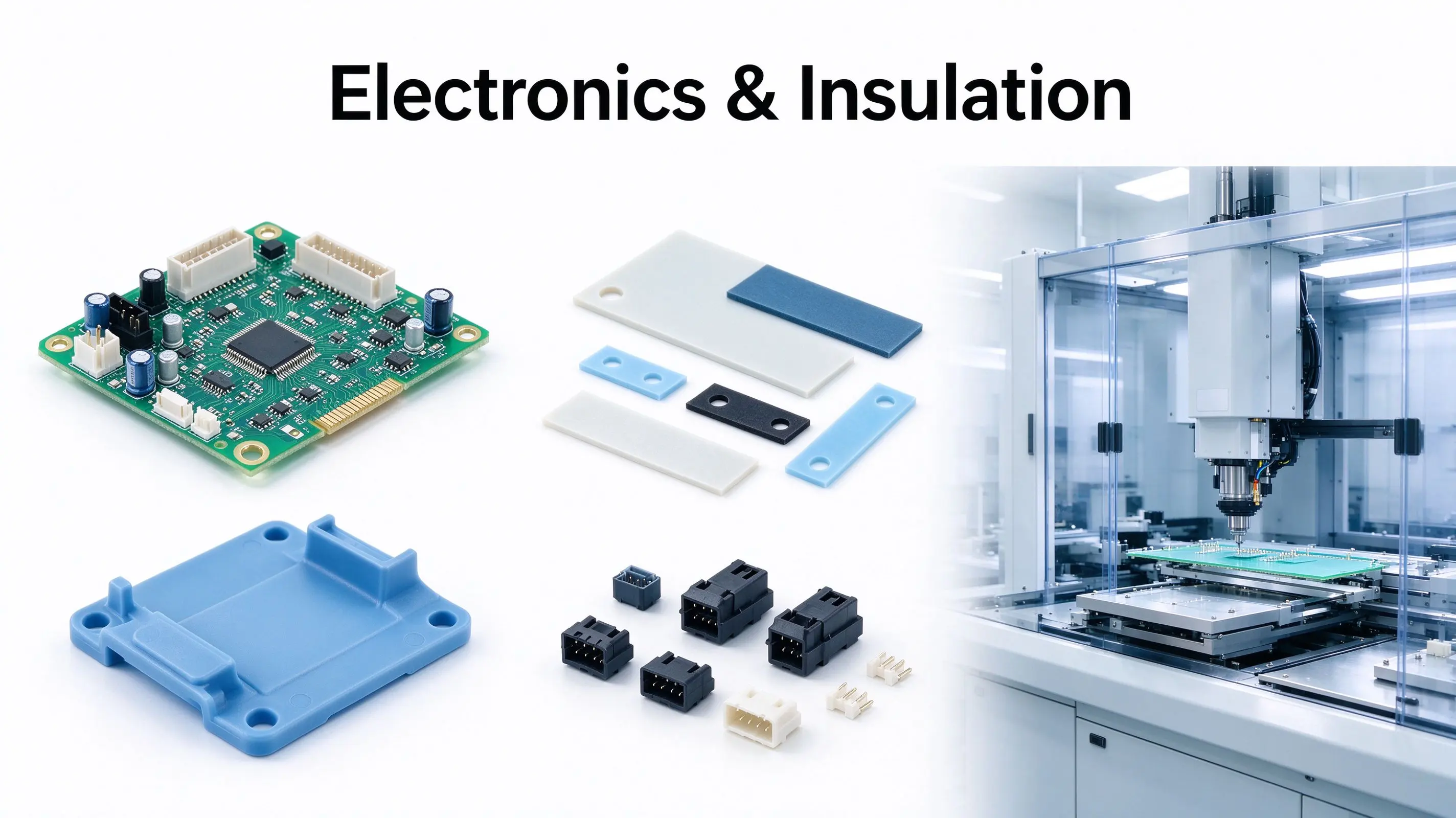
Electronics & Insulation:Used as high-frequency insulators or shock-absorbing balls for electronic components.
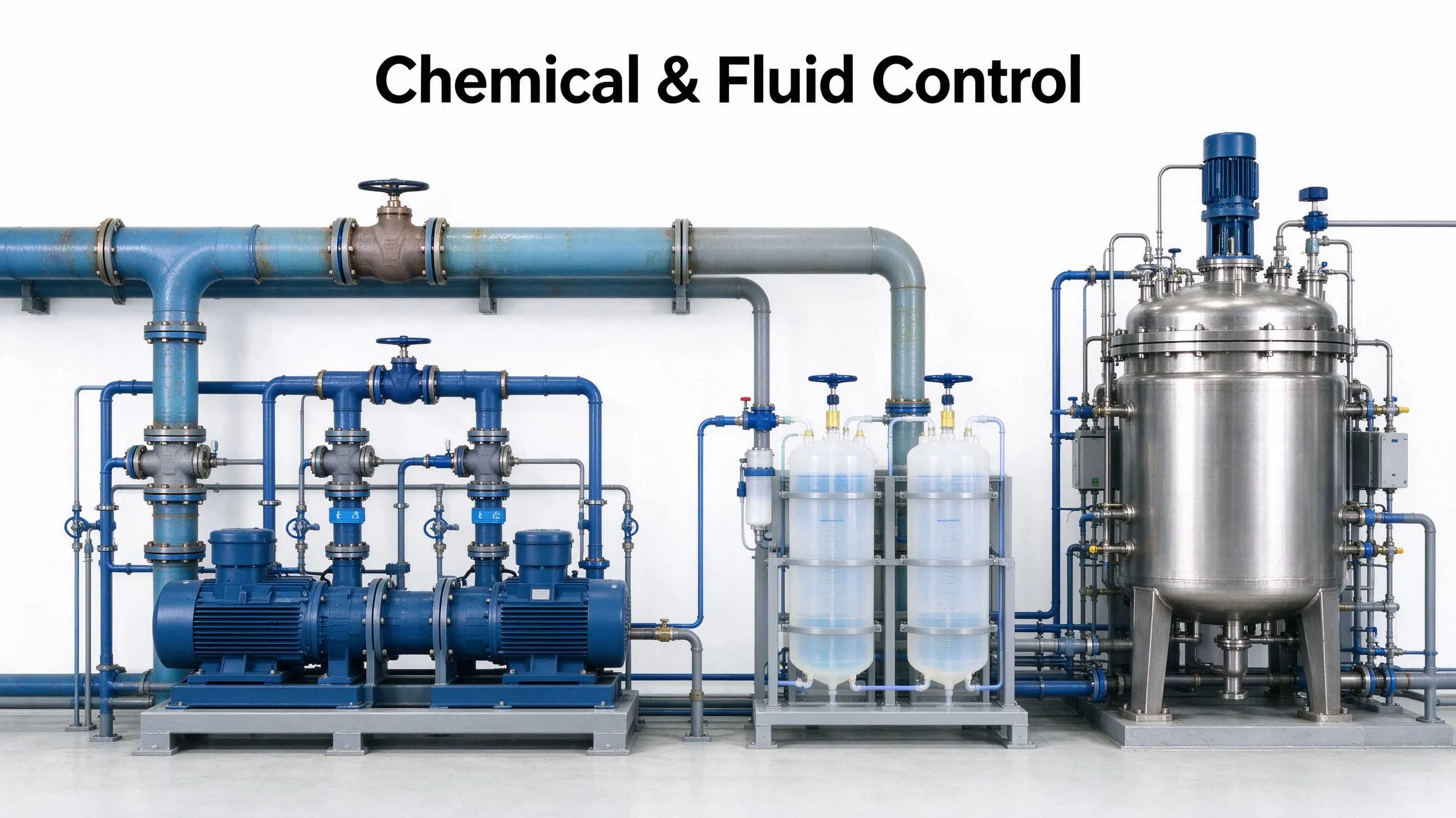
Chemical & Fluid Control:Used for flow control balls in chemical pumps, resisting strong acids and alkalis.
Medical & Food:Used as rolling balls in food machinery or medical devices, as pure PTFE is non-toxic, odorless, and FDA-compliant.
Rubber Balls' Size Tolerance
Standard: GB/T 3672.1-2025
d (mm)
M1 ±(mm)
M2 ±(mm)
M3 ±(mm)
0.5 < d ≤ 1.5
0.08
0.12
0.20
1.5 < d ≤ 3.0
0.10
0.15
0.25
3.0 < d ≤ 6.0
0.12
0.20
0.30
6.0 < d ≤ 10.0
0.15
0.25
0.40
10.0 < d ≤ 16.0
0.20
0.30
0.50
16.0 < d ≤ 25.0
0.25
0.40
0.60
25.0 < d ≤ 40.0
0.30
0.50
0.80
40.0 < d ≤ 63.0
0.40
0.65
1.00
Diameter tolerance: Deviation of measured vs. nominal diameter; ground balls ≈ ±0.003 in (±0.08 mm), precision ground down to ±0.03 mm.
Sphericity: Consistency of diameter in all directions (total error), ≈ 0.003 in for ground balls — rounder = more uniform seal.
Surface roughness: Surface smoothness (Ra/μin); smoother = less leakage and wear.
Mold line / flash: Grinding removes parting lines and flash to eliminate local leak paths.
Dimensional stability: Resistance to thermal expansion, media swell, and compression set.
OEM & ODM Service
We provide professional OEM and ODM services for our rubber balls, offering comprehensive customization to meet your specific project requirements.
Proceso de pedido
RFQ: Tell us your specifications, including material, size, hardness, color, quantity and working conditions.
Offer: We will calculate and provide quotation or sample offer according to your requirements.
Sample Confirmation: Produce samples for your performance and dimension testing.
Production Arrangement: Start mass production once samples are approved and order confirmed.
Quality Inspection: Finished goods undergo full inspection on dimension, appearance and performance.
Packing & Shipment: Qualified products are packed and delivered.
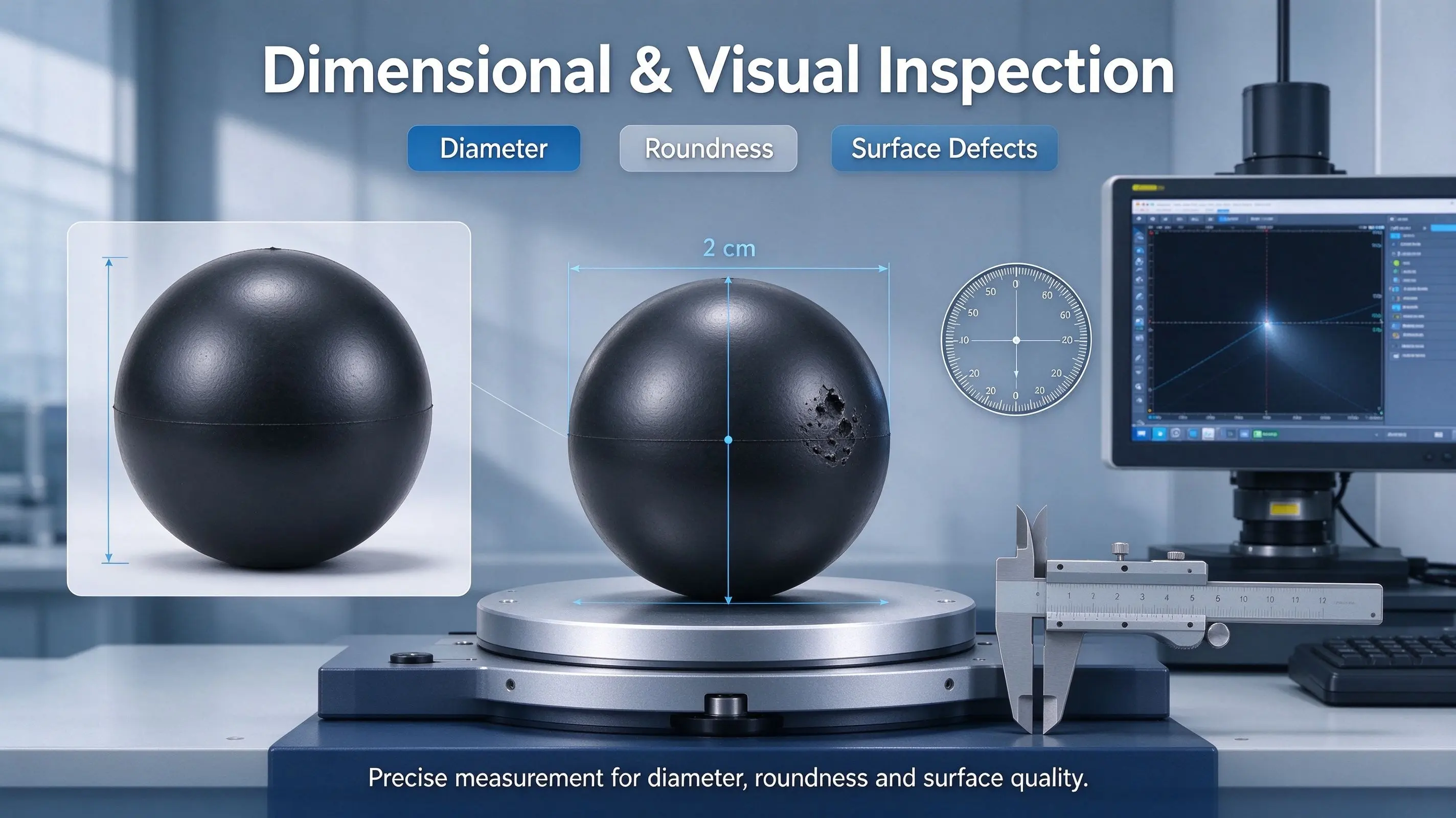
Visual Inspection: No pores, cracks, impurities, dents or scratches on surface; uniform color
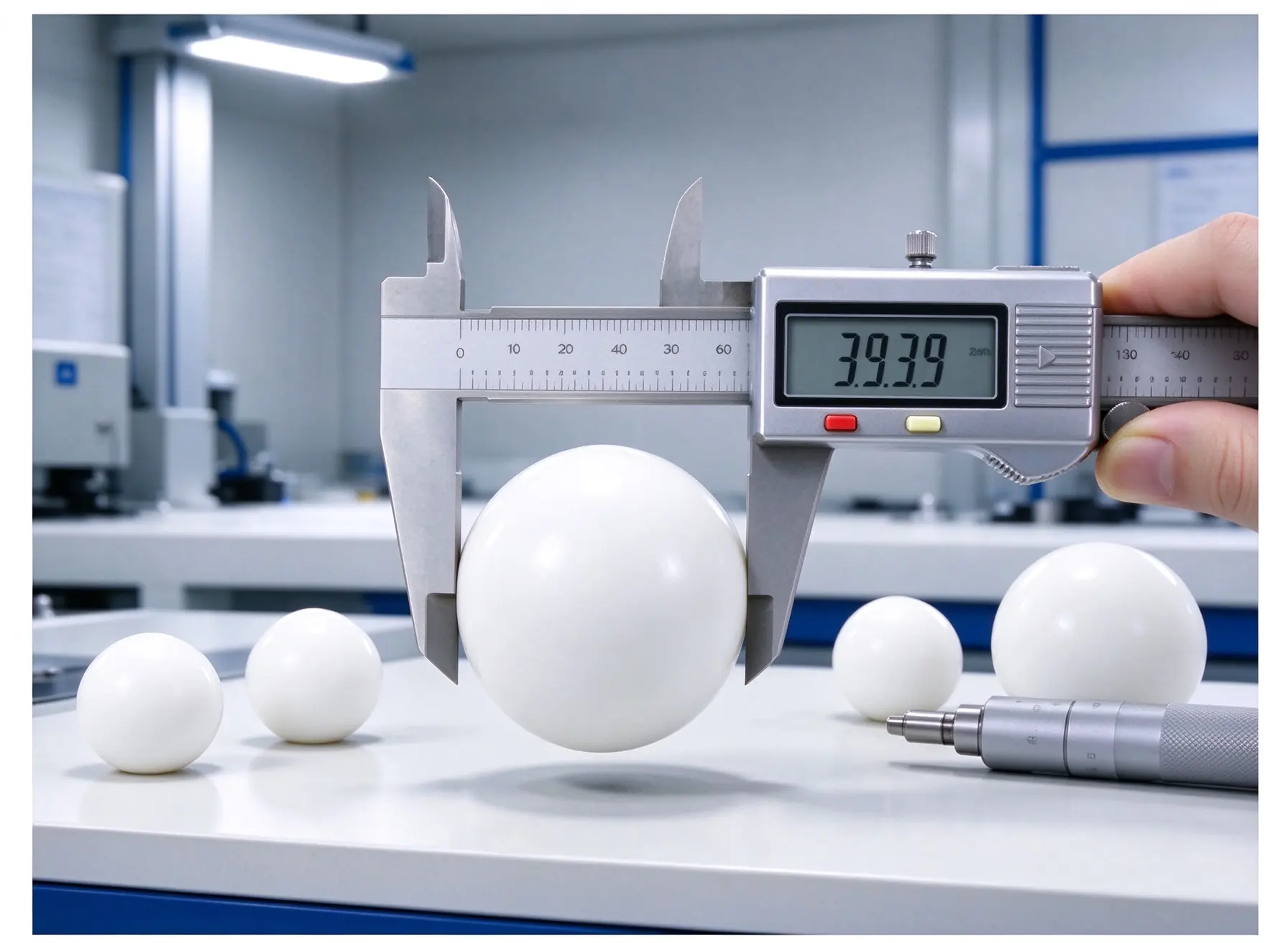
Dimensional Inspection: Diameter, roundness, tolerance, measured by caliper or optical comparator
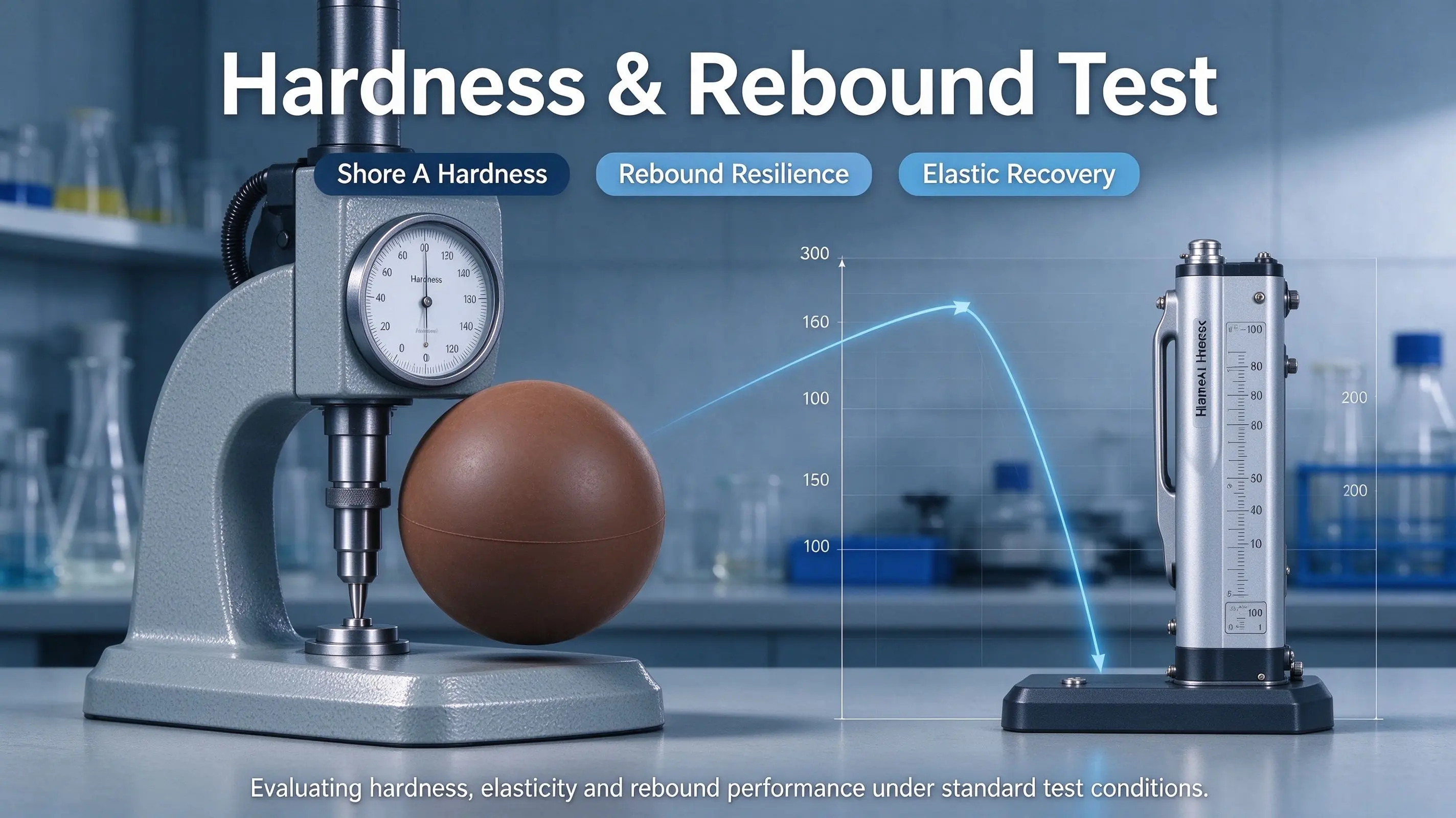
Hardness Test: Shore A hardness
Rebound Resilience Test
Tensile Strength & Elongation at Break
Compression Set (key indicator for sealing parts)
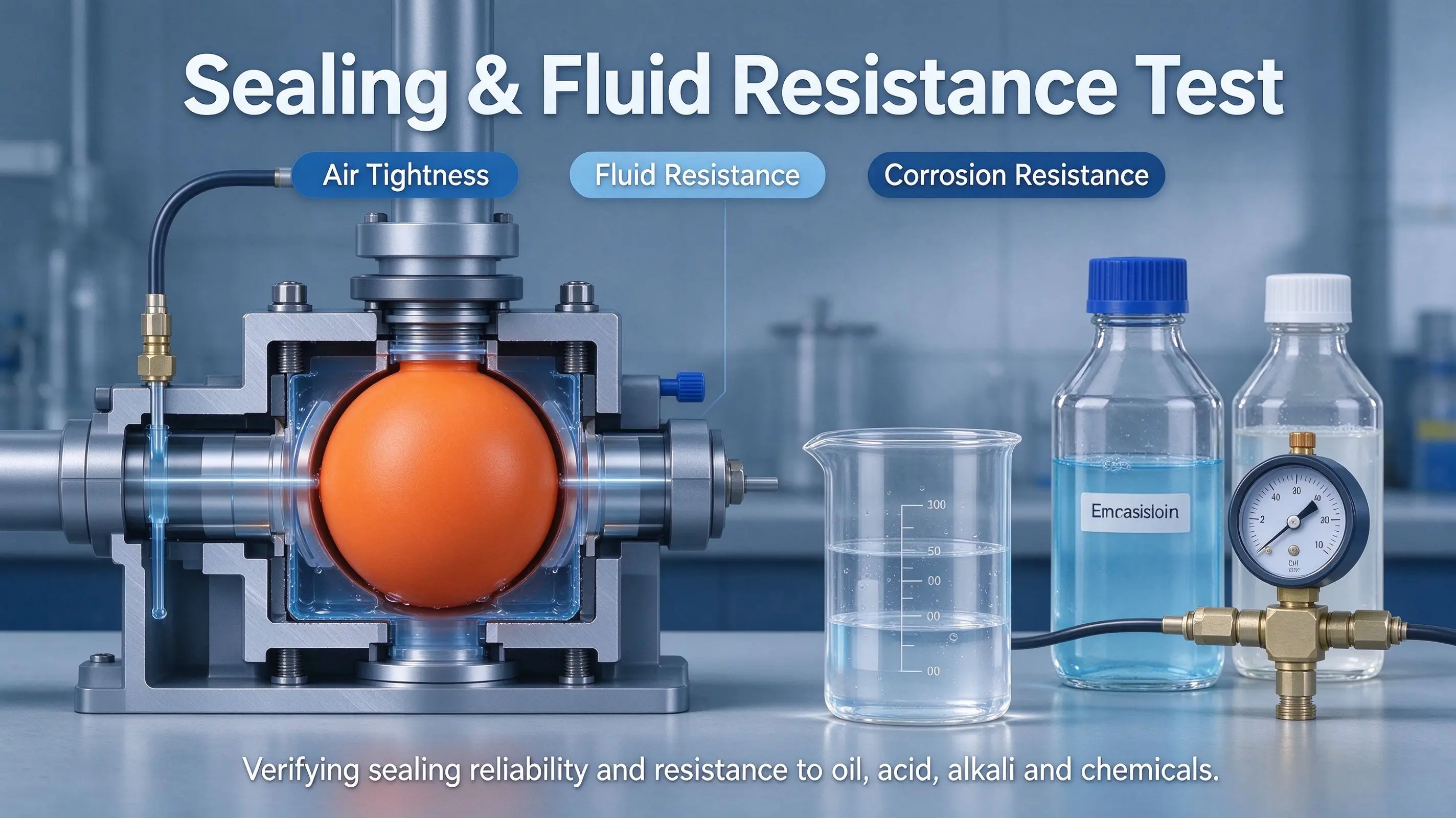
Fluid Resistance Test: Immersion test in oil, acid, alkali and solvent; weight change & volume change
Aging Test: Hot air aging, hardness and strength change after aging
Cleanliness Test (Food / Pharma Grade): Extractables, microbial test
Air Tightness & Sealing Performance Test (for valve balls)
Specific Gravity (Density) Test
Embalaje, pago y envío
Paquete:Ofrecemos cajas de cartón estándar, palets y cajas de madera. Si lo desea, podemos personalizar el embalaje, por ejemplo, imprimiendo su logotipo, para proteger sus productos durante los diferentes envíos.
Métodos de pago:Liquidación en múltiples divisas (CNY, USD, EUR, etc.). Diversas opciones de pago, incluyendo transferencia bancaria y PayPal. Para transacciones más rápidas, se ofrece transferencia bancaria local en algunos países.
Métodos de envío:Ofrecemos transporte exprés internacional, transporte aéreo, marítimo y ferroviario. También puede designar a su propio agente de transporte para una mayor flexibilidad en las entregas.
Products Type
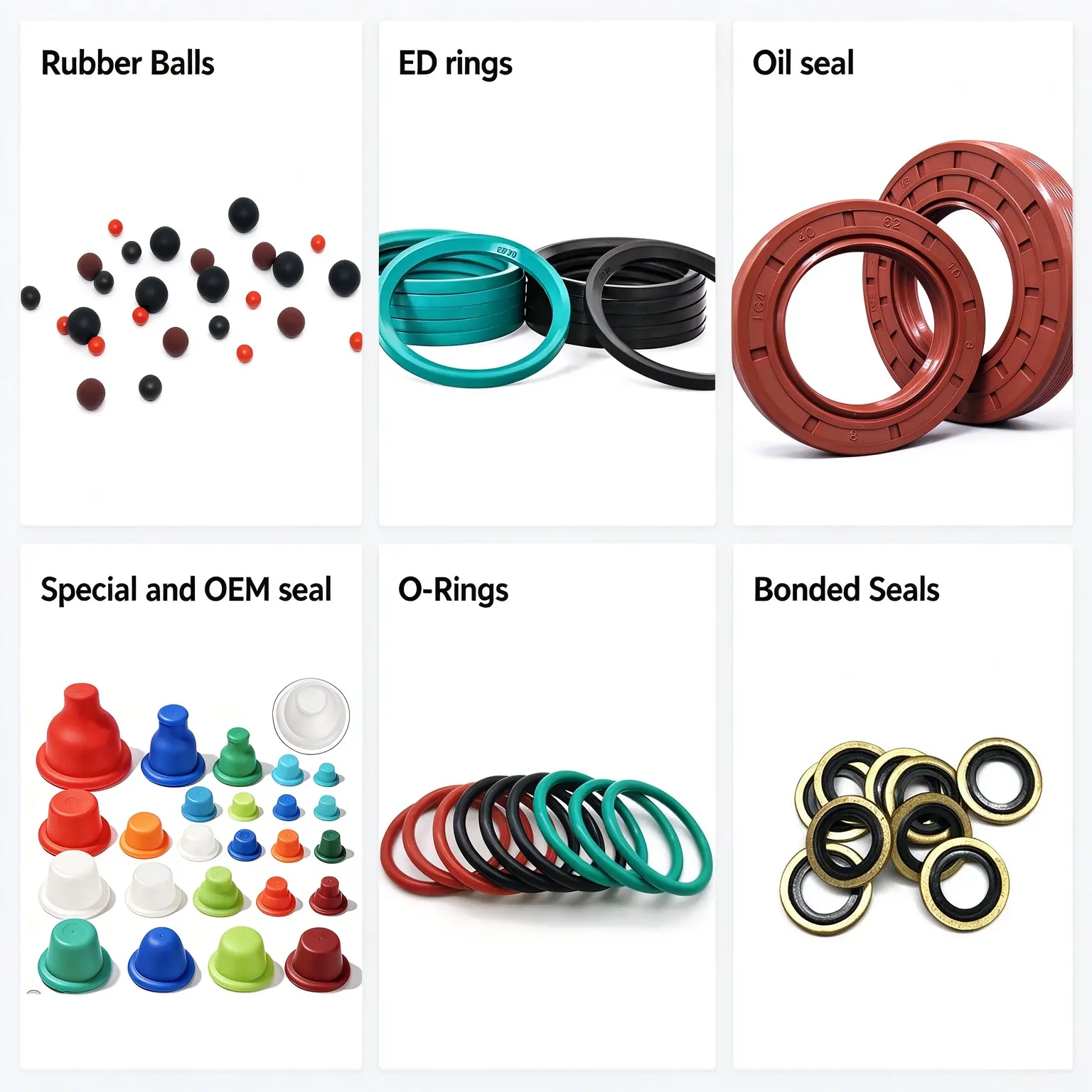
As a professional manufacturer of rubber sealing and transmission components, we are dedicated to providing global customers with high-quality, diversified rubber products and customized solutions. Our core production lines comprehensively cover the following six major categories:
· pelotas de goma: Featuring excellent elasticity and wear resistance, widely used in various pumps, valves, and mechanical transmission systems. · ED rings: Specifically designed for demanding working conditions, providing outstanding static and dynamic sealing performance. · Oil seal: Effectively prevents lubricant leakage and external contaminant intrusion, ensuring the safe operation of machinery. · Special and OEM seal: Equipped with strong R&D and tooling capabilities, we support non-standard customization to precisely meet your specific drawings and sample requirements. · O-Rings: Available in a complete range of specifications and diverse materials (such as NBR, FKM, EPDM, etc.), making them the ideal choice for basic sealing applications. · Bonded Seals: Perfectly combining the sealing properties of rubber with the strength of metal, offering high-pressure resistance and anti-deformation characteristics.
From mass production of standard parts to highly complex customized requirements, we strictly control the production process to ensure that every product leaving our factory possesses exceptional quality and reliability.
Preguntas frecuentes
What is the main difference between a pure PTFE ball and a rubber ball?
Pure PTFE (Polytetrafluoroethylene) balls are known for their extremely low friction coefficient (self-lubricating), high chemical resistance, and high-temperature tolerance (-200°C to +260°C), but they are relatively soft and prone to cold flow. Rubber balls (such as NBR, EPDM, or Silicone) offer excellent elasticity, high compressibility, and impact absorption, but they have higher friction and lower chemical/temperature resistance compared to PTFE.
Why does my pure PTFE ball deform under constant load?
This is a characteristic inherent to PTFE known as "cold flow" or "creep." Under continuous pressure, pure PTFE tends to deform. If your application requires high load-bearing capacity, we highly recommend using modified PTFE (filled with glass fiber, carbon, or bronze) or switching to a harder rubber compound if elasticity isn't the primary need.
How do I choose the right hardness for a rubber ball?
The hardness is usually measured in Shore A. For applications requiring high sealing pressure and minimal deformation, a higher Shore A (e.g., 70A-90A, like NBR) is suitable. For applications requiring high flexibility, vibration dampening, or low-pressure sealing, a lower Shore A (e.g., 40A-60A, like Silicone or EPDM) is recommended.
Can PTFE balls be used in high-pressure check valves?
Pure PTFE balls are generally not recommended for high-pressure check valves due to their cold flow tendency and low compressive strength. However, if the pressure is moderate, they are excellent for highly corrosive chemical fluids. For high-pressure systems, consider metal balls with PTFE coatings or highly modified PTFE balls.
What are the best rubber materials for oil resistance versus weather resistance?
Oil Resistance: NBR (Nitrile Butadiene Rubber) is the standard choice for oil seals and balls exposed to petroleum-based fluids.
· Weather/Chemical Resistance: EPDM is excellent for outdoor applications, water, and steam, but should not be used with oils. FKM (Viton) is best for extreme temperatures and aggressive chemicals.
How does the surface finish of a PTFE or rubber ball affect its performance?
For PTFE balls, a highly polished surface minimizes friction and wear in valve seats. For rubber balls, the surface finish affects the sealing efficiency. A smooth surface provides a better dynamic seal against a metal seat, while a textured (matte) surface can sometimes help retain lubricants or provide better grip in specific mechanical applications.