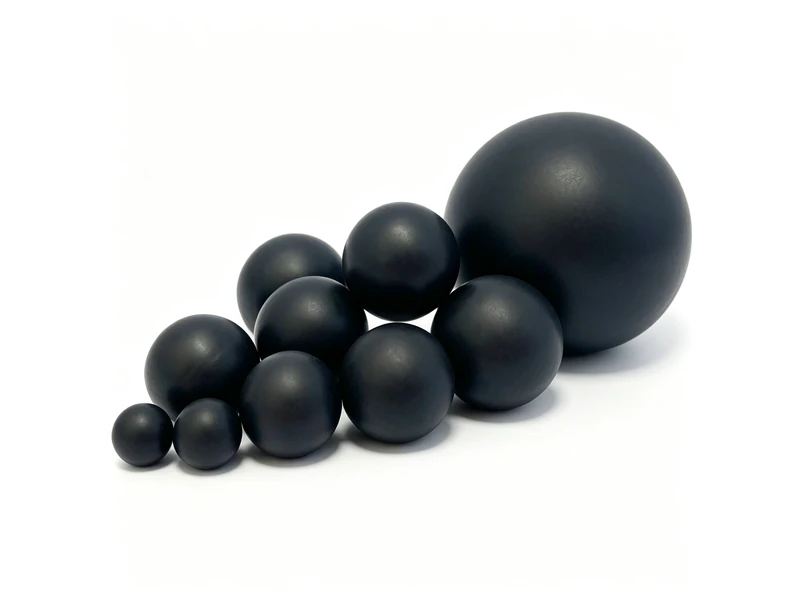
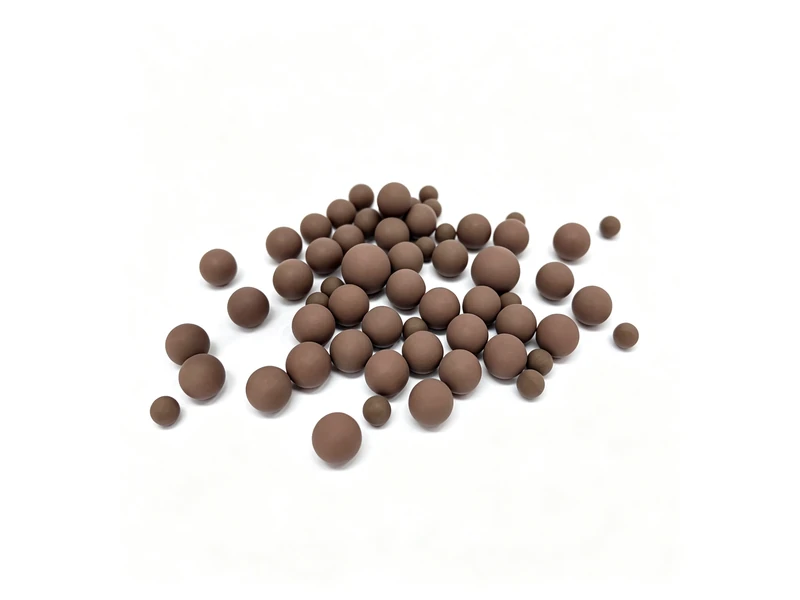
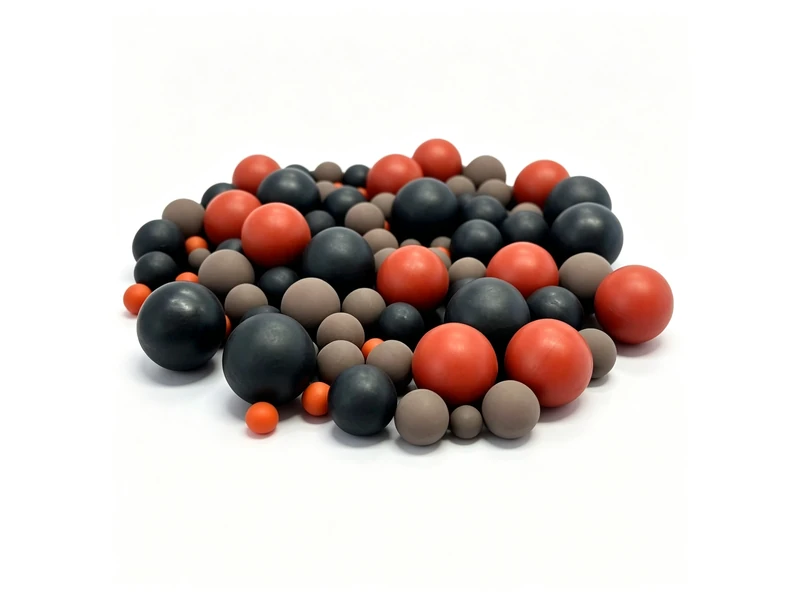
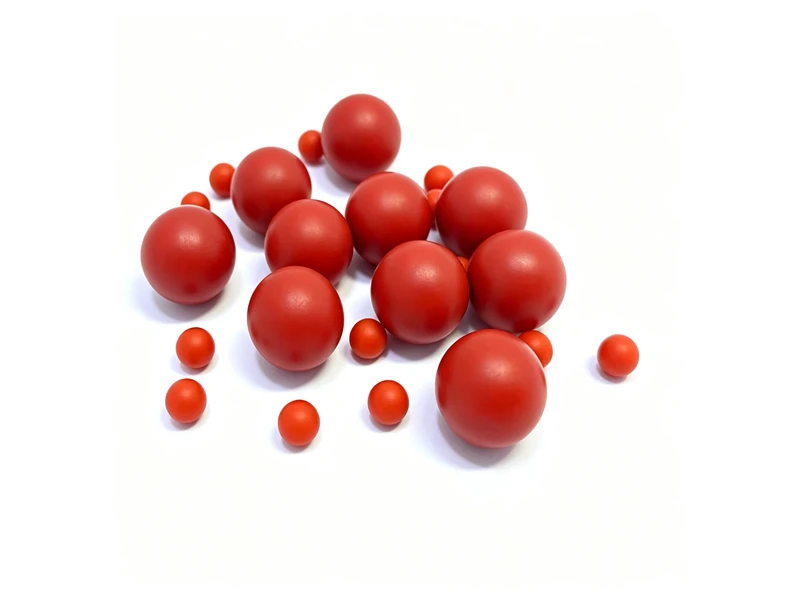
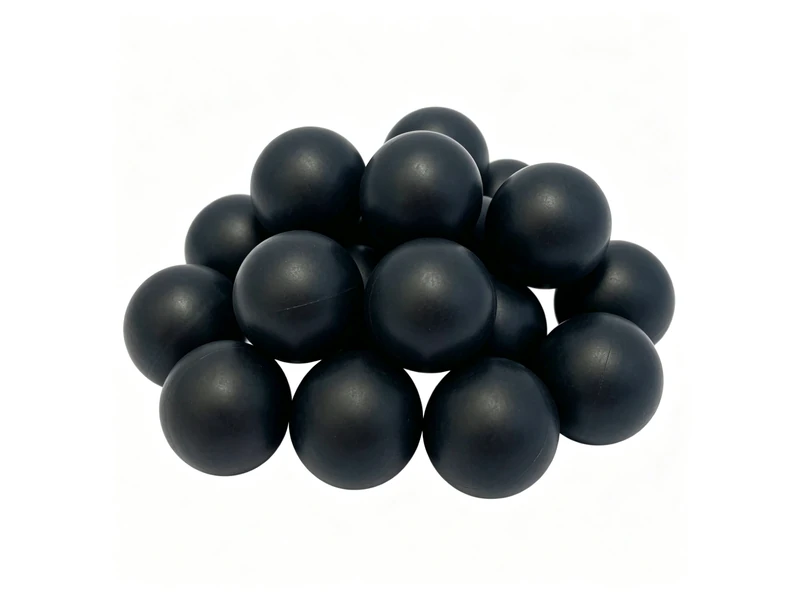
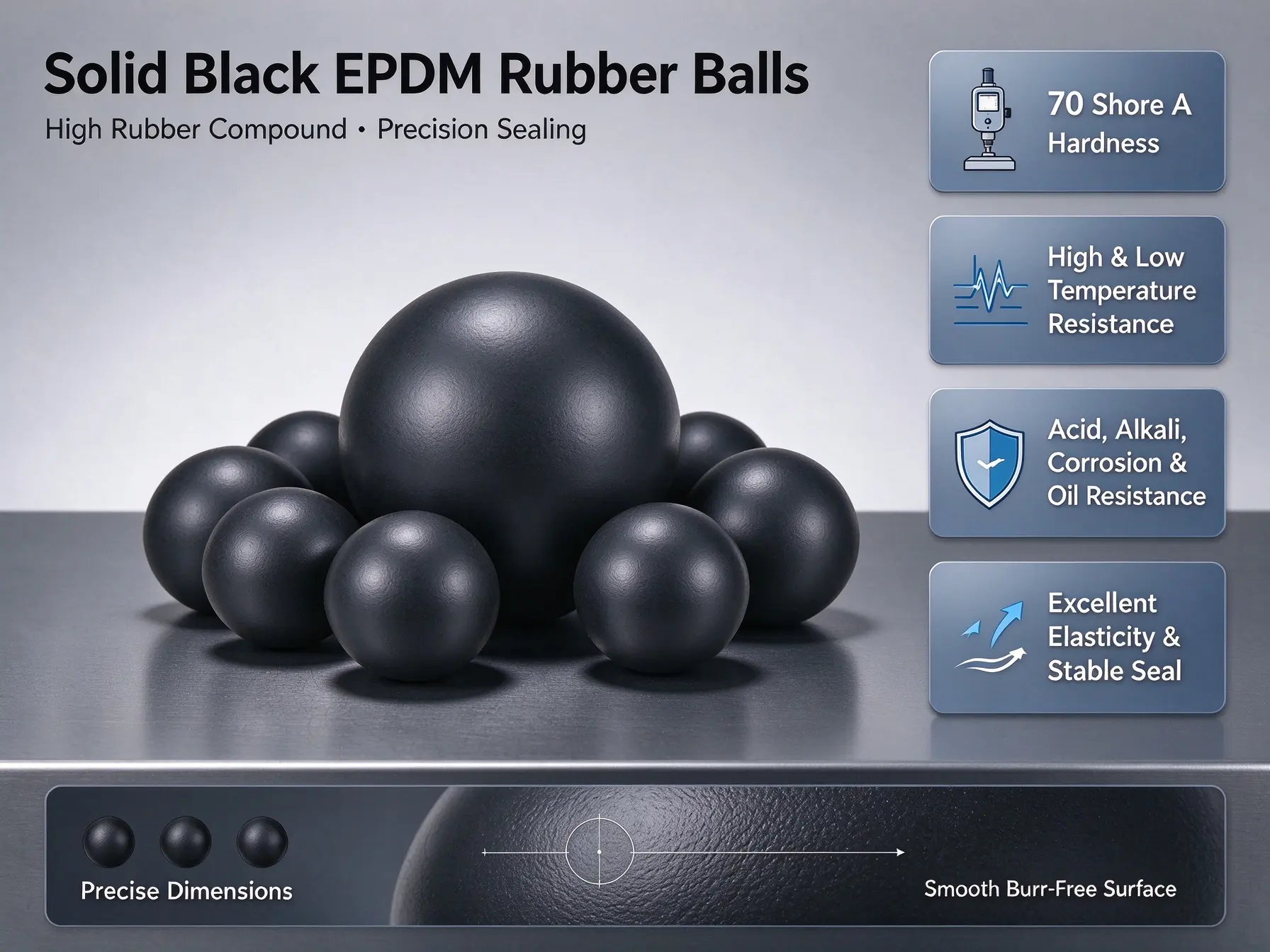
Our Solid EPDM Rubber Balls are high-quality black rubber balls manufactured from durable ethylene propylene diene monomer (EPDM) rubber, designed for reliable sealing and industrial applications. These 3.18mm EPDM rubber balls with 70 Shore A hardness feature excellent elasticity, a smooth burr-free surface, and consistent dimensional accuracy.
EPDM rubber balls offer outstanding resistance to high and low temperatures, weathering, ozone, aging, and many acids and alkalis. Their good wear resistance and elastic recovery support reliable performance in repeated operating cycles.
As a professional EPDM rubber ball manufacturer and supplier, we offer solid rubber balls, black EPDM balls, sealing rubber balls, industrial valve balls, and custom EPDM rubber balls in various diameters, hardness levels, and specifications. Our precision-molded rubber balls are suitable for valve sealing, fluid control systems, pumps, pneumatic equipment, and other industrial sealing applications. Bulk orders and customized manufacturing options are available to meet your specific requirements.
Rubber Balls detail Specifications
Item
Specification
Product Name
EPDM Solid Rubber Ball / EPDM Sealing Ball
Material
EPDM (Ethylene Propylene Diene Monomer )
Material Features
Excellent ozone, UV, weather and aging resistance; resists heat, steam, hot water, dilute acids & alkalis and polar fluids; high elasticity and good electrical insulation. Not recommended for mineral oils / petroleum fluids (NBR is suggested for oil service)
Color
Black (standard); custom colors available
Standard Size
3.18 mm (+/-0.08mm)
Available Size
1 mm–200 mm diameter; custom sizes accepted
Hardness
70 Shore A (standard +/-5); custom range 40–90 Shore A
Service Temperature
-40 °C to +120 °C continuous; intermittent peak +150 °C
Compression molding; water-polished, smooth and burr-free
Applications
Valves, pumps, plumbing, water treatment, HVAC, automotive cooling, food & beverage, chemical sealing
Certifications
ISO 9001, IATF 16949, RoHS, FDA (food grade, FDA 21 CFR 177.2600)
MOQ
1 piece for stock size (sample order accepted),custom size according to size (100pcs ,300pcs ,500pcs .ect)
Customization
Size, color, hardness ,material and packing (OEM/ODM)
Packaging
PE bag / carton; custom logo and label supported
Sample
Available
Lead Time
Samples 3 days; bulk production per quantity
Brand
EPDM BALLS (OEM/ODM orders welcome)
Multiple Materials, Made to Your Application
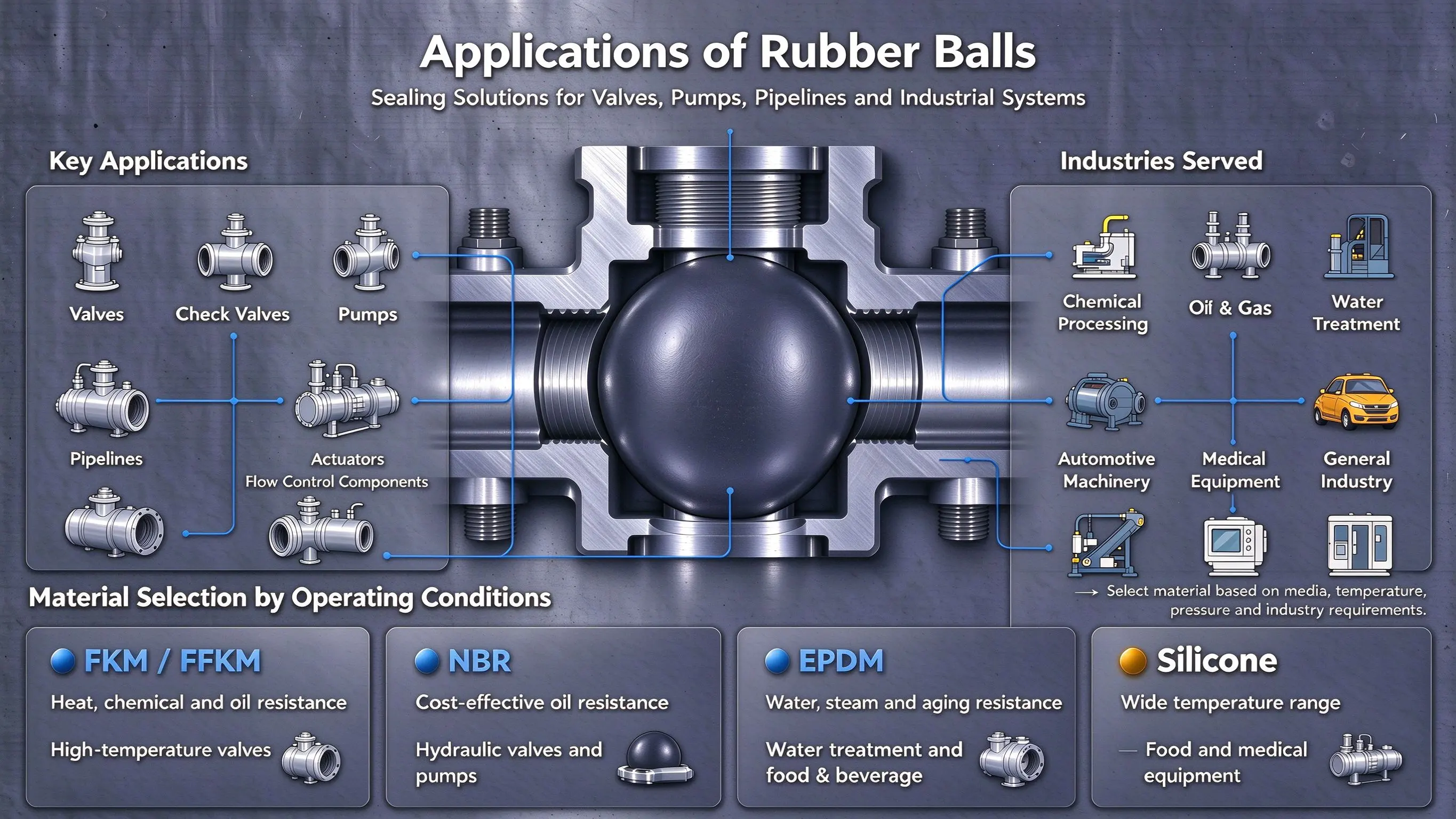
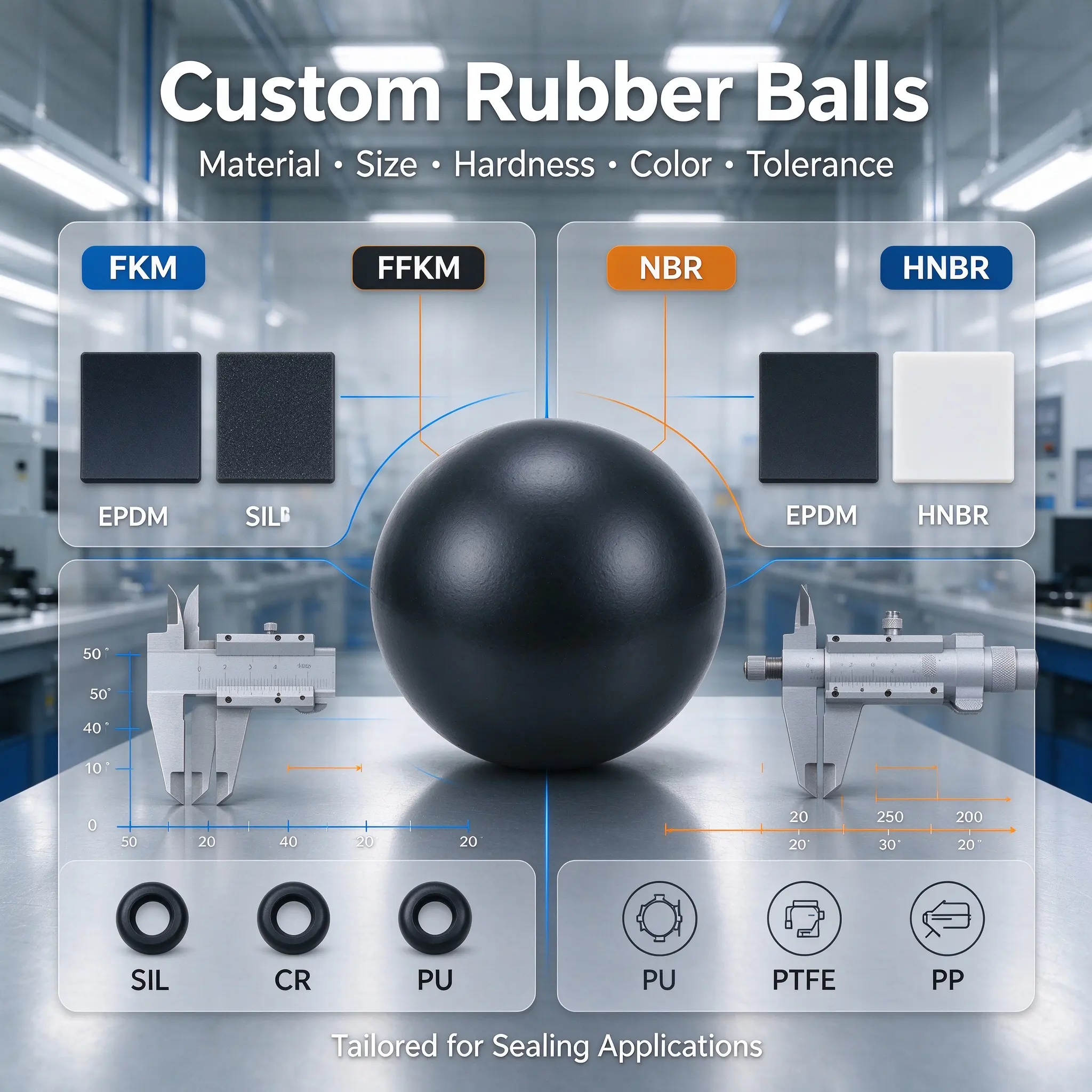
We supply rubber balls in a wide range of compounds — FKM, FFKM, NBR, EPDM and silicone (VMQ) — covering service temperatures from -50°C to +320°C. Each material brings its own strengths in oil, chemical, heat or cold resistance, fitting valve, pump and pipeline sealing needs. Materials, sizes and tolerance grades are customizable to match your exact working conditions.
Material
Service Temperature
Key Properties
Typical Applications
FKM (Fluororubber)
-20°C to +200°C
Resistant to oil, abrasion, acids and alkalis
High-temperature and corrosive sealing
FFKM (Perfluoroelastomer)
-20°C to +320°C
Excellent resistance to chemicals, solvents, acids, alkalis and high temperature; outstanding compression set
Sealing for extreme chemical and high-temperature conditions
NBR (Nitrile)
-20°C to +100°C
Resistant to oil and abrasion
General oil-sealing applications
EPDM (Ethylene Propylene)
-30°C to +120°C
Resistant to abrasion, acids and alkalis
Water, steam and outdoor environments
Silicone (VMQ)
-50°C to +200°C
Resistant to cold and heat; high elasticity
Wide-temperature flexible sealing
Industries We Serve
Rubber sealing balls of various materials are widely applied in chemical, oil & gas, water treatment, machinery, automotive, food & beverage, medical industries for valves, check valves, pumps and pipeline sealing, resisting high temperature, oil, acid, alkali and moisture as per material properties.
Diameter tolerance: Deviation of measured vs. nominal diameter; ground balls ≈ ±0.003 in (±0.08 mm), precision ground down to ±0.03 mm.
Sphericity: Consistency of diameter in all directions (total error), ≈ 0.003 in for ground balls — rounder = more uniform seal.
Surface roughness: Surface smoothness (Ra/μin); smoother = less leakage and wear.
Mold line / flash: Grinding removes parting lines and flash to eliminate local leak paths.
Dimensional stability: Resistance to thermal expansion, media swell, and compression set.
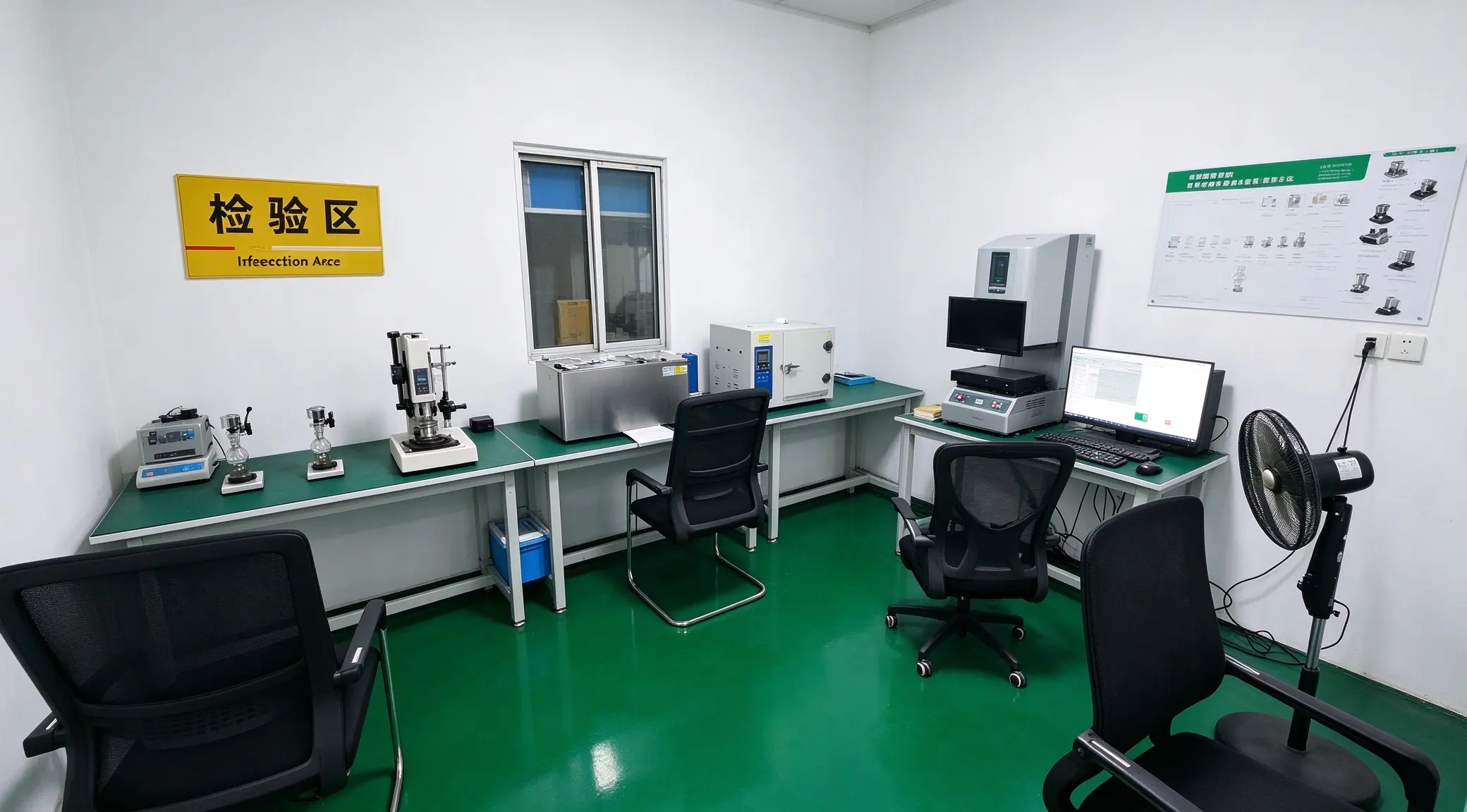
Strict Quality Control & Testing
Every rubber ball goes through systematic inspection before shipment, ensuring stable material performance and
accurate dimensions from batch to batch.
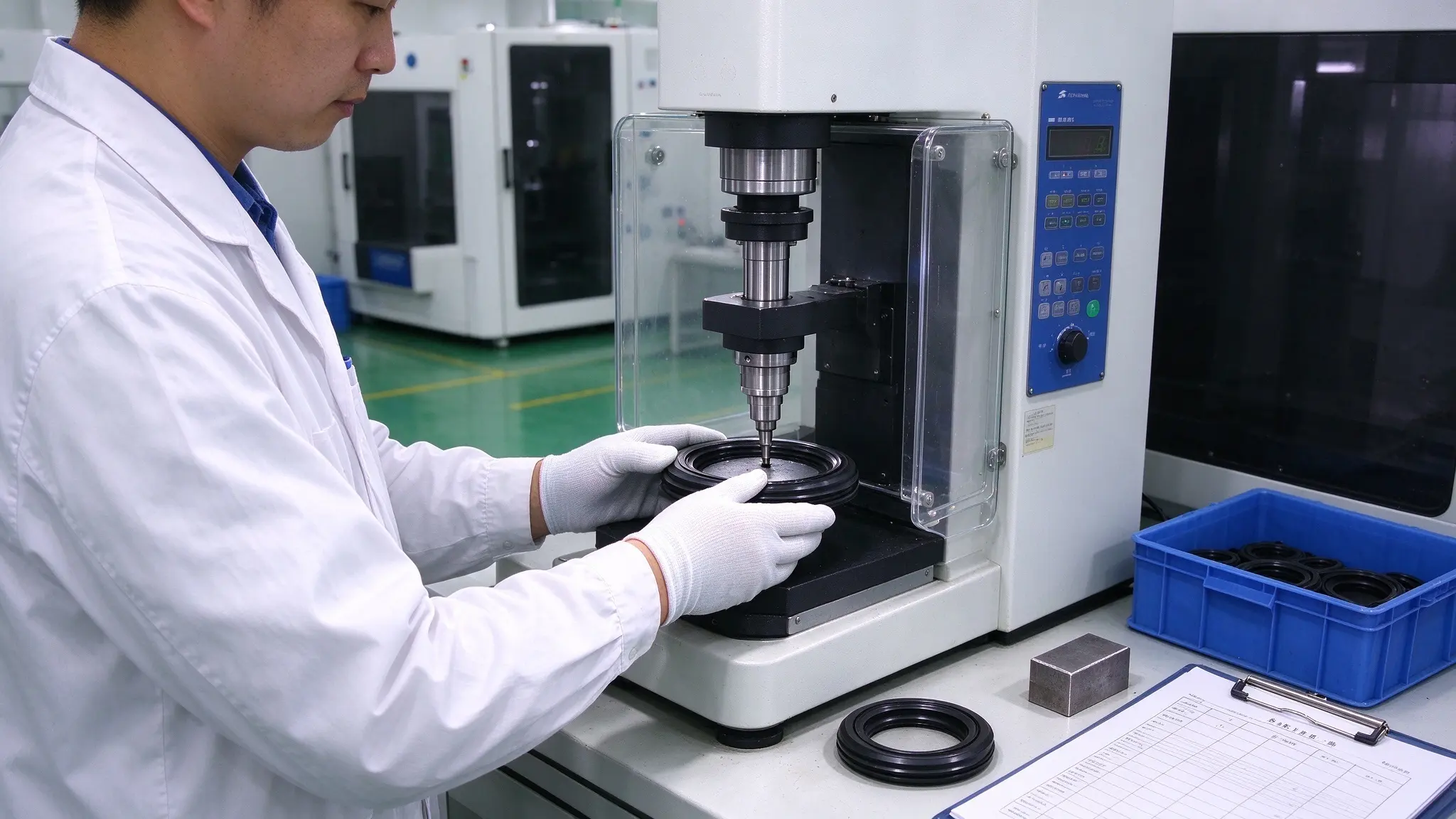
Hardness Testing — Shore A hardness is measured to confirm each batch meets the specified hardness.
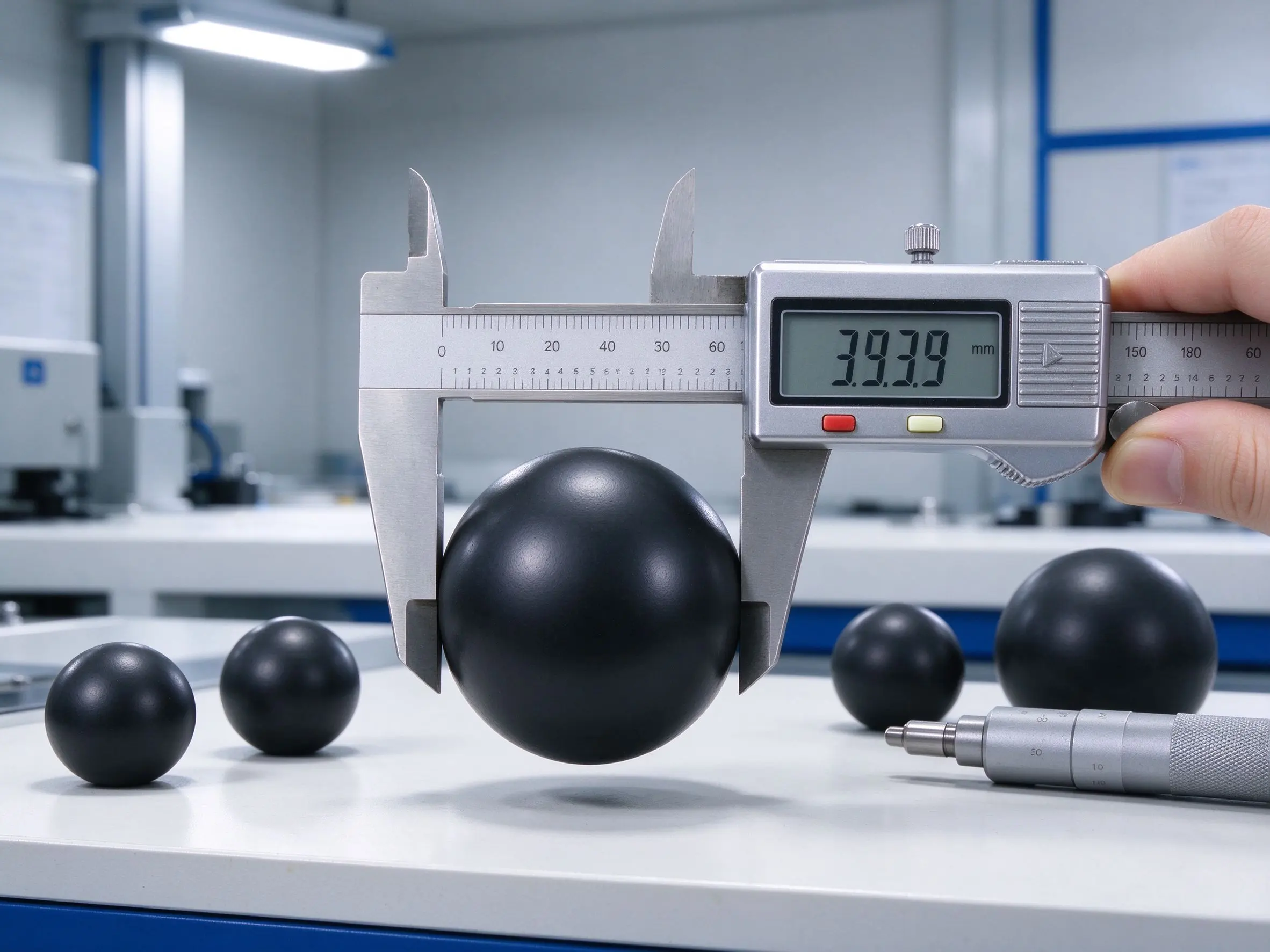
Dimensional Inspection — Diameter is checked with precision calipers and micrometers against GB/T 3672.1-2025 standard tolerances.
Mechanical Property Testing — Tensile strength and elongation at break are verified per ASTM D412.
Surface & Appearance Check — Each ball is inspected for smoothness, flash, burrs, cracks and air bubbles.
rubber seal hardness testrubber seal inspection rubber seal CCD machine vision
One-stop rubber seal service from reliable manufacturer
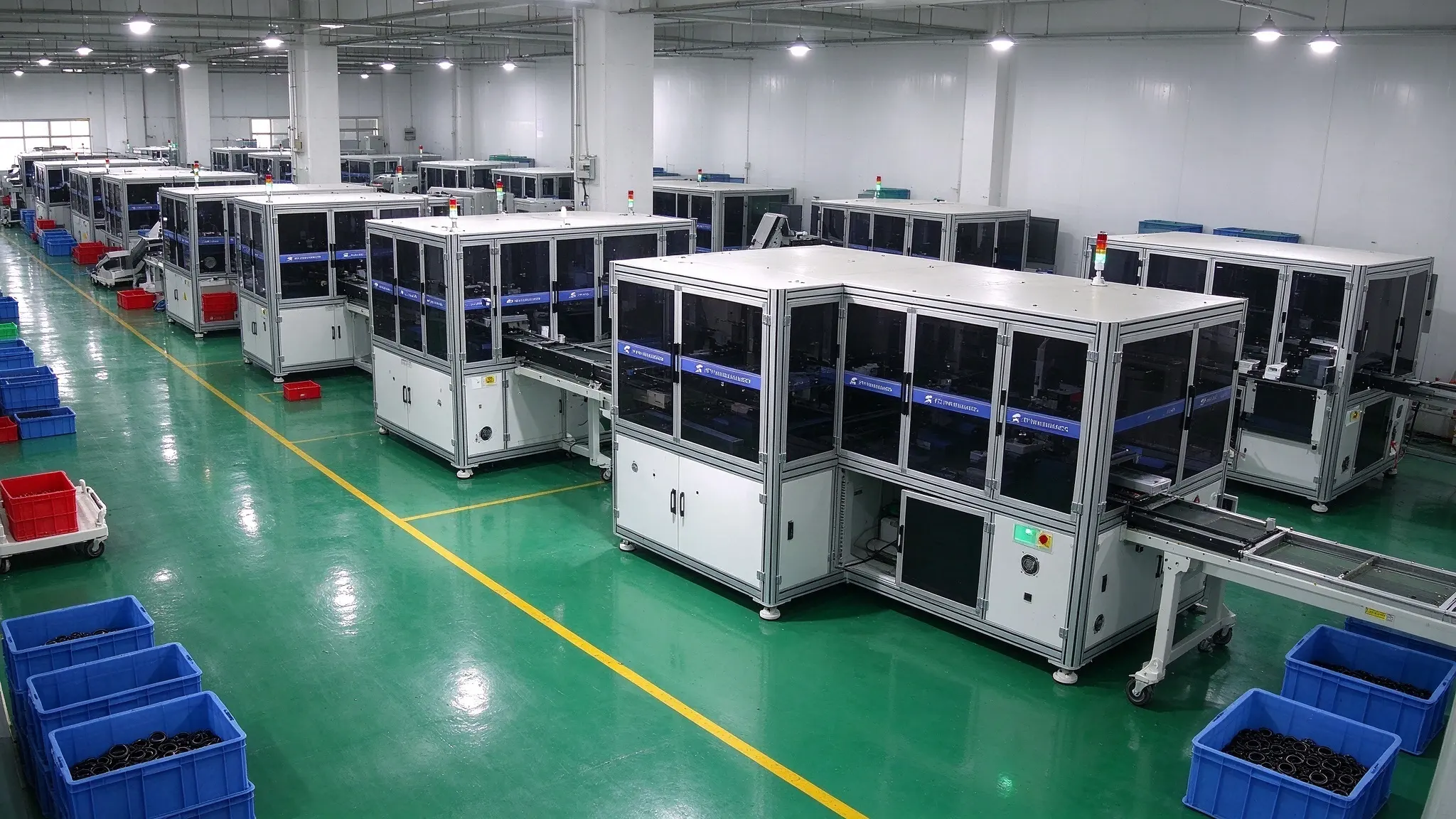
Equipped with automated production lines and in-house molding capability, we manufacture a full range of rubber sealing components in EPDM, NBR, FKM,FFKM,HNBR,PU,VMQ,SIL,PTFE ect. From standard parts to custom special-shaped components, each product is built to your specifications.
What We Produce:
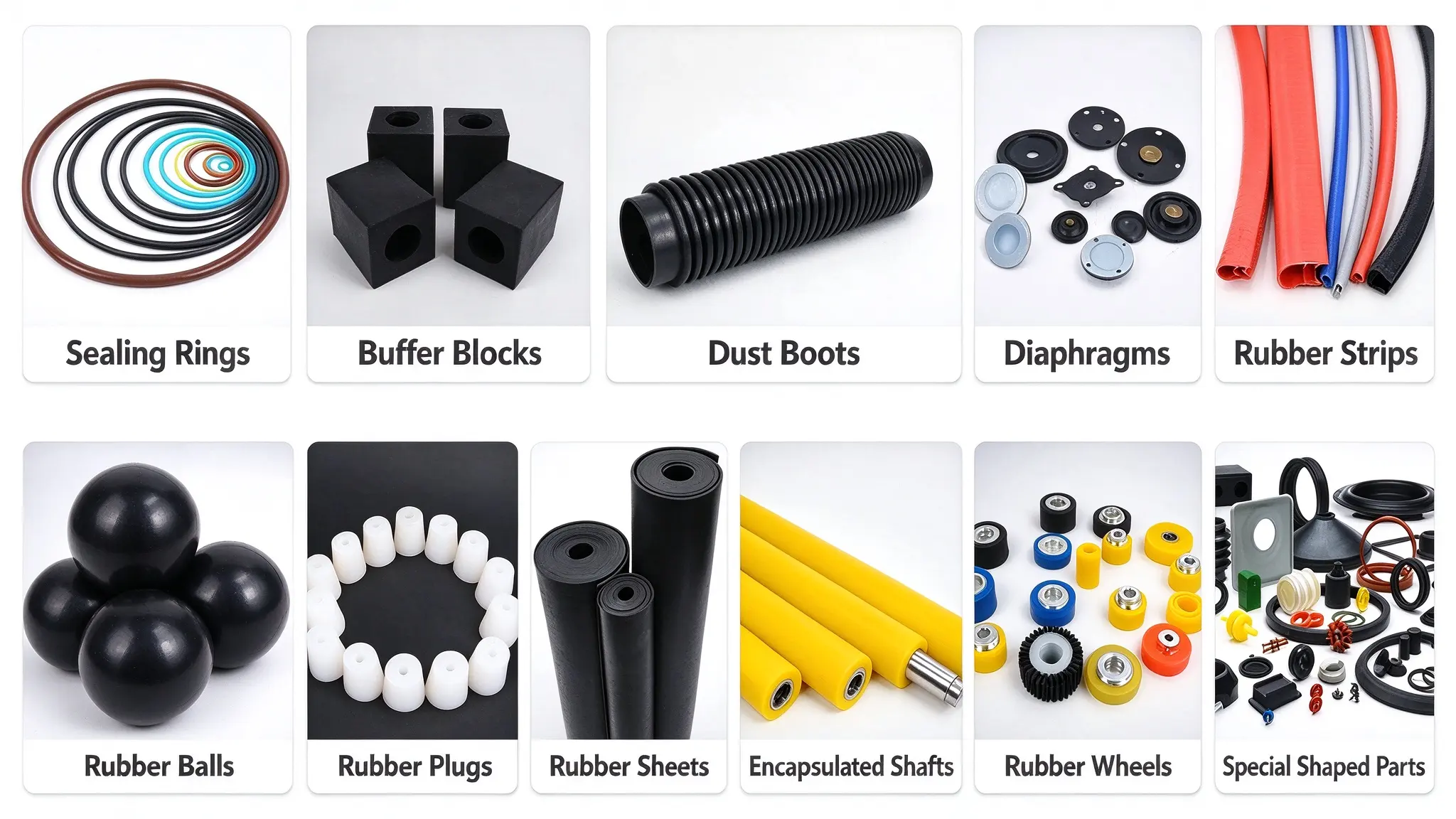
O-rings — standard series and custom sizes
Rubber balls — solid rubber balls from 1mm to 500mm and custom support
Gaskets, washers & flat seals — molded or die-cut
Oil seals — rotary shaft and lip seals
Custom special-shaped rubber seals — made to your drawing or sample
OEM & ODM Service
one-stop custom service:
Size
Hardness
Colors
Material
Surface
Packing Logo
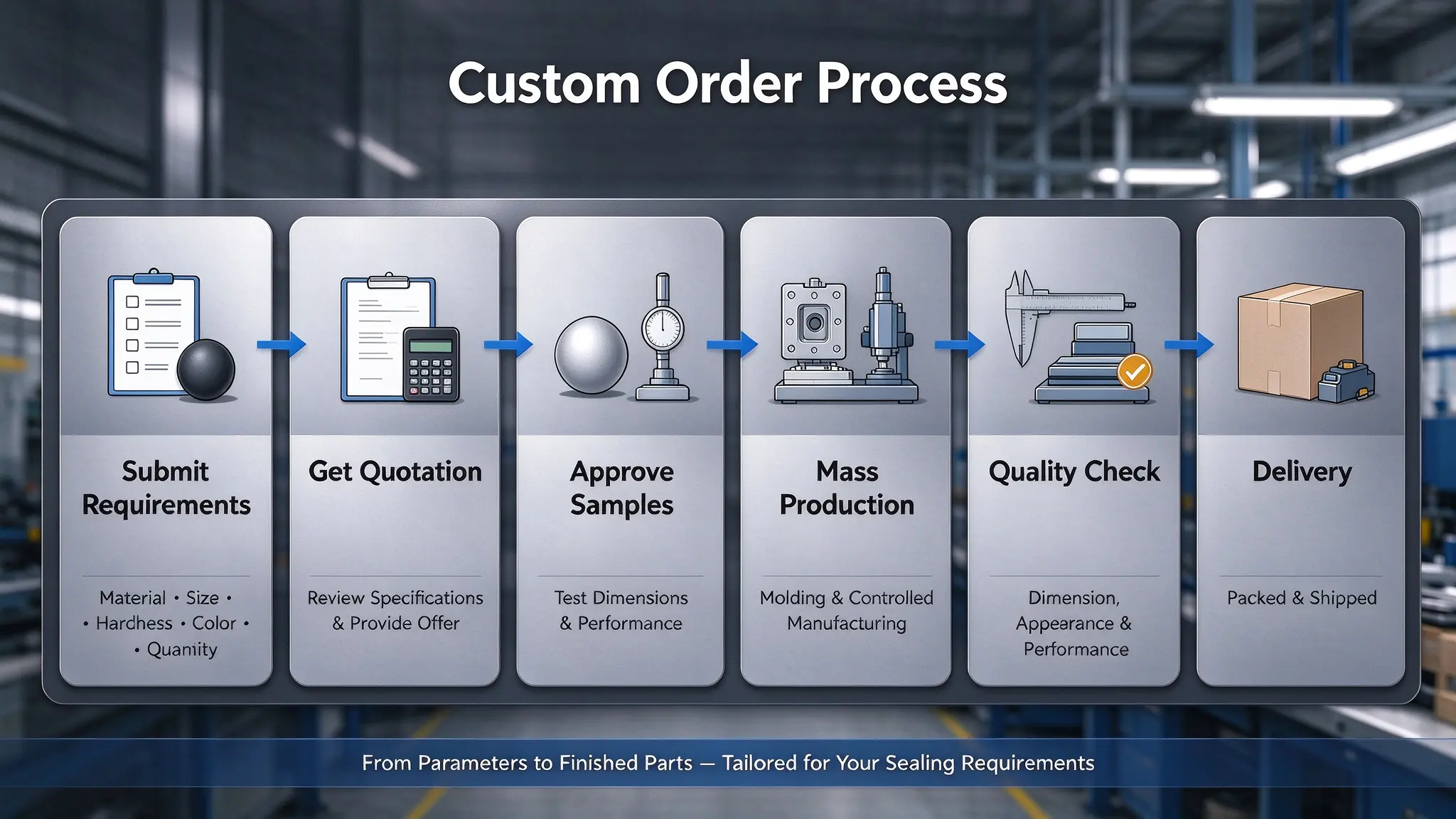
Customization Workflow
Requirement Communication: Tell us your specifications, including material, size, hardness, color, quantity and working conditions.
Quotation: We will calculate and provide quotation or sample offer according to your requirements.
Sample Confirmation: Produce samples for your performance and dimension testing.
Production Arrangement: Start mass production once samples are approved and order confirmed.
Quality Inspection: Finished goods undergo full inspection on dimension, appearance and performance.
Packing & Shipment: Qualified products are packed and delivered.
Packing & Payment & Shipping
Package:We provide standard cartons, pallets and wooden cases. Custom packaging such as custom logo print is available upon request to protect goods well for different shipments.
Payment Methods:Multi-currency settlement (CNY, USD, EUR, etc.). Multiple payment options including T/T, PayPal. Local bank transfer is available for some countries for faster transactions.
Shipping Ways:We offer international express, air freight, sea freight and railway transport. You can also appoint your own forwarder for flexible delivery arrangements.
FAQs
How should the ball diameter match the seat orifice?
The ball must be larger than the orifice. The larger the ball-to-orifice ratio, the lower the risk of the ball being extruded into the gap; an excessively large ratio raises opening resistance and pressure drop, so balance sealing against flow.
How do I choose the ball hardness (Shore A)?
70 Shore A is the general-purpose baseline. Use 55–65A for low-pressure, soft-sealing, or irregular surfaces, and 80–90A for high-pressure, anti-extrusion duties. Compounds below 70A are generally difficult to grind.
What is compression set, and why does it matter?
It is the permanent deformation remaining after prolonged compression (expressed as a percentage). It lowers sealing contact pressure and causes leakage; heat, incompatible media, and long compression worsen it. Typical limits are about 15%–20%.
How can I prevent ball extrusion under high pressure?
Reduce the clearance between seat and ball, increase hardness, and raise the ball-to-orifice ratio; add a backup ring if needed. High temperature weakens extrusion resistance, so allow a safety margin.
Molded balls vs. ground balls — how to choose?
Ground balls undergo high-speed centerless grinding that removes parting lines and flash, delivering tighter diameter tolerance, better sphericity, and smoother surfaces for precision sealing. Plain molded balls are cheaper for non-critical use. Precision ground balls are typically 70A and harder.
What is the effect of media swell (volume change)?
Contact with incompatible media causes swelling, which increases diameter and lowers hardness and strength, leading to sticking or seal failure. Verify material–media compatibility and keep the volume change rate as low as possible.