






-
Product Range: Automotive O-rings, rubber gaskets, oil seals, molded rubber seals, and custom sealing components.
-
Material Options: NBR, HNBR, FKM, EPDM, and silicone for different automotive operating conditions.
-
Application Areas: Engine systems, fuel systems, transmissions, cooling systems, air conditioning, and hydraulic brake systems.
-
Performance: Excellent leakage prevention, oil and chemical resistance, temperature resistance, and dimensional stability.
-
Customization: OEM & ODM manufacturing based on customer drawings, samples, material specifications, and application requirements.
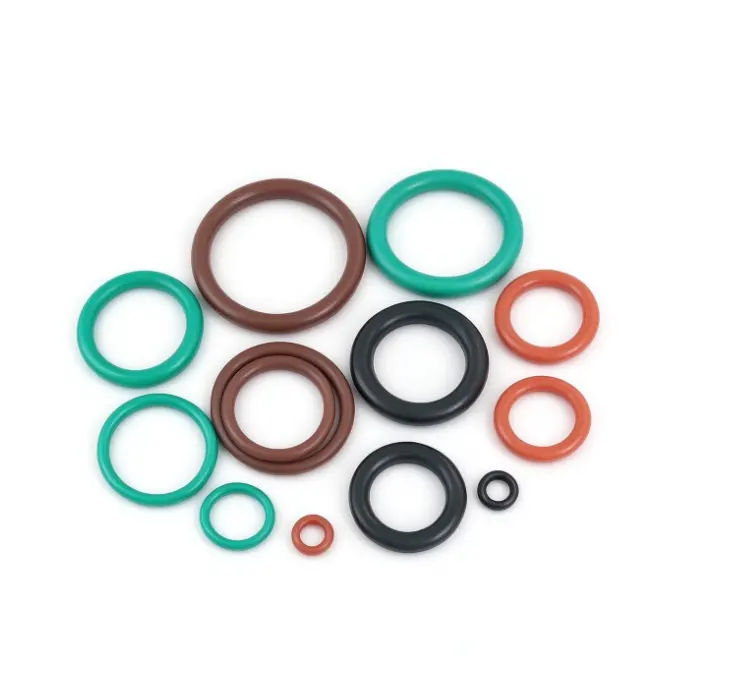
O-Ring-Gummidichtungen
Lieferant von O-Ringen aus Gummi für die Automobilindustrie
- Beschreibung
- Herunterladen
-
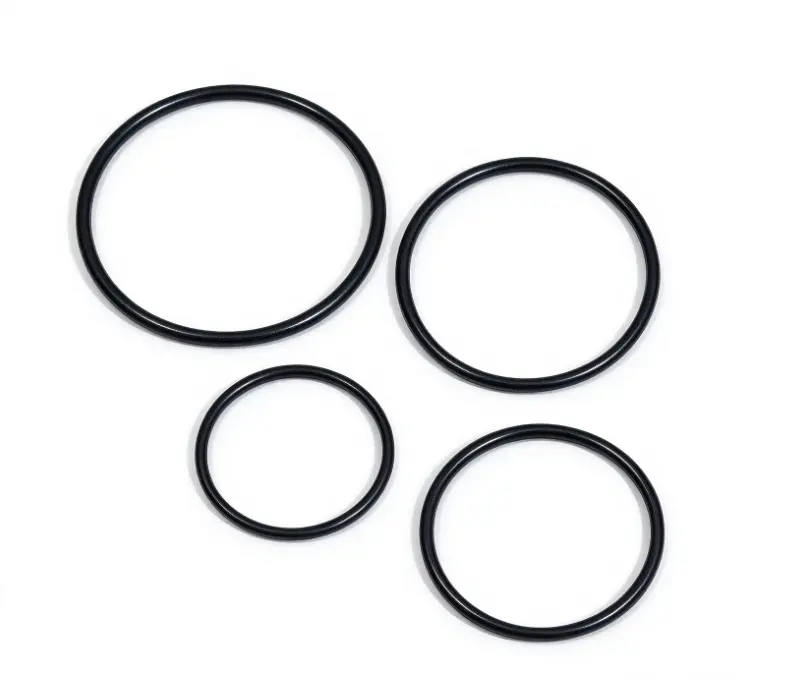
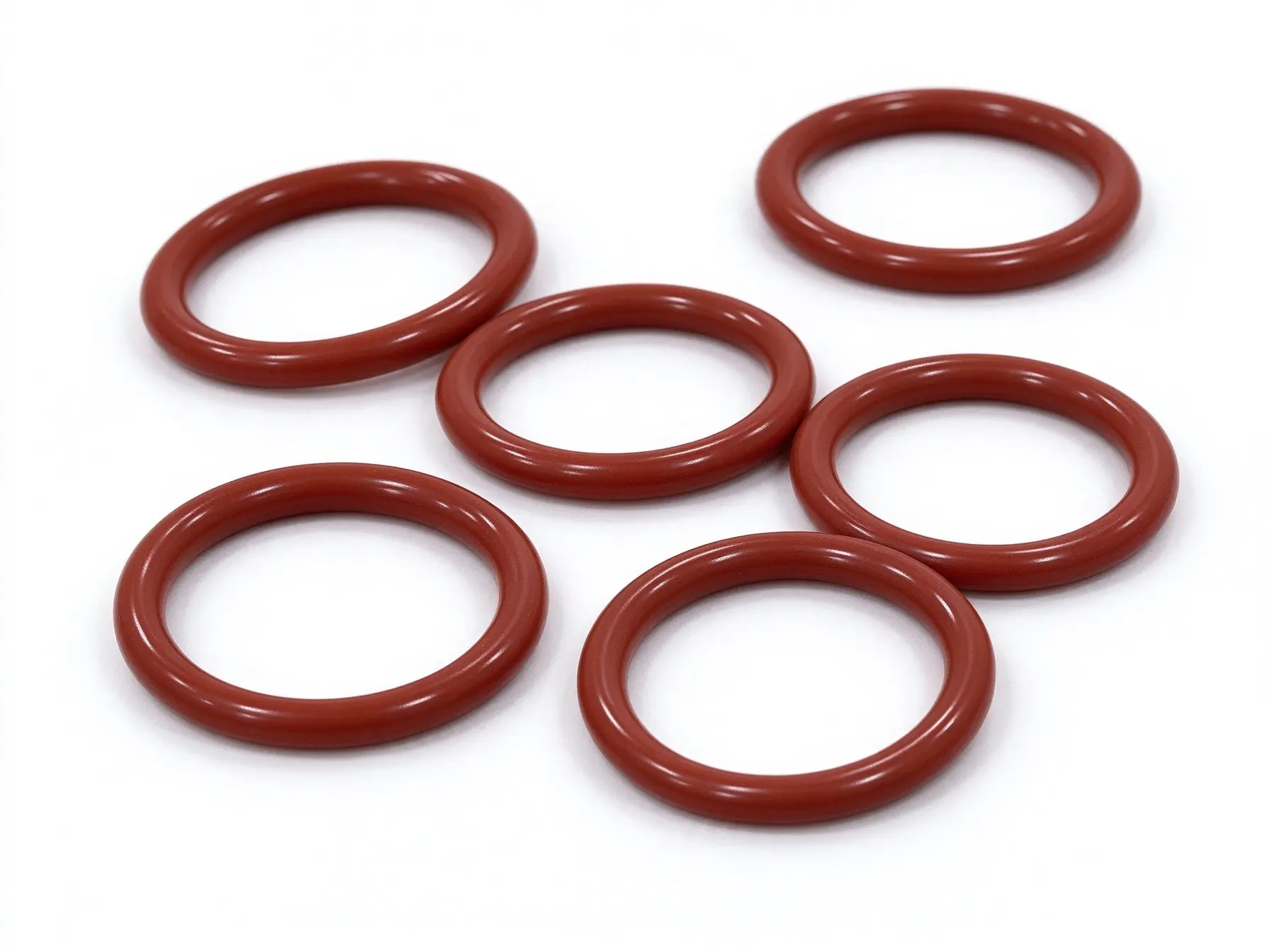
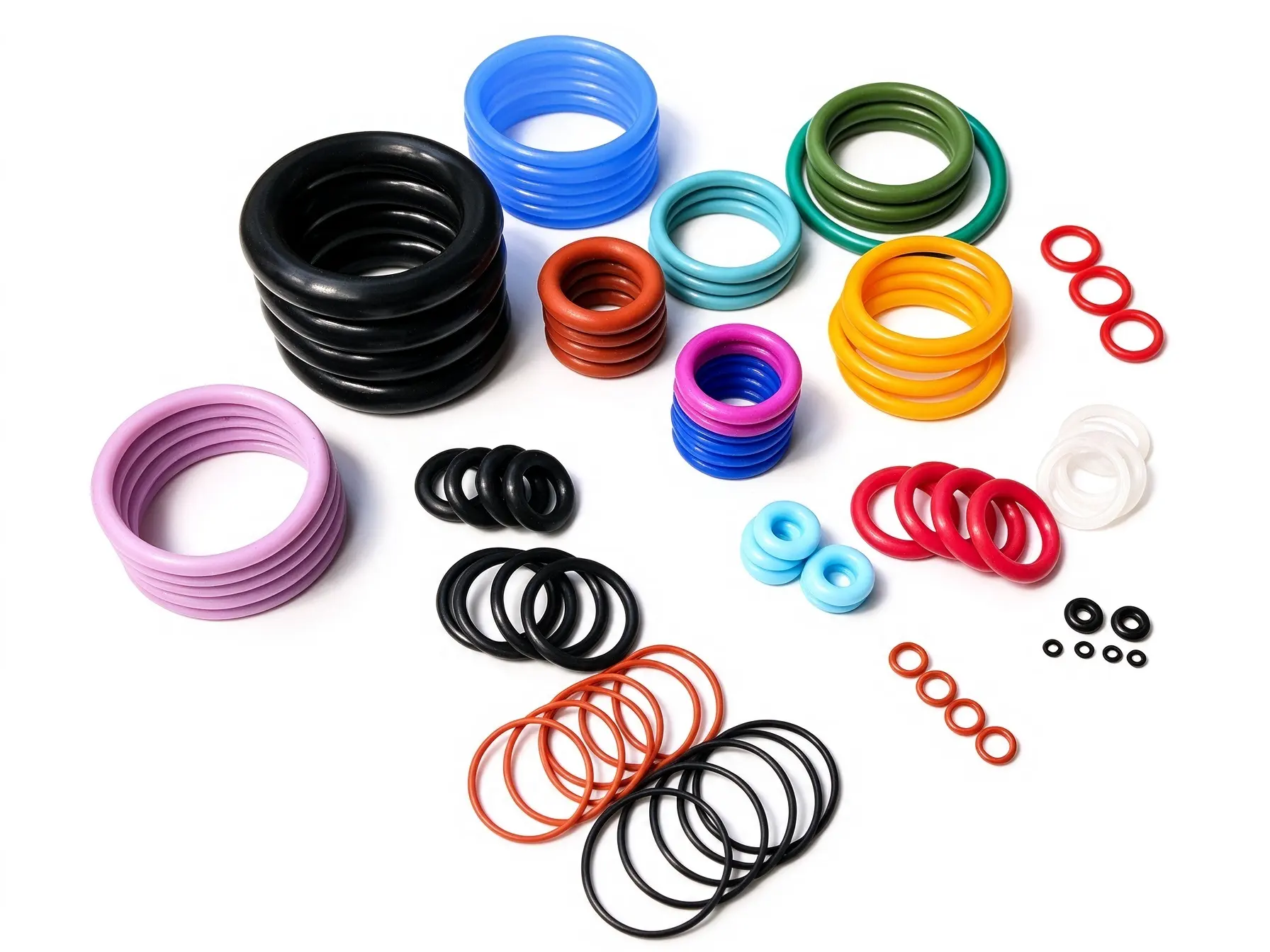
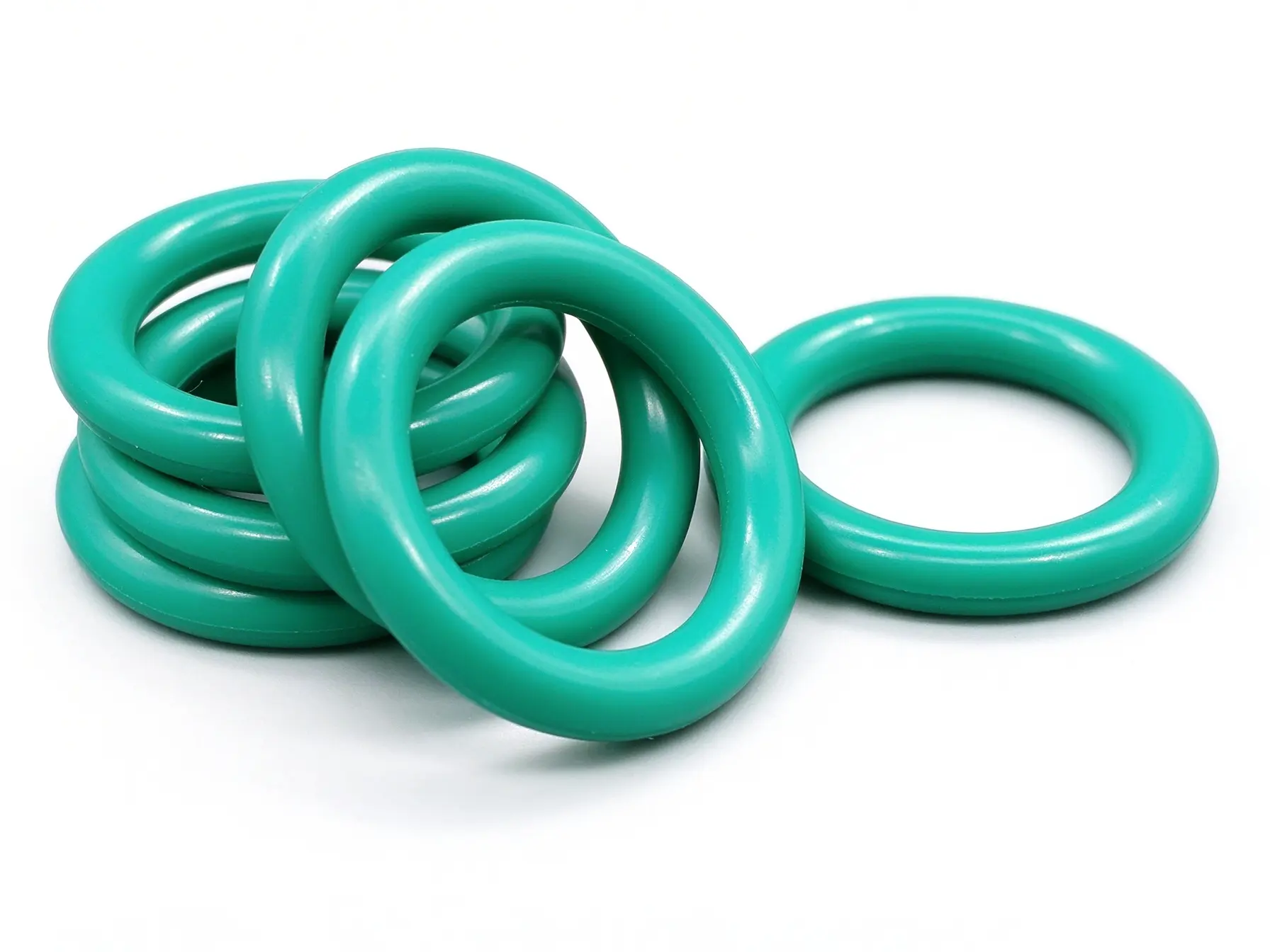
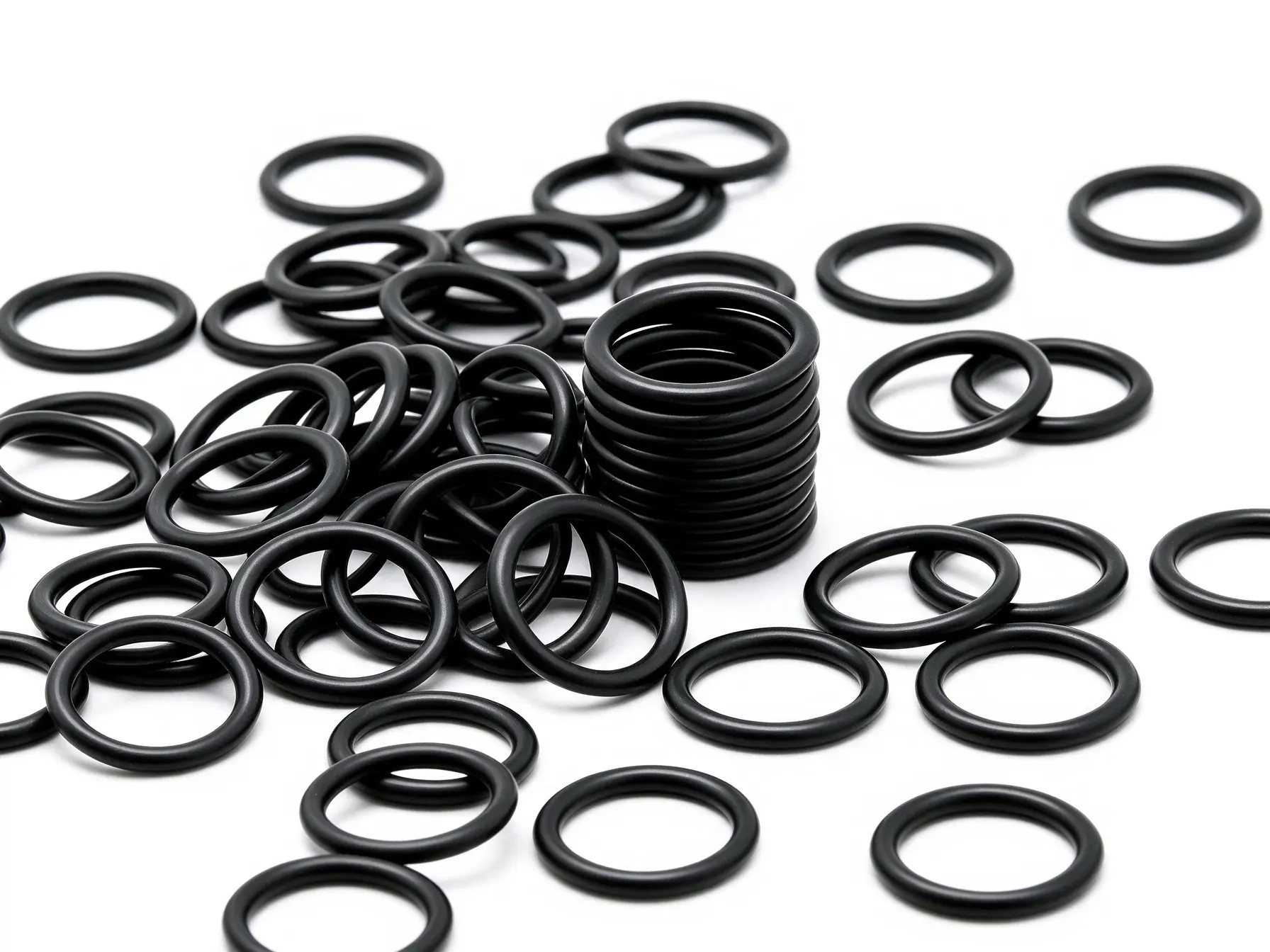
JINNAI SEAL manufactures custom automotive rubber O-rings for engines, fuel systems, transmissions, cooling systems, and automotive air conditioning equipment. Available in NBR, HNBR, FKM, EPDM, and other suitable rubber compounds, our automotive O-ring seals are designed to provide reliable leakage prevention, chemical resistance, and temperature stability. We support OEM automotive O-ring manufacturing based on customer drawings, samples, and specific application requirements, with flexible sizes, hardness options, and custom specifications.
Technische Spezifikationen
Artikel Spezifikation Produktname Automotive Rubber O-Rings Produkttyp O-Ring Seals Material NBR, HNBR, FKM, EPDM, Silicone Härte Customizable Shore A Form Circular Cross-Section Herstellung Compression / Injection Molding Größe Standard & Custom Sizes Anwendung Automotive Sealing Systems Anpassung OEM / ODM Available 1. Automotive Engine O-Rings
Designed for automotive engine components, these rubber O-rings help prevent oil and coolant leakage while maintaining reliable sealing under temperature fluctuations and mechanical stress.
2. Fuel Injector O-Rings
Automotive fuel system O-rings provide reliable sealing in fuel injectors, fuel pumps, fuel lines, and related connections. FKM and other suitable compounds can be selected according to fuel type and operating conditions.
3. Transmission O-Rings
Transmission O-ring seals are used in automotive transmission systems to prevent hydraulic fluid and lubricant leakage, helping maintain stable system pressure and reliable operation.
4. Automotive HVAC O-Rings
Automotive air conditioning O-rings are designed for refrigerant system connections, compressors, and related components. Suitable materials help provide reliable sealing against refrigerants, lubricants, and temperature changes.
5.Brake System O-Rings
Designed for hydraulic brake components such as master cylinders, brake valves, and hydraulic connections, these O-ring seals use brake-fluid-compatible rubber materials, such as EPDM, to help prevent fluid leakage and maintain reliable hydraulic pressure and braking performance.
Available Rubber Materials
Material Wichtigste Eigenschaften Typische Anwendungen NBR Oil and fuel resistance Engine and fuel systems HNBR Heat, oil and mechanical resistance Engine and transmission systems FKM High-temperature and chemical resistance Fuel systems and engine components EPDM Heat, ozone and weather resistance Cooling systems Silicone Flexibility and temperature resistance Selected automotive sealing applications Key Product Features
- Excellent Leakage Prevention – Helps prevent oil, fuel, coolant, and other fluid leakage.
- Temperature Resistance – Maintains sealing performance under application-specific temperature conditions.
- Chemical Compatibility – Available in compounds selected for different automotive fluids and chemicals.
- Compression Set Resistance – Helps maintain sealing force during long-term compression.
- Precision Dimensions – Manufactured to meet specified dimensions and tolerances for accurate installation.
How to measure an O-Rings?
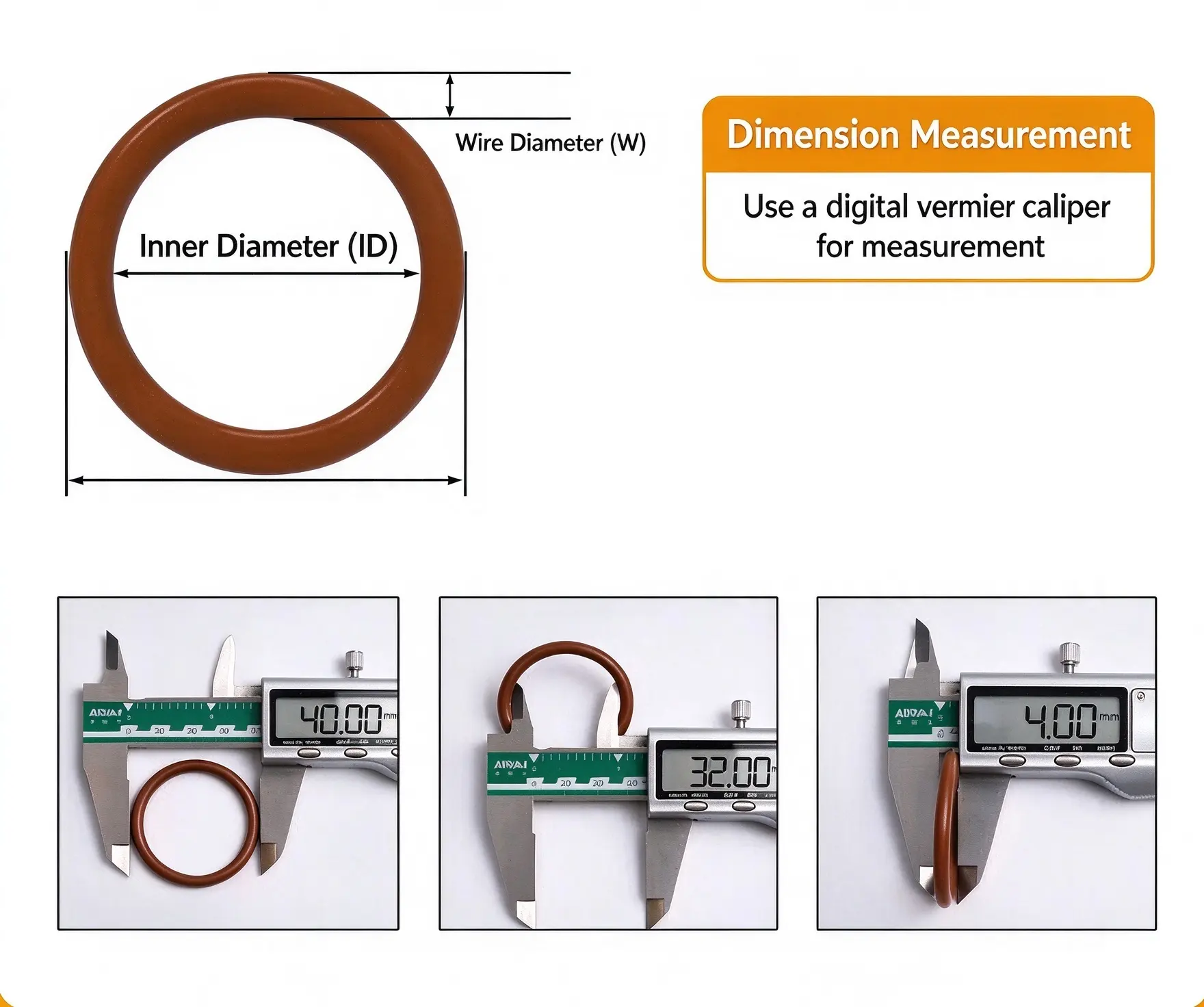
Measuring an O-ring correctly is essential for selecting the right replacement and ensuring reliable sealing performance. An O-ring is typically measured by its Inside Diameter (ID) and Cross-Section (CS).
1. Measure Inside Diameter (ID)
Measure the internal distance across the center of the O-ring, from one inner edge to the opposite inner edge. Use a caliper for accurate measurement.
2. Measure Cross-Section (CS)
Measure the thickness of the rubber cord by measuring across its circular cross-section. A digital caliper or O-ring measuring gauge can be used.
3. Check O-Ring Condition
If measuring a used O-ring, check for stretching, deformation, wear, or compression damage. For more accurate replacement sizing, use an undamaged sample whenever possible.
4. Confirm the O-Ring Dimensions
O-ring sizes are generally specified as:
- ID (Inside Diameter): Internal diameter of the O-ring.
- CS (Cross-Section): Thickness of the rubber cord.
- OD (Outside Diameter): Outside diameter, calculated as ID + 2 × CS.
O-Ring Size Formula
Example:
- ID: 20 mm
- CS: 2.5 mm
- OD: 25 mm
Helpful Tip: Always measure O-rings in an unstretched and uncompressed condition. For replacement applications, also check the gland dimensions and applicable industry standards to ensure proper fit and sealing performance.
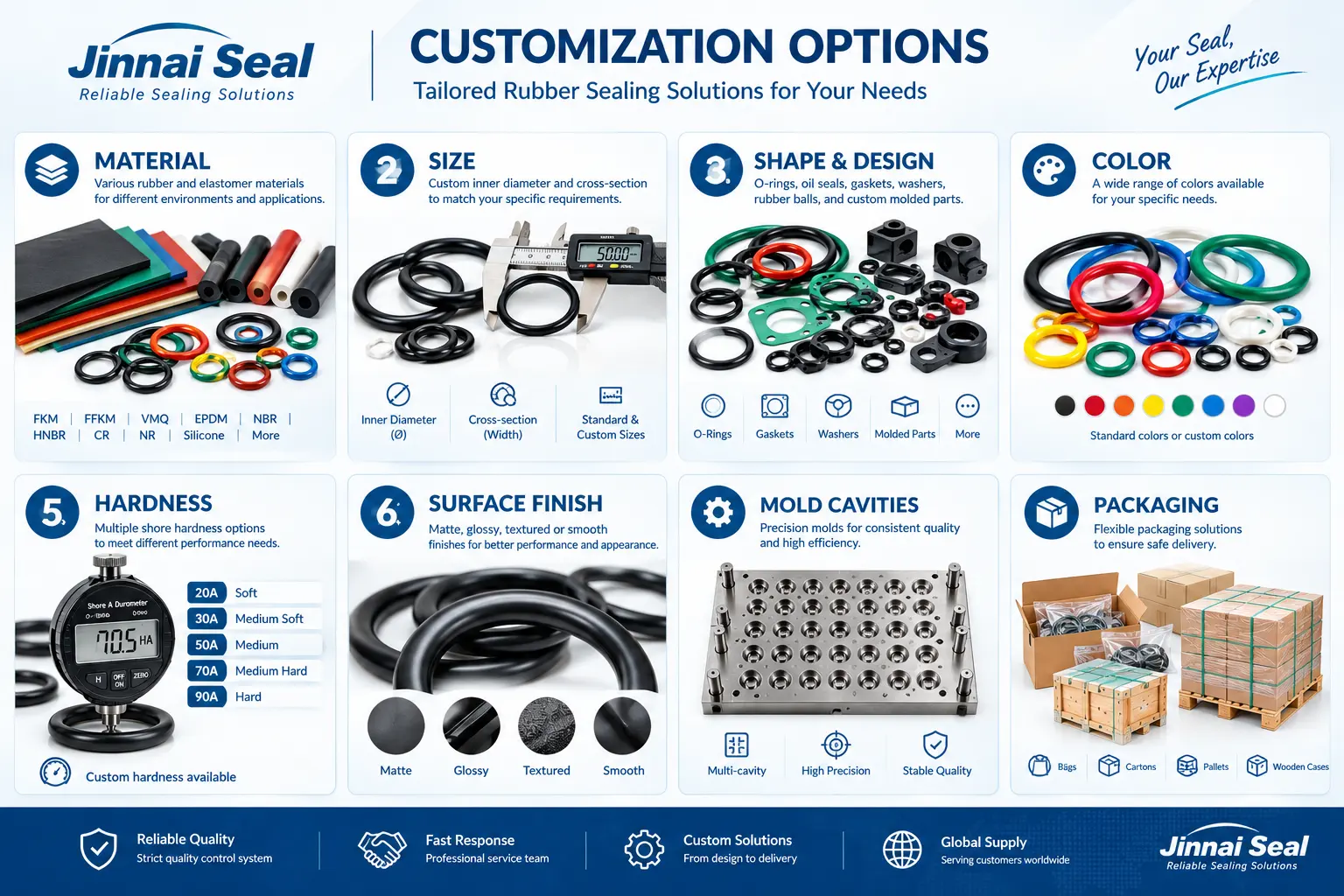
Anpassungsoptionen
- Material: NBR, HNBR, FKM, EPDM, Silicone
- Hardness: Custom Shore A hardness
- Size: Standard and non-standard dimensions
- Color: Black and customized colors
- Design: Custom cross-sections and dimensions
- Production: Prototype samples, small batches, and mass production
Product Applications
Engine Systems – Sealing engine covers, oil passages, coolant connections, and other engine components.
Fuel Systems – Used in fuel injectors, fuel pumps, and fuel line connections.
Transmission Systems – Preventing fluid leakage in transmission housings and hydraulic connections.
Cooling Systems – Sealing coolant pipes, thermostats, and cooling system connections.
Automotive HVAC Systems – Providing sealing for air conditioning compressors, refrigerant pipes, and connectors.
Brake System O-Rings – Provide reliable sealing in hydraulic brake components to prevent brake fluid leakage and maintain system pressure.
Why Choose JINNAI?
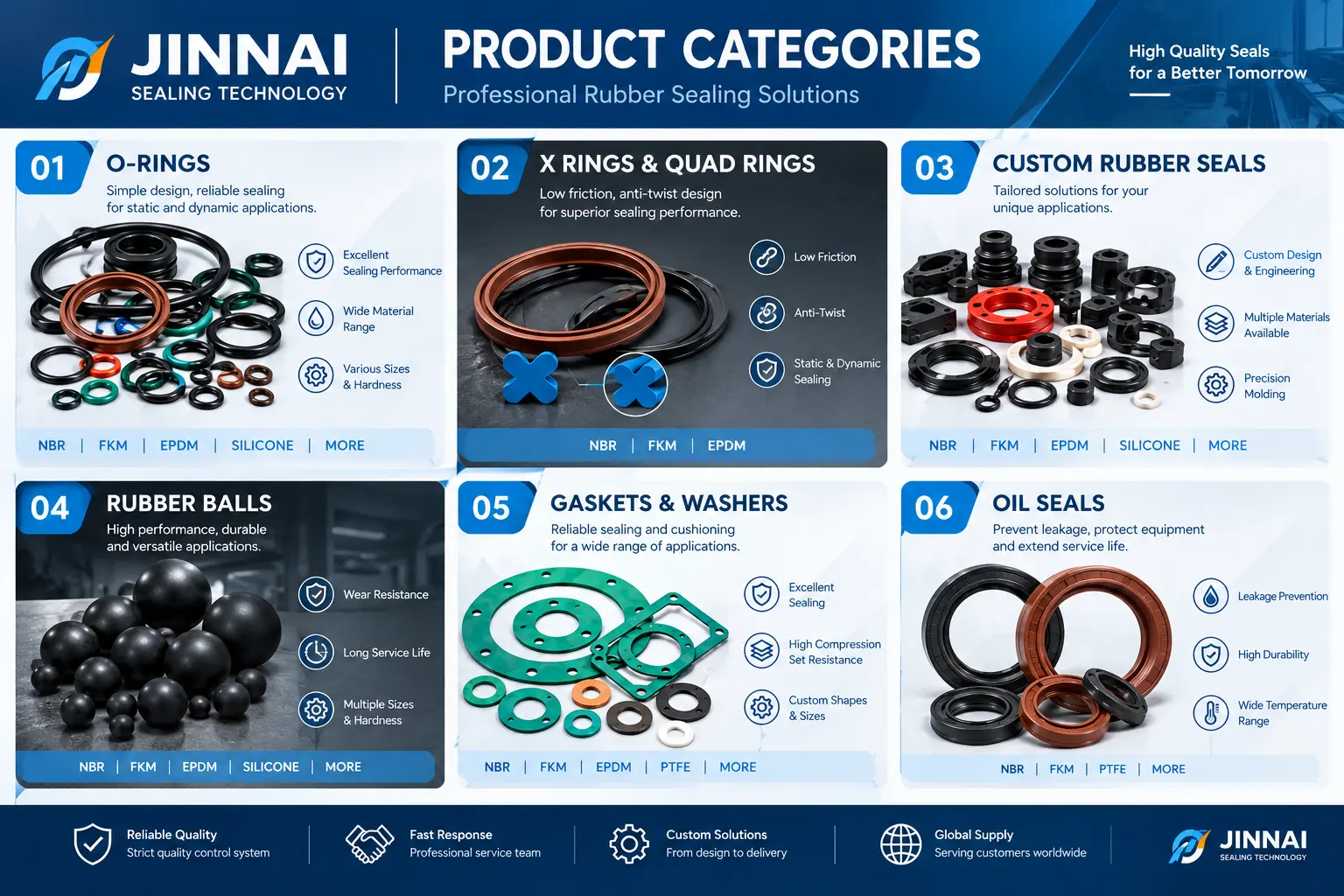
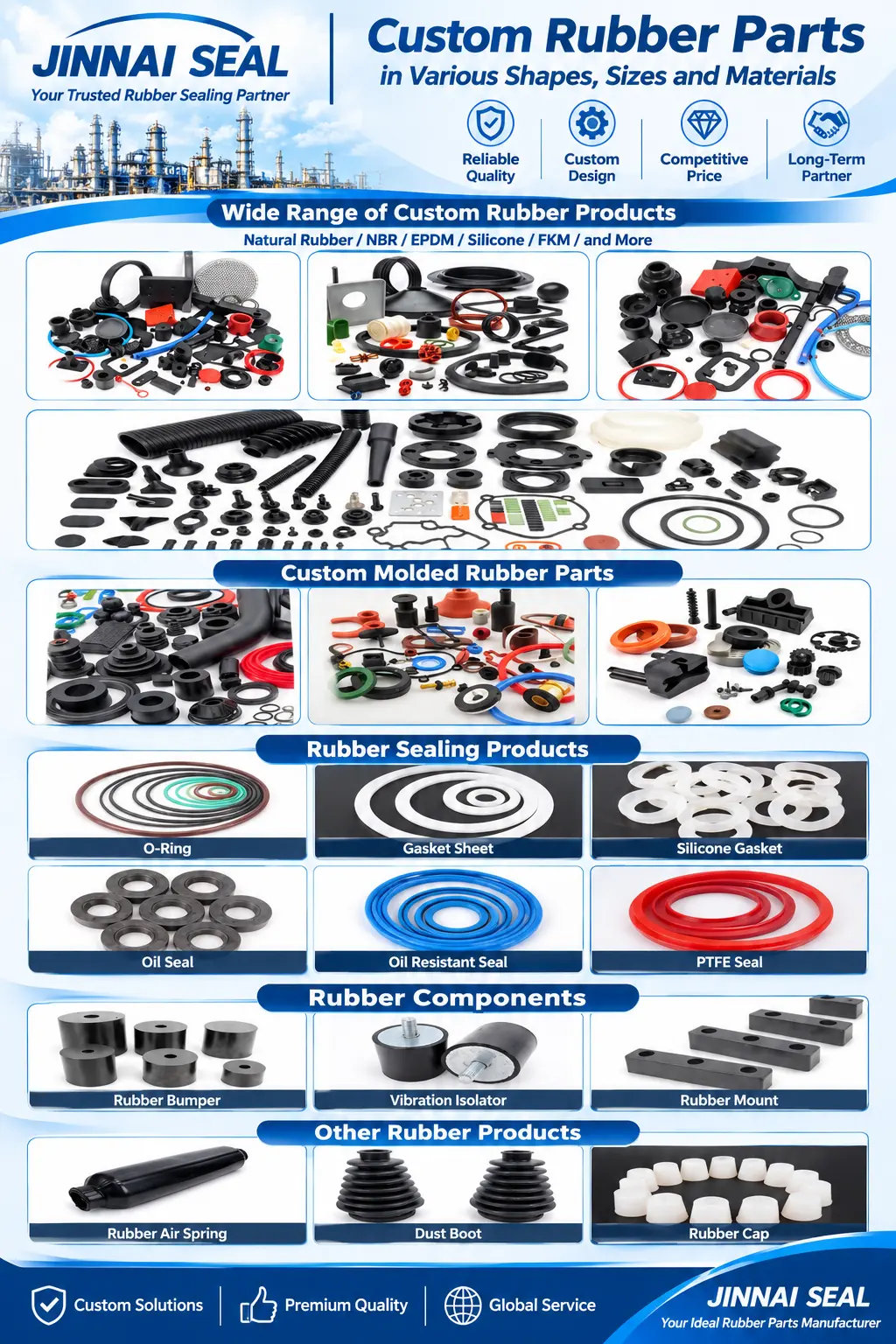
JINNAI SEAL Products Type
 Häufig gestellte Fragen
-
What rubber material is best for automotive O-rings?
NBR is commonly used for oil and fuel applications, while HNBR and FKM are suitable for applications requiring higher temperature or chemical resistance. EPDM is often used in coolant and water systems.
-
Can you manufacture custom automotive O-rings based on drawings?
Yes. We manufacture custom automotive O-rings according to customer drawings, samples, dimensions, and material requirements.
-
What is the difference between NBR and FKM automotive O-rings?
NBR offers good resistance to petroleum-based oils and fuels at suitable temperatures. FKM generally provides better high-temperature and chemical resistance, depending on the compound.
-
What is the difference between an O-ring and an oil seal?
An O-ring is a simple circular sealing ring for static or light dynamic sealing, while an oil seal is a molded seal with a lip and metal case for rotating shafts. O-rings are common in fuel, cooling and hydraulic connections; oil seals are used in engine, transmission and wheel hub applications. Both are available in NBR, FKM and other automotive-grade rubber materials.
-
Which automotive rubber seals are oil-resistant and heat-resistant?
NBR provides good oil resistance for standard temperatures, while FKM (Viton) is preferred for higher temperatures and aggressive fuels. ACM is also used in high-temperature air/oil seals, and HNBR offers improved heat and wear resistance over standard NBR. For combined oil and high-temperature exposure, FKM or HNBR are common specifications.
-
Verwandte Produkte
Wir haben ein vielfältiges Portfolio an Produktlösungen entwickelt, um unterschiedlichen Märkten und Bedürfnissen gerecht zu werden.-
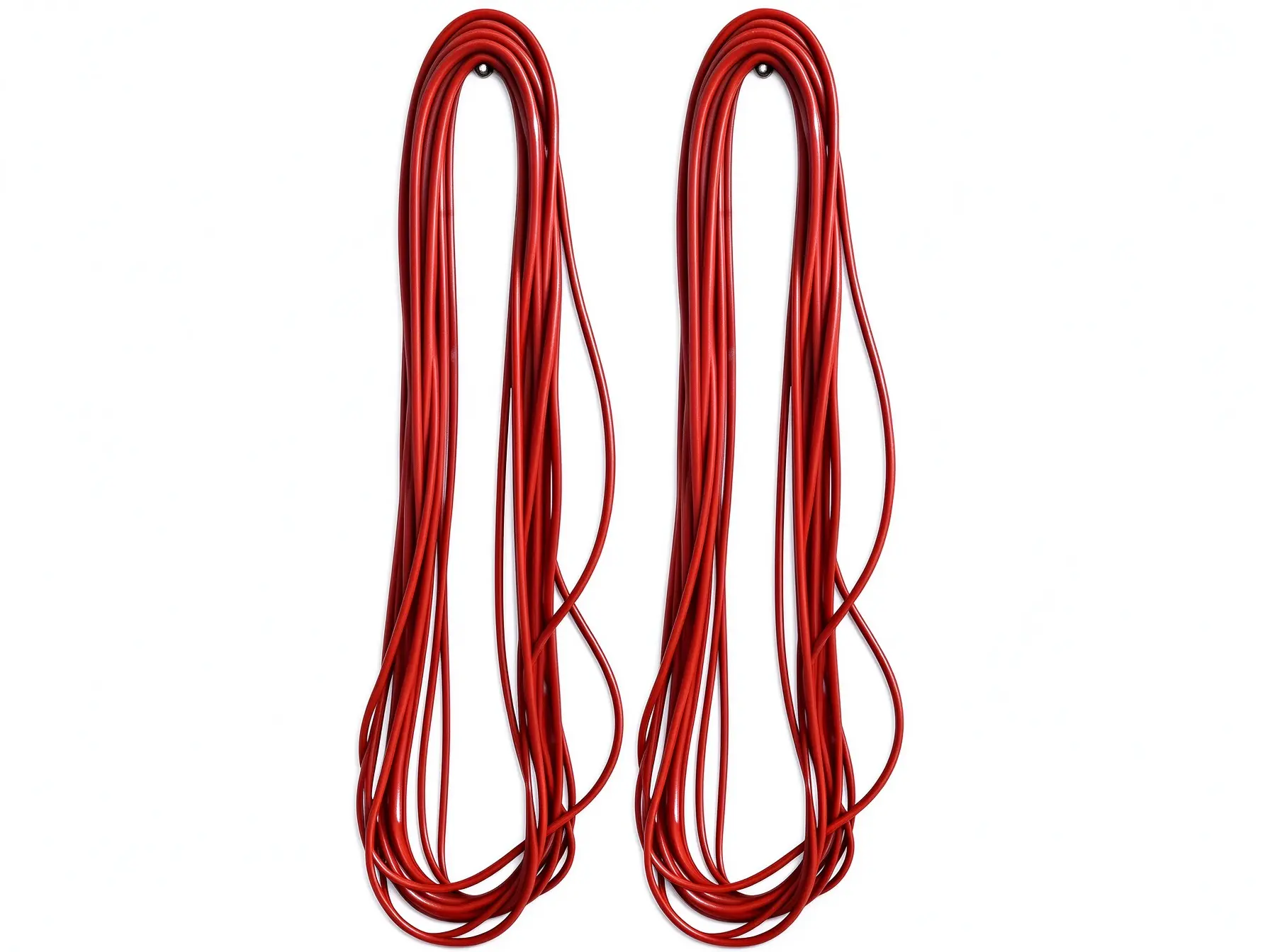
Hersteller von O-Ring-Dichtungen mit großem Durchmesser, kundenspezifische Sondergrößen
Mehr erfahren

-
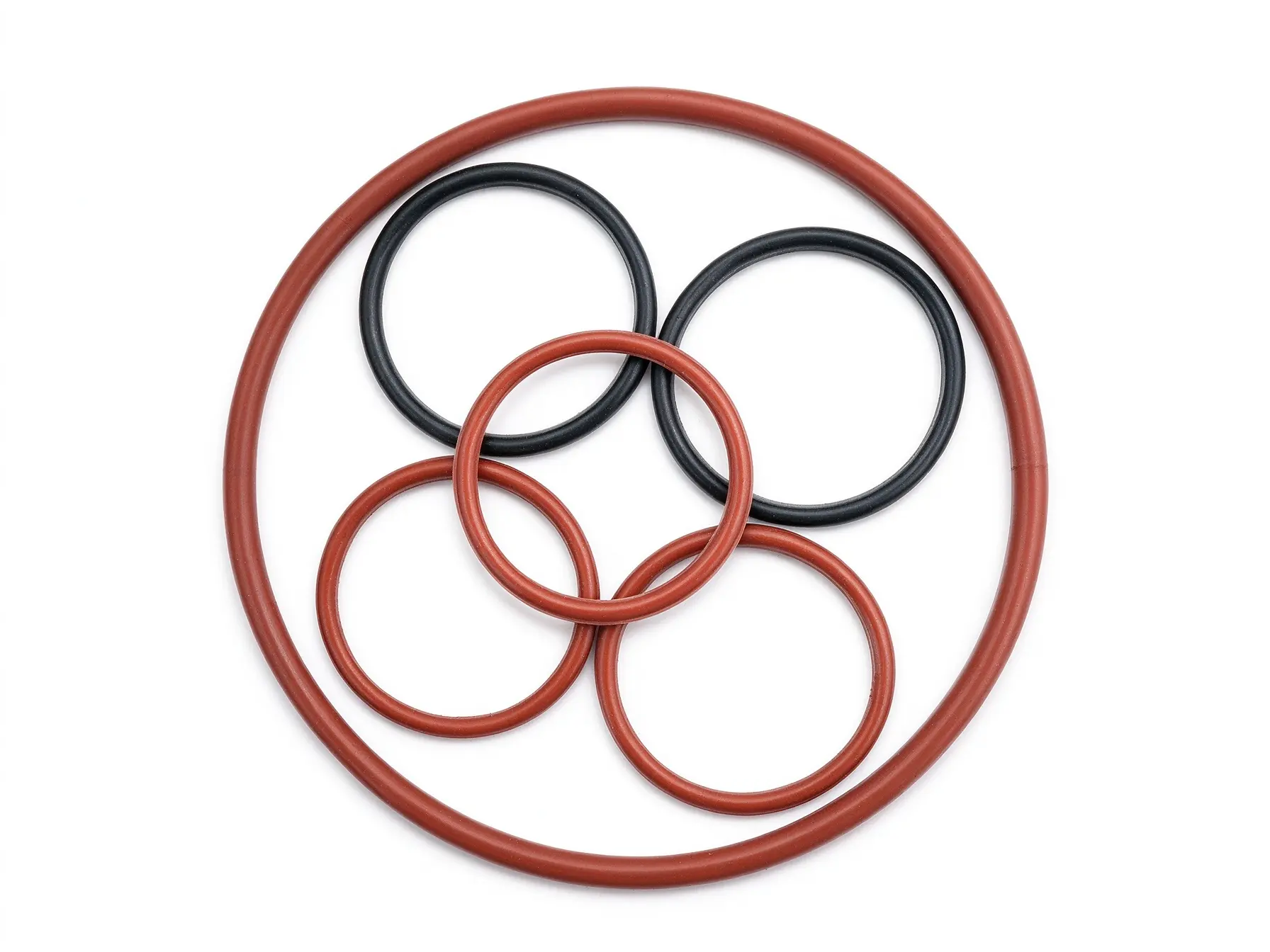
PFA-ummantelte O-Ringe für kundenspezifische chemikalienbeständige Abdichtung
Mehr erfahren
-
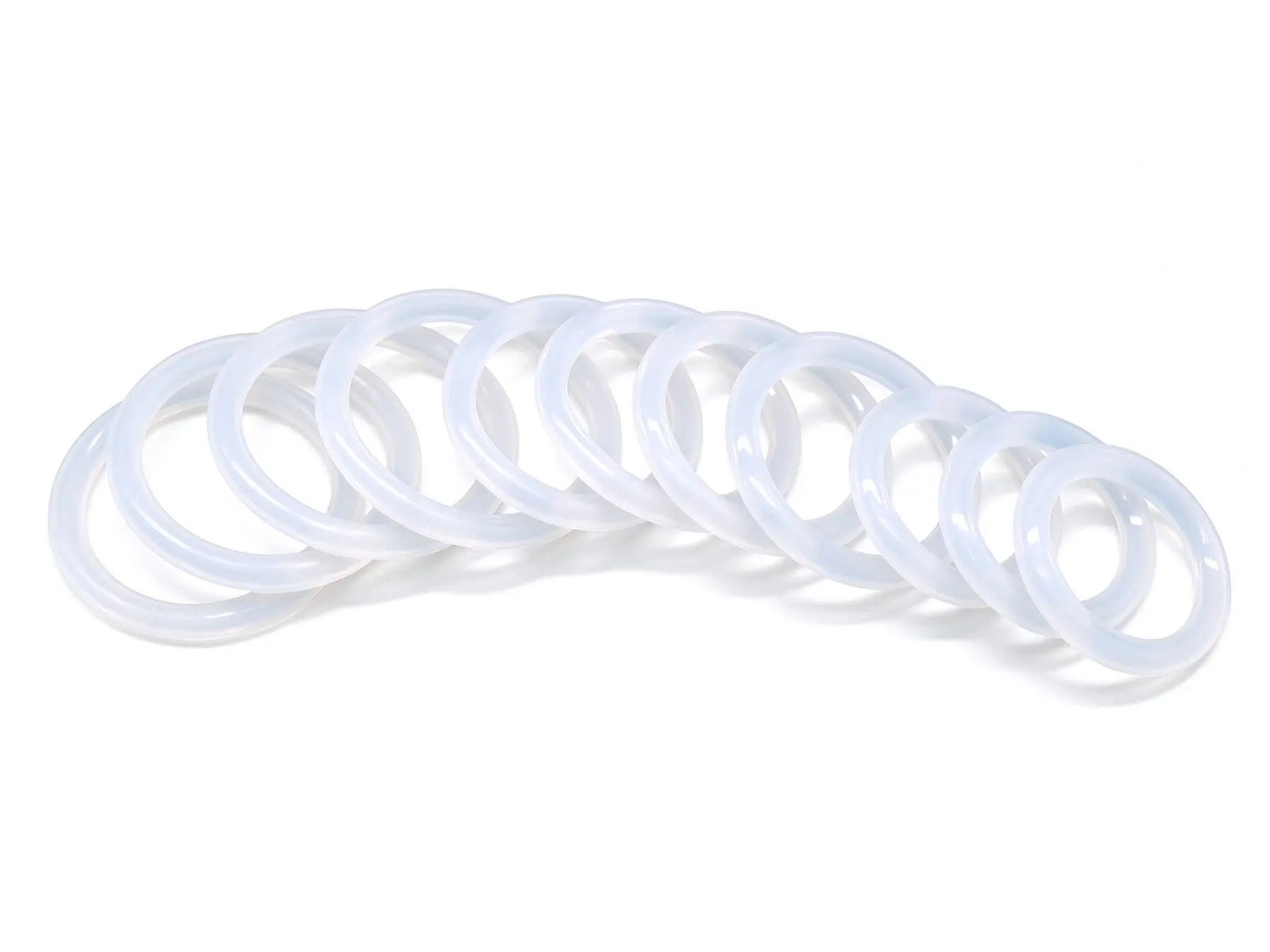
Transparente, hochelastische Silikon-O-Ringe für Wasserleitungen, 5 mm Durchmesser, 150 mm Länge
Mehr erfahren
-
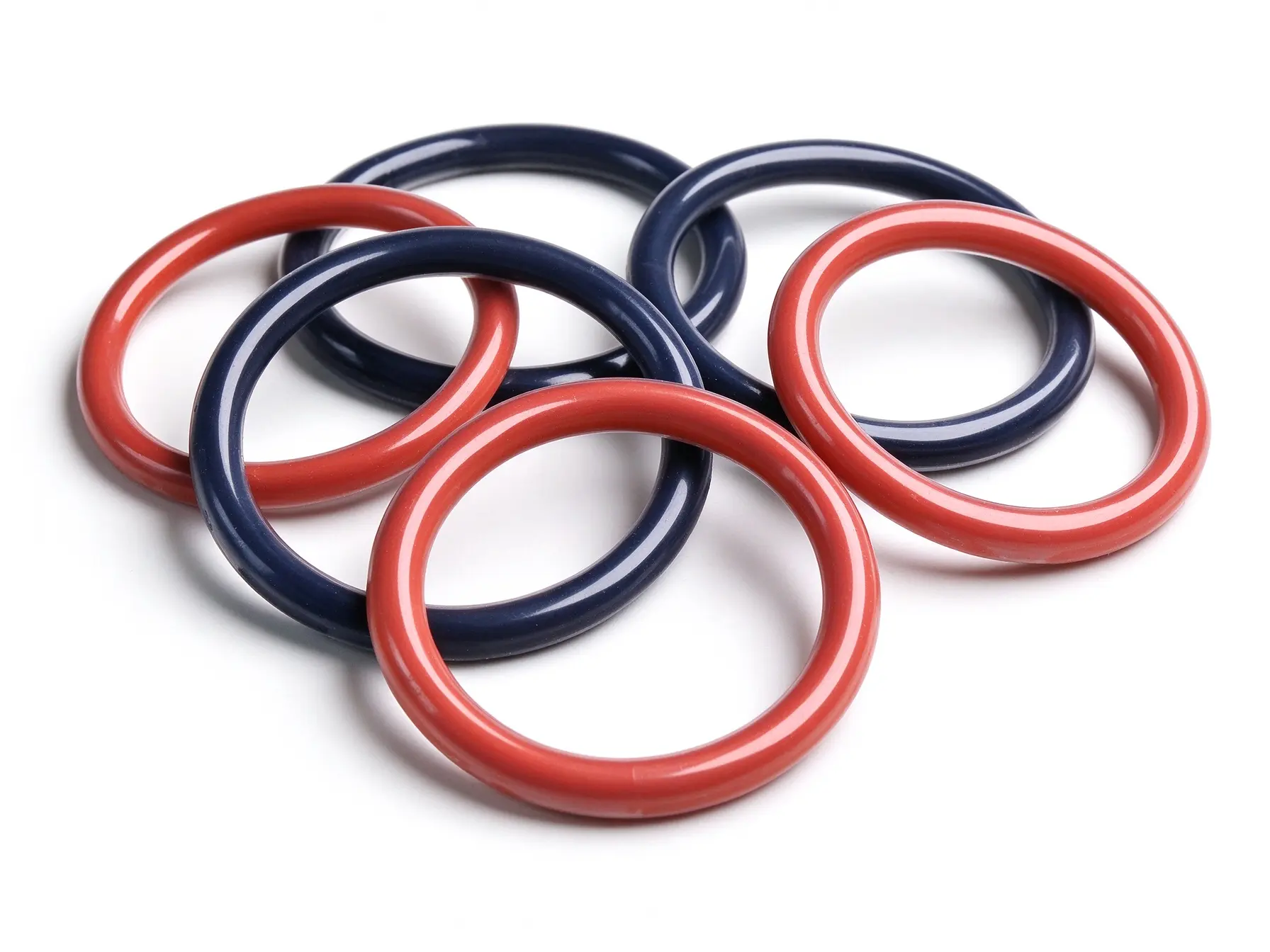
FEP-ummantelte O-Ringe zur Abdichtung von Halbleiteranlagen
Mehr erfahren
-
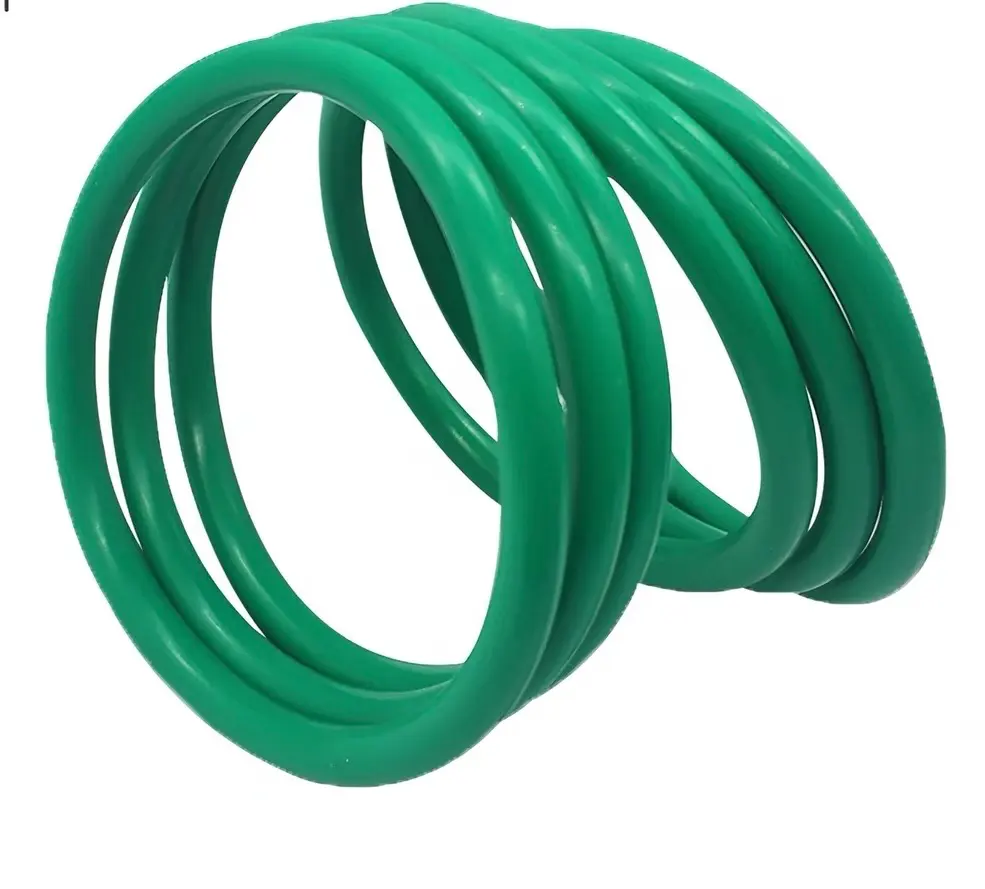
O-Ringe für Bohrlochwerkzeuge, Hochdruckdichtungen aus FKM und NBR
Mehr erfahren
-
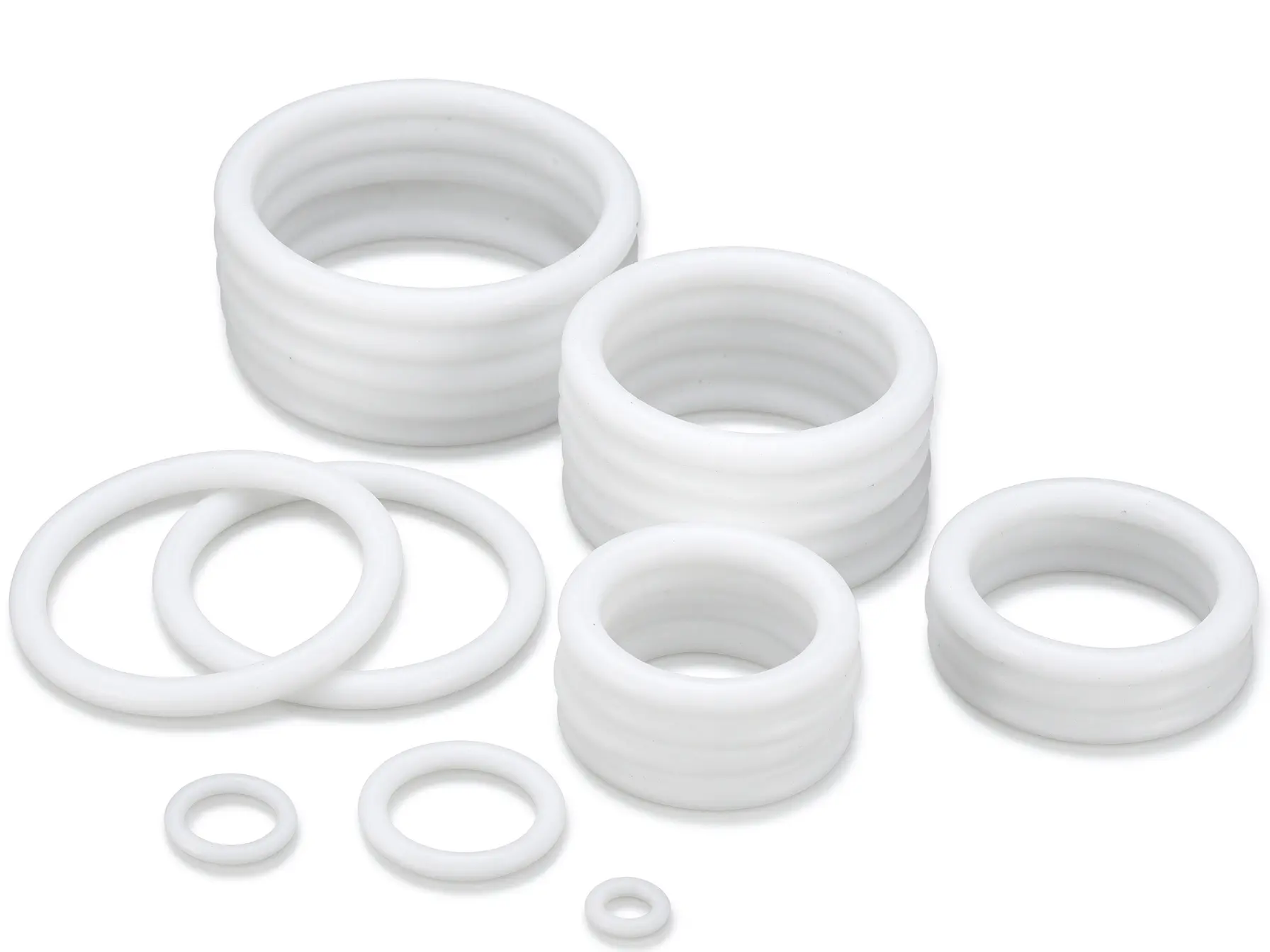
PTFE-O-Ringe für Kfz-Verrohrung und hitzebeständige Abdichtung
Mehr erfahren
-
Öl- und ozonbeständige HNBR-O-Ringe für die Automobilindustrie
Mehr erfahren
-
PTFE-O-Ringe in Lebensmittelqualität für Dichtungen an Abfüll- und Verpackungsanlagen für Molkereiprodukte
Mehr erfahren
Willkommen