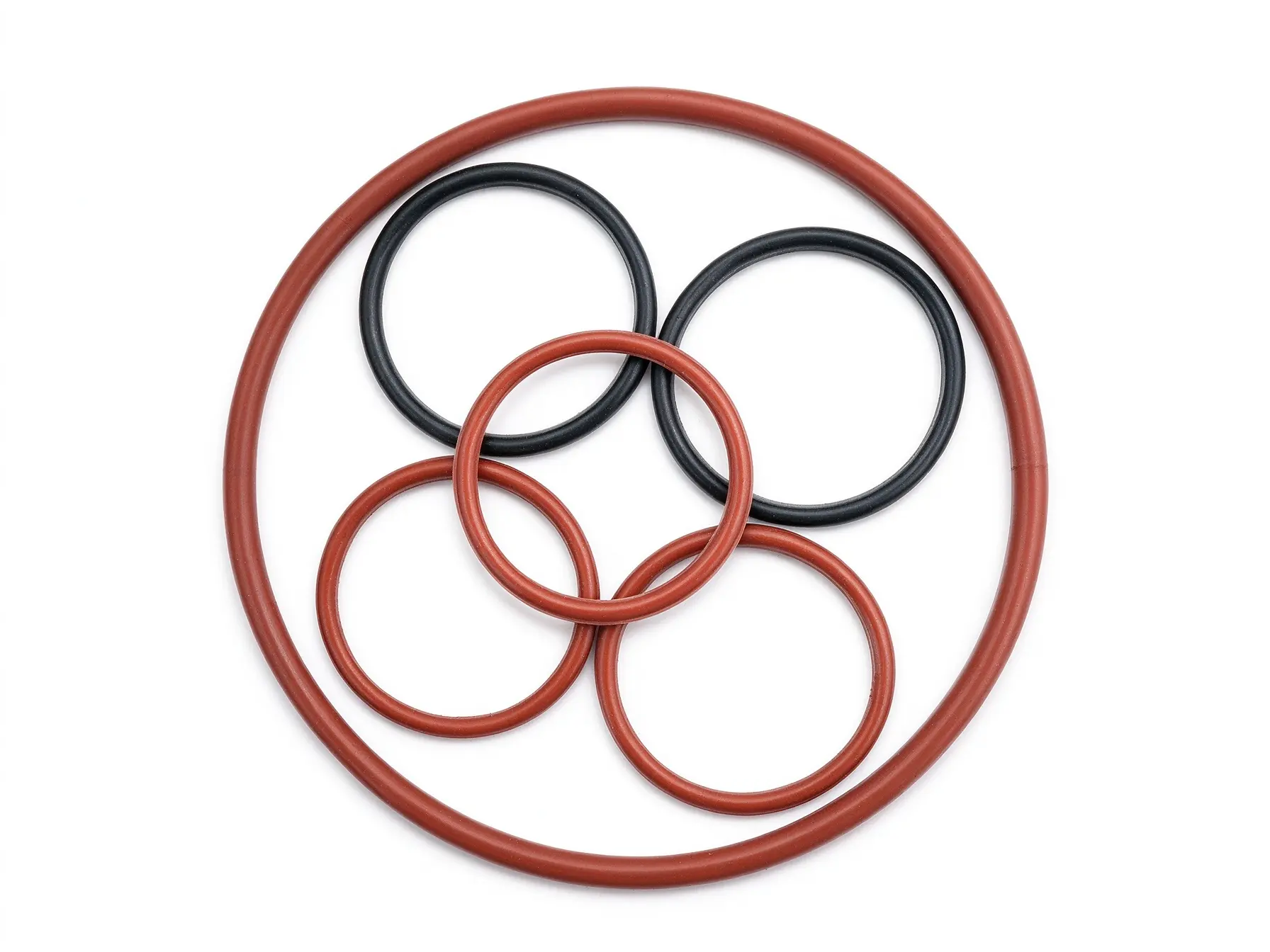
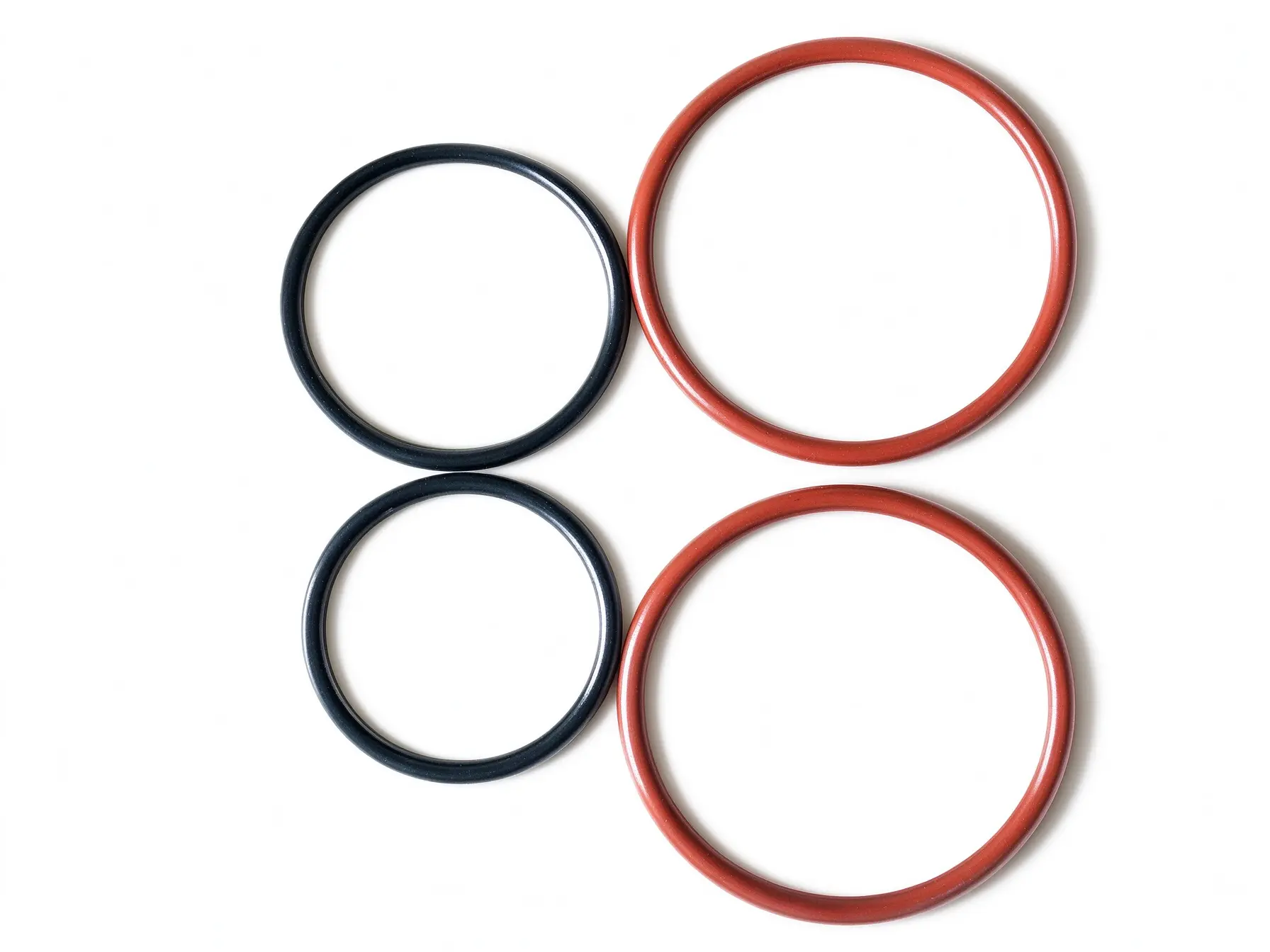
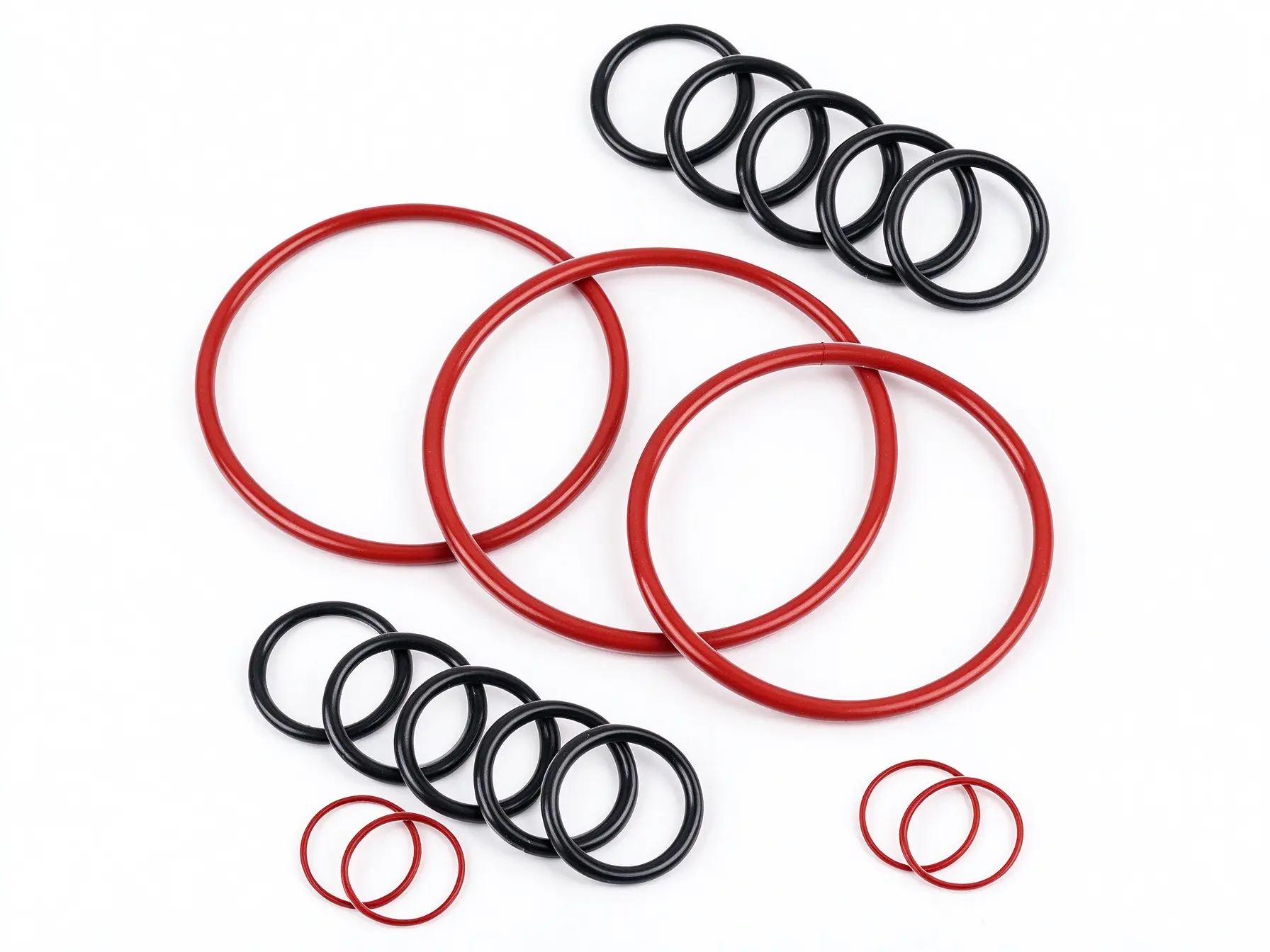
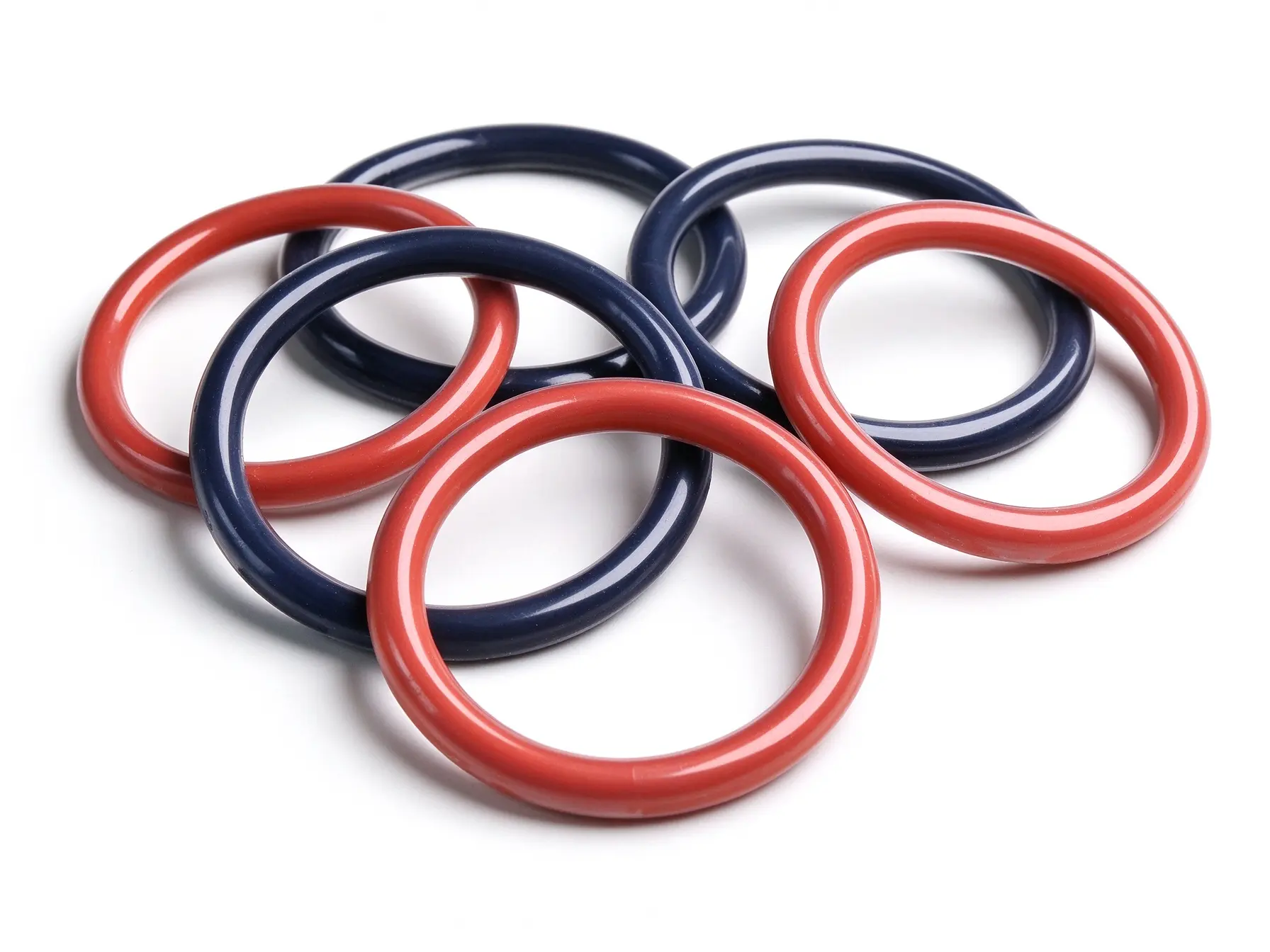
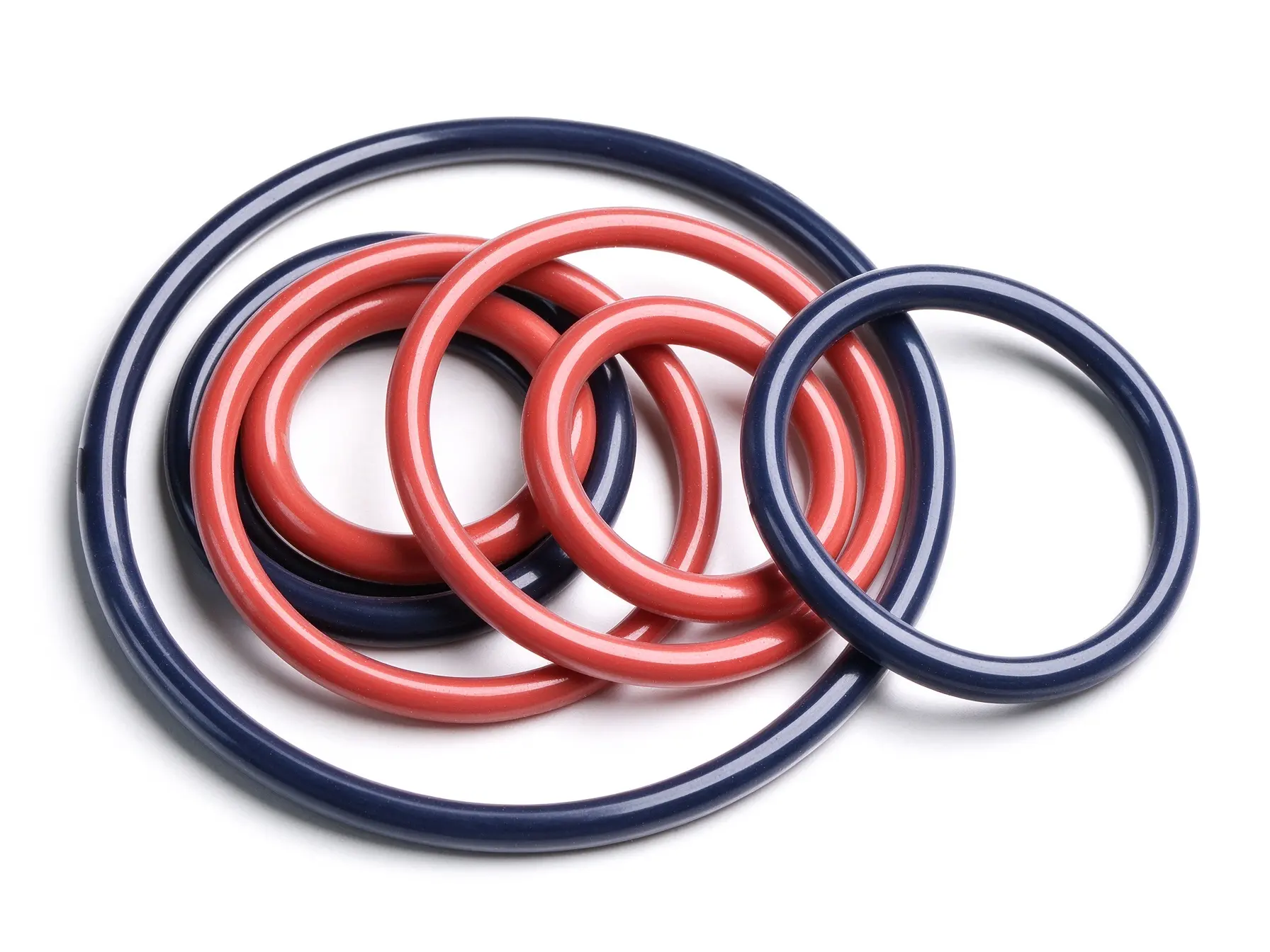
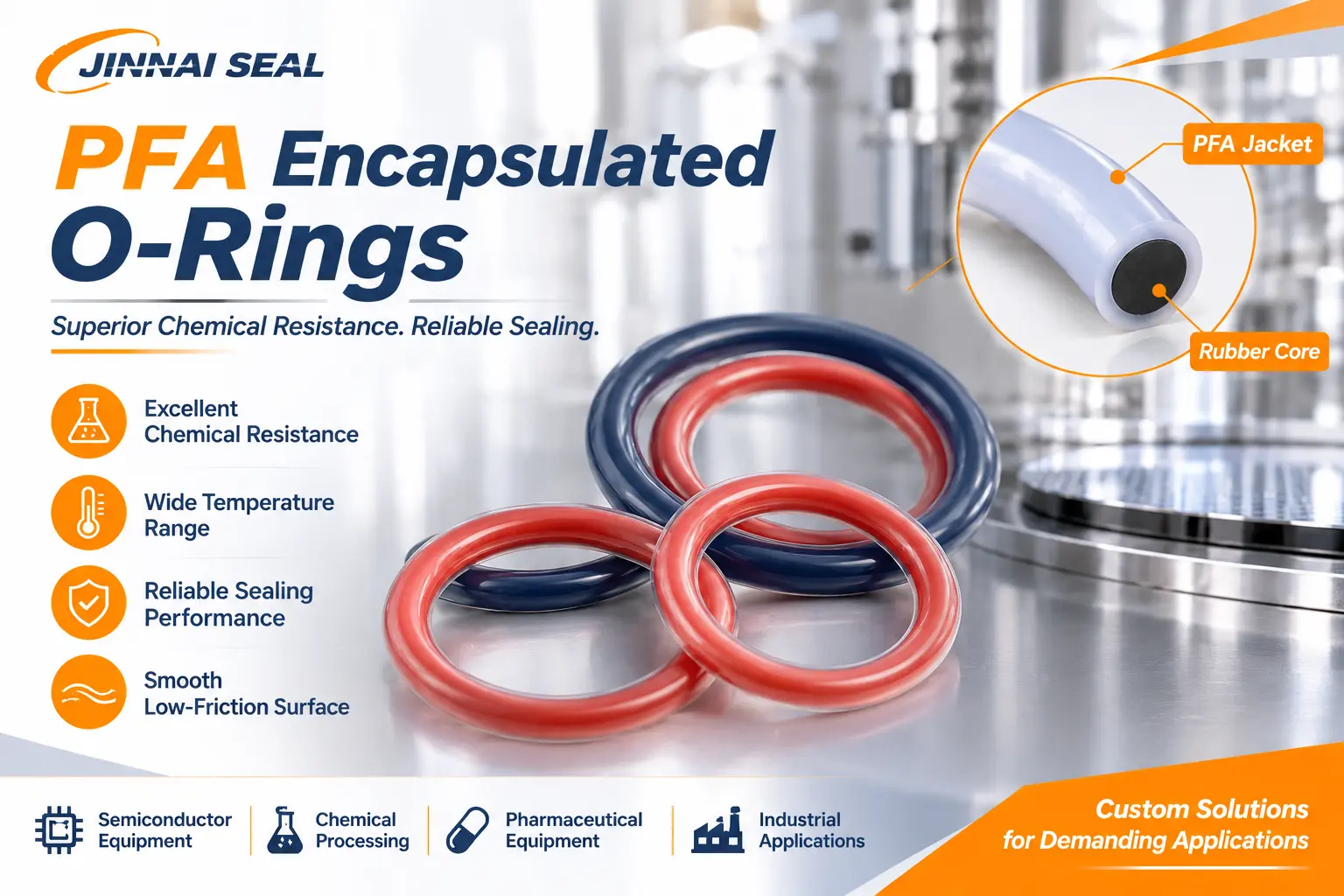
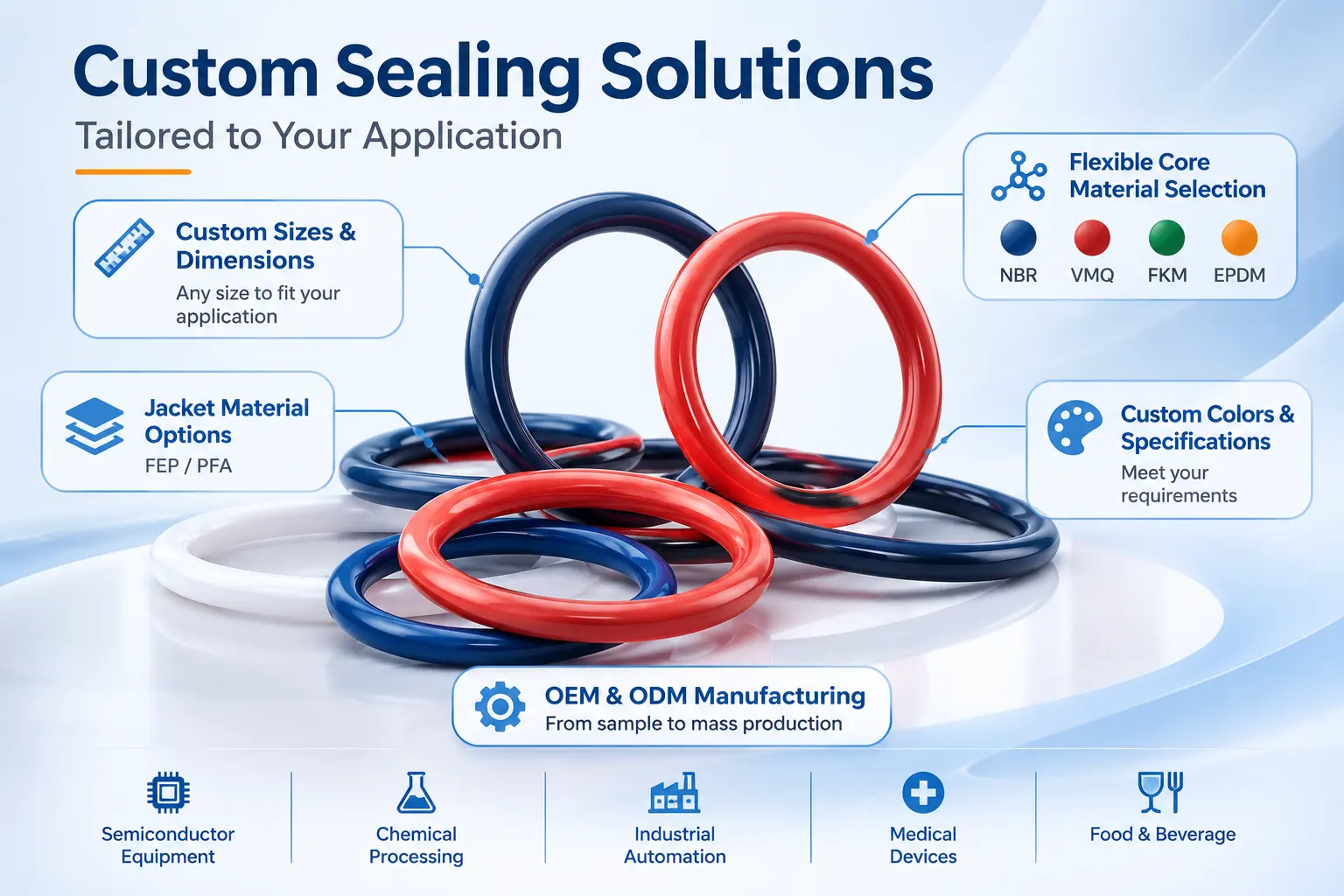
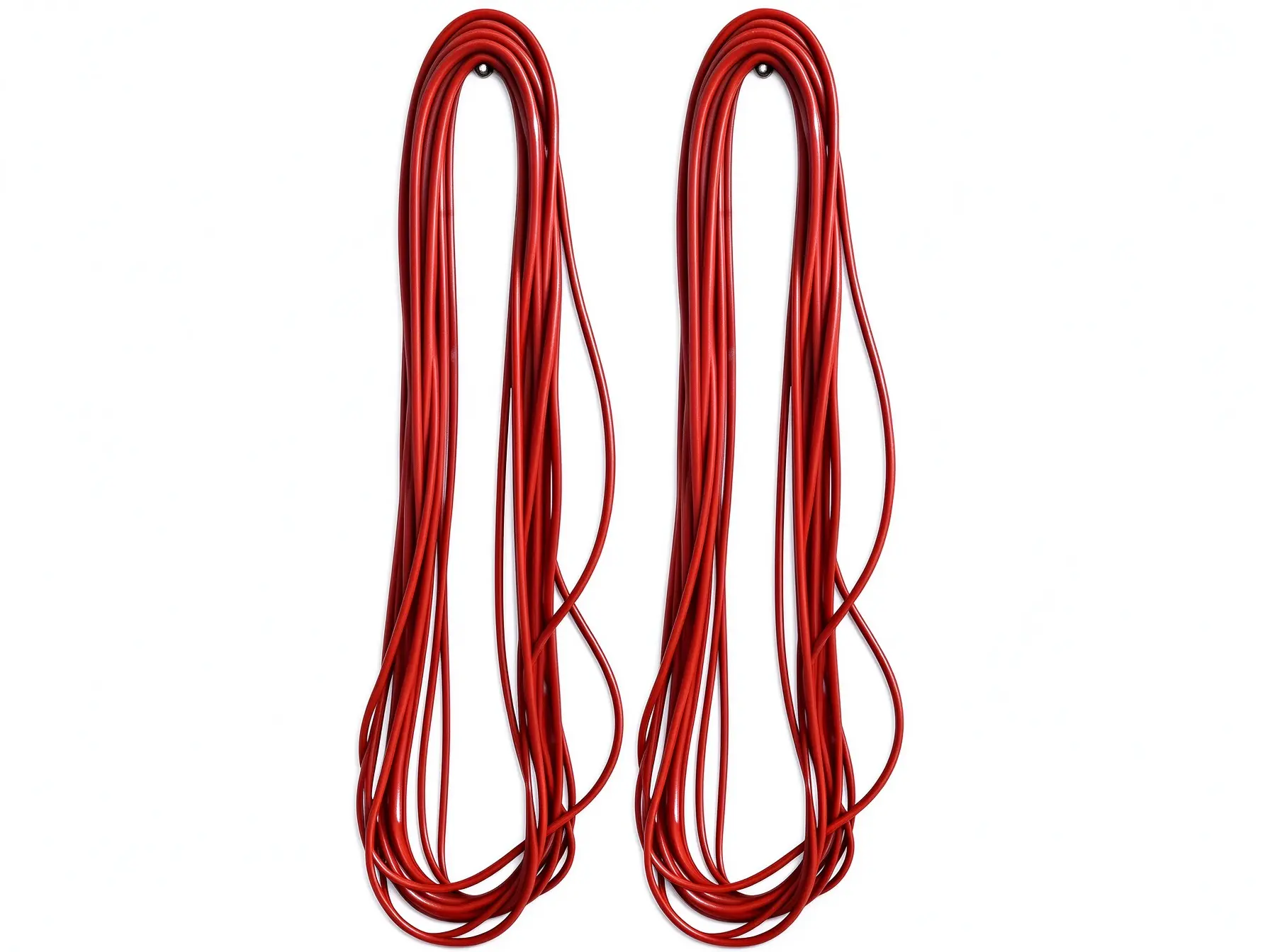
PFA encapsulated O-rings are high-performance sealing components consisting of an elastic rubber core completely enclosed in a seamless PFA (Perfluoroalkoxy) jacket. This unique structure combines the flexibility and recovery properties of an elastomer core with the excellent chemical resistance and low-friction surface of PFA.
The PFA outer jacket acts as a protective barrier against aggressive chemicals, corrosive fluids, and demanding operating environments, while the inner rubber core provides the elasticity needed to maintain sealing contact.
Compared with conventional rubber O-rings, PFA encapsulated O-rings offer enhanced chemical protection for applications where standard elastomer seals may deteriorate, swell, or lose their sealing performance.
They are commonly considered for semiconductor manufacturing equipment, chemical processing systems, pharmaceutical equipment, and precision fluid handling applications.
Structure and Material Options
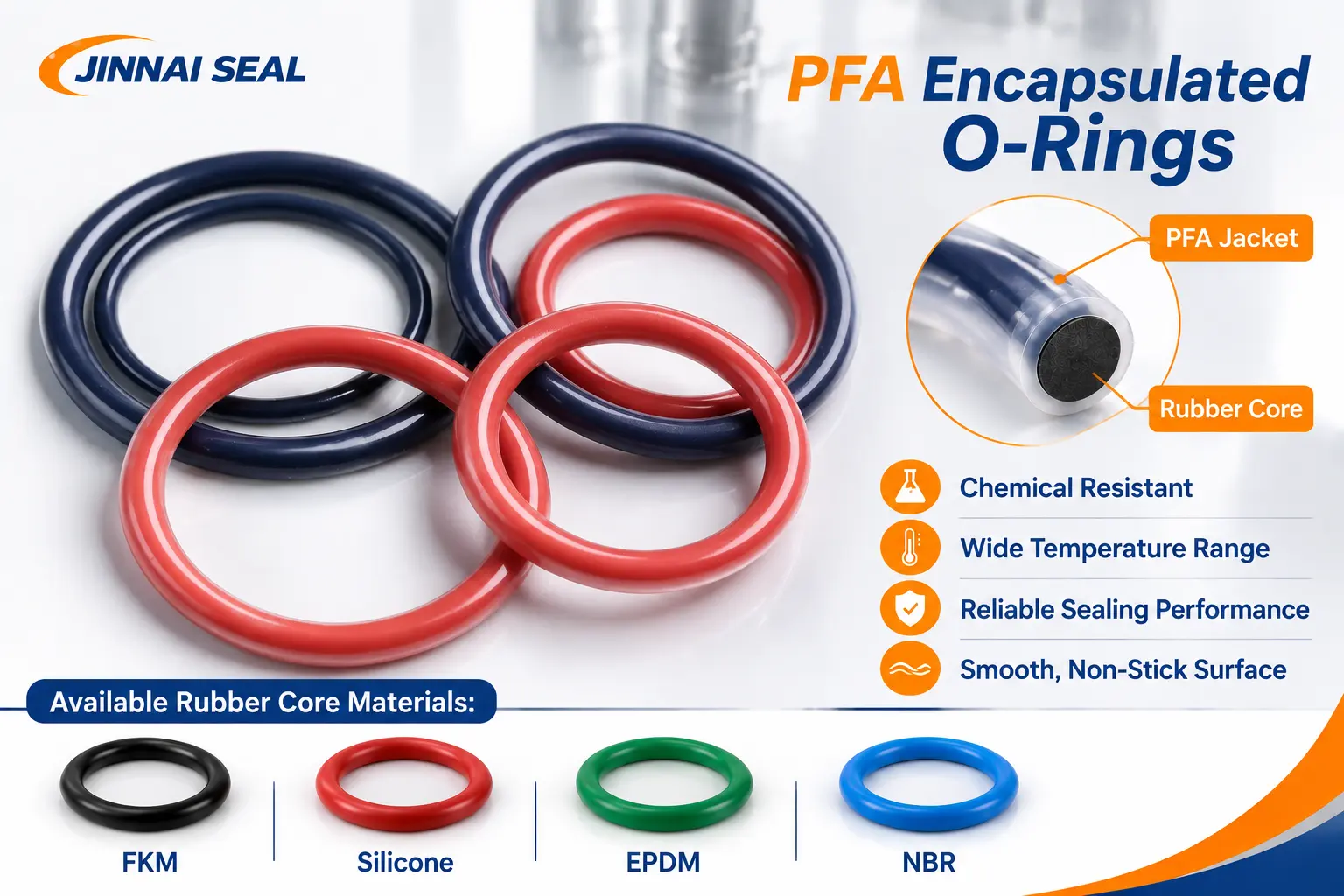
A PFA encapsulated O-ring consists of two main components: the PFA outer jacket and the inner elastomer core. Selecting the appropriate combination is essential for achieving reliable sealing performance under specific operating conditions.
PFA Outer Jacket
PFA provides excellent resistance to a wide range of aggressive chemicals, including many acids, solvents, and corrosive process media. It also offers a smooth, non-stick surface and good thermal stability. Its chemical compatibility should always be verified against the actual media and operating conditions.
Available Rubber Core Materials
FKM Core: Suitable for applications requiring oil resistance, heat resistance, and chemical compatibility.
Silicone (VMQ) Core: Offers excellent flexibility and elasticity, making it suitable for applications requiring a softer sealing core.
EPDM Core: Provides good resistance to water, steam, ozone, and weathering. It is generally not suitable for petroleum-based oils and fuels.
NBR Core: Offers good resistance to petroleum-based oils and fuels and is commonly used in general industrial sealing applications.
The core material should be selected according to temperature, compression requirements, media exposure, and the specific sealing design. Not every core material is available in every encapsulated O-ring configuration.
Key Features and Performance of PFA O Rings
PFA encapsulated O-rings are designed to address demanding sealing requirements in chemical-intensive and industrial environments.
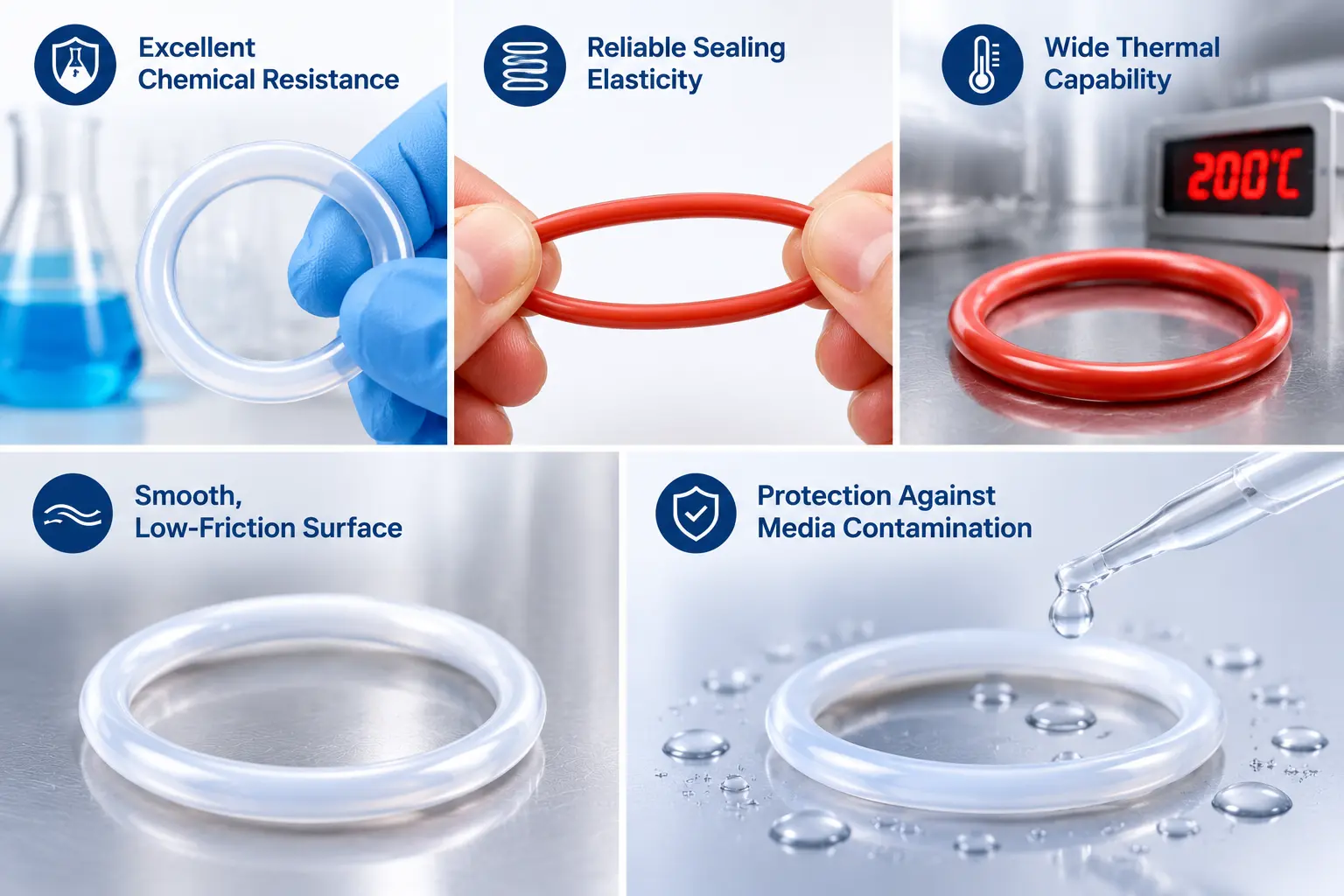
Excellent Chemical Resistance
The PFA jacket helps protect the inner elastomer core from direct exposure to many aggressive chemicals, reducing the risk of chemical degradation and leakage.
Reliable Sealing Elasticity
The rubber core provides elastic recovery and helps maintain contact pressure between sealing surfaces, supporting reliable sealing performance.
Wide Thermal Capability
PFA offers good thermal stability for demanding applications. However, the actual operating temperature range depends on the PFA jacket, core material, construction, and application conditions.
Smooth, Low-Friction Surface
The smooth PFA surface helps reduce sticking and friction during installation and contact with mating surfaces.
Protection Against Media Contamination
The continuous PFA jacket acts as a barrier between the process media and the elastomer core. This can be beneficial in applications where material compatibility and process cleanliness are important.
Types of Encapsulated and Related Rubber Seals
Core Material
Main Characteristics
Typical Selection
FKM
Oil resistance, heat resistance and chemical compatibility
Oil-exposed and higher-temperature applications
Silicone (VMQ)
Flexibility and elastic recovery
Applications requiring a softer sealing core
EPDM
Water, steam, ozone and weather resistance
Water and steam applications; not suitable for petroleum-based oils
NBR
Mineral oil and fuel resistance
General oil-handling applications
FEP Encapsulated O-Rings and PFA Encapsulated O-Rings Comparison
Comparison
FEP Encapsulated O-Rings
PFA Encapsulated O-Rings
Jacket Material
Fluorinated Ethylene Propylene
Perfluoroalkoxy
Appearance
Transparent to translucent
Transparent to translucent
Chemical Resistance
Excellent
Excellent
Temperature Capability
Typically up to around 200–205°C for resin grades
Typically up to around 260°C for resin grades
Thermal Stability
Good
Higher thermal capability
Surface Properties
Smooth, non-stick
Smooth, non-stick
Rubber Core Options
FKM, Silicone and other compatible elastomers
FKM, Silicone and other compatible elastomers
Typical Applications
Chemical handling, valves, pumps and industrial fluid systems
Higher-temperature chemical processing, semiconductor and industrial equipment
How to Choose Between FEP and PFA?
Choose FEP Encapsulated O-Rings for:
General chemical-resistant sealing applications.
Chemical transfer and fluid handling equipment.
Compatible industrial valves and pumps.
Applications where FEP's temperature capability is sufficient.
Choose PFA Encapsulated O-Rings for:
Applications requiring higher temperature capability.
6. Common Industry Challenges and Our Sealing Solutions
Industrial sealing systems often face chemical attack, leakage, material degradation, and premature seal failure. Selecting the right encapsulated O-ring can help address these challenges.
Challenge 1: Chemical Attack and Seal Degradation
Conventional rubber O-rings may swell, harden, or deteriorate when exposed to incompatible chemicals.
Our Solution: PFA encapsulated O-rings provide a protective chemical-resistant jacket. The actual media compatibility should be checked before material selection.
Challenge 2: Leakage in Chemical Transfer Systems
Chemical leakage can cause equipment damage, production interruptions, and safety concerns.
Our Solution: We help customers select suitable PFA jacket and rubber core combinations based on media, temperature, compression, and sealing design.
Challenge 3: Frequent Seal Replacement
Premature seal failure can increase maintenance costs and equipment downtime.
Our Solution: Appropriate material selection, accurate dimensions, and suitable installation design help improve sealing reliability and service life.
Challenge 4: Limited Compatibility of Standard Rubber Seals
Standard NBR, EPDM, or FKM O-rings may not be suitable for every aggressive chemical environment.
Our Solution: PFA and FEP encapsulated O-rings offer alternative sealing structures for applications requiring enhanced chemical protection.
Challenge 5: Non-Standard Equipment Dimensions
Specialized equipment may require seals with non-standard dimensions or specific cross-sectional designs.
Our Solution: We support custom O-ring sizes and specifications based on customer drawings, samples, or technical requirements.
Custom Sealing Solutions
JINNAI SEAL provides customized FEP encapsulated O-rings and PTFE-coated sealing solutions for semiconductor manufacturing equipment, precision fluid handling systems, and chemical processing applications. We understand that different semiconductor processes require specific sealing materials, dimensions, and performance characteristics. Our custom solutions are developed to meet individual equipment requirements and demanding operating conditions.
Industrial Applications of PFA Encapsulated O-Rings
PFA encapsulated O-rings are used in equipment that requires chemical resistance and dependable sealing performance.
Semiconductor Manufacturing Equipment
Used in selected wafer processing equipment, chemical supply systems, wet benches, and fluid handling assemblies where exposure to process chemicals requires compatible sealing materials.
Chemical Processing Systems
Suitable for selected chemical pumps, valves, pipe connections, and processing equipment handling aggressive chemical media.
Pharmaceutical and Bioprocess Equipment
Considered for fluid handling connections and process equipment where chemical compatibility and contamination control are important. The material grade and finished seal must meet the specific application and regulatory requirements.
Precision Fluid Handling Systems
Used in selected fluid delivery equipment, dosing systems, and chemical transfer assemblies to help prevent leakage and protect critical components.
Industrial Valves and Pumps
Can be used in compatible valve and pump designs where chemical resistance and reliable static sealing are required.
FAQs
What is the maximum operating temperature of PFA encapsulated O-rings?
PFA resin typically offers continuous-use temperature capability of up to approximately 260°C. However, the actual operating temperature of a finished PFA encapsulated O-ring depends on the rubber core material, jacket construction, compression conditions, and application environment. Please confirm the allowable temperature with the product specifications.
Are PFA encapsulated O-rings resistant to acids and chemicals?
Yes. PFA provides excellent resistance to many aggressive chemicals, including various acids, alkalis, and solvents. However, chemical compatibility depends on the specific chemical, concentration, temperature, and exposure time. We recommend evaluating the actual operating media before selecting a sealing solution.
What rubber core materials are available for PFA encapsulated O-rings?
Common core material options include FKM, Silicone (VMQ), EPDM, and NBR, depending on product configuration and manufacturing feasibility. Each material offers different properties in terms of temperature resistance, elasticity, and media compatibility. The appropriate core should be selected according to the application requirements.
Can PFA encapsulated O-rings be used in high-pressure applications?
PFA encapsulated O-rings can be used in certain pressure sealing applications, but their pressure capability depends on the rubber core, jacket construction, cross-sectional size, groove design, and operating conditions. For high-pressure systems, proper gland design and application testing are recommended to ensure reliable sealing performance.
Are PFA encapsulated O-rings available in standard and metric sizes?
Yes. PFA encapsulated O-rings can be manufactured in various standard and metric dimensions. Custom inner diameters, outer diameters, and cross-sectional sizes are also available according to customer drawings, samples, or equipment requirements.
How should PFA encapsulated O-rings be installed?
PFA encapsulated O-rings should be installed carefully to avoid excessive stretching, twisting, or sharp-edge contact. The sealing groove should be clean and free of burrs. Appropriate installation tools and compatible lubricants may be used when permitted by the application to reduce the risk of jacket damage.
What is the difference between PFA and FEP encapsulated O-rings?
Both PFA and FEP encapsulated O-rings feature a fluoropolymer outer jacket and an elastic rubber core. Both provide excellent chemical resistance. PFA generally offers higher temperature capability, while FEP is suitable for many applications with less demanding temperature requirements. The final selection should be based on operating temperature, chemical media, and product specifications.