






-
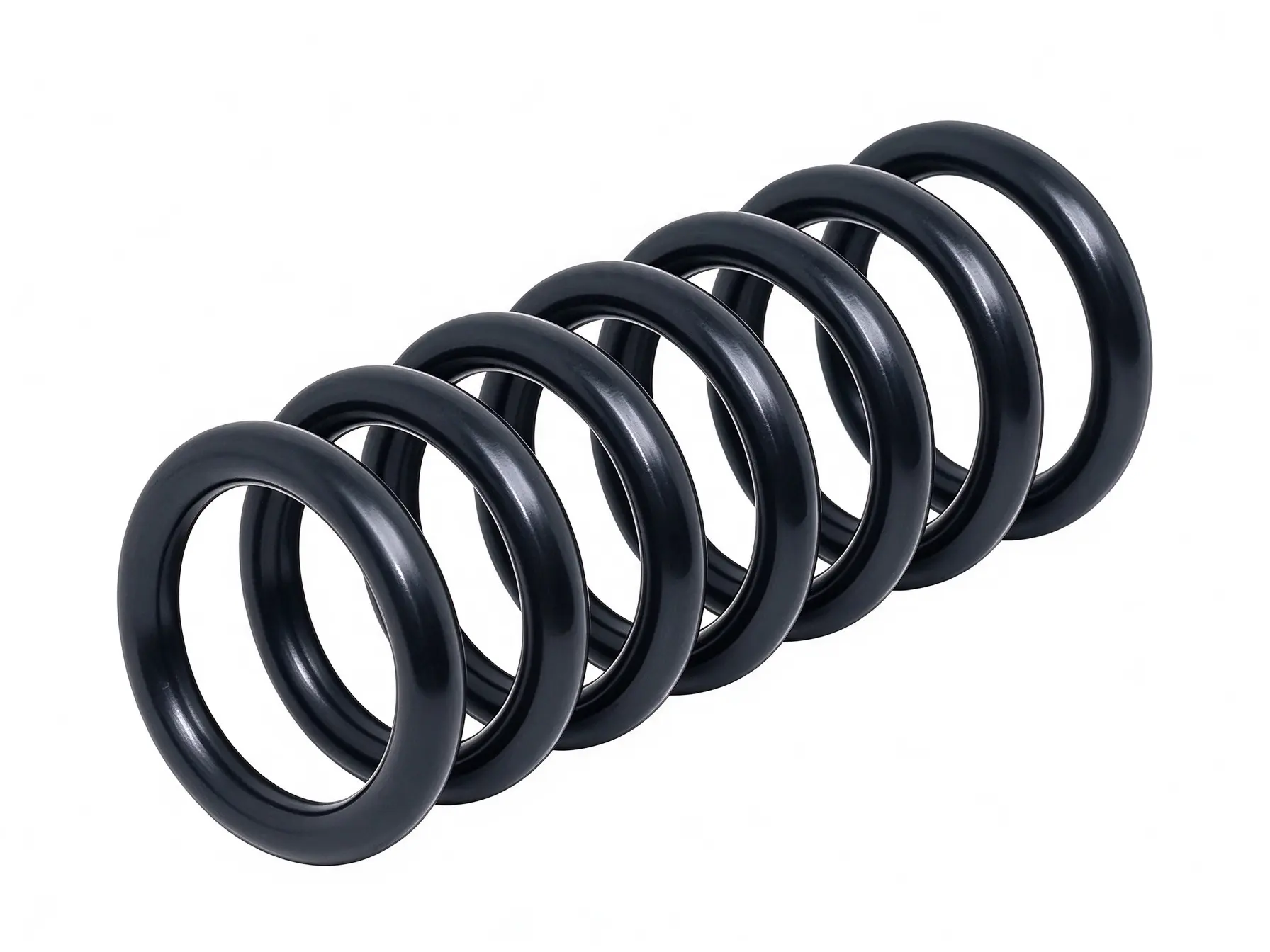
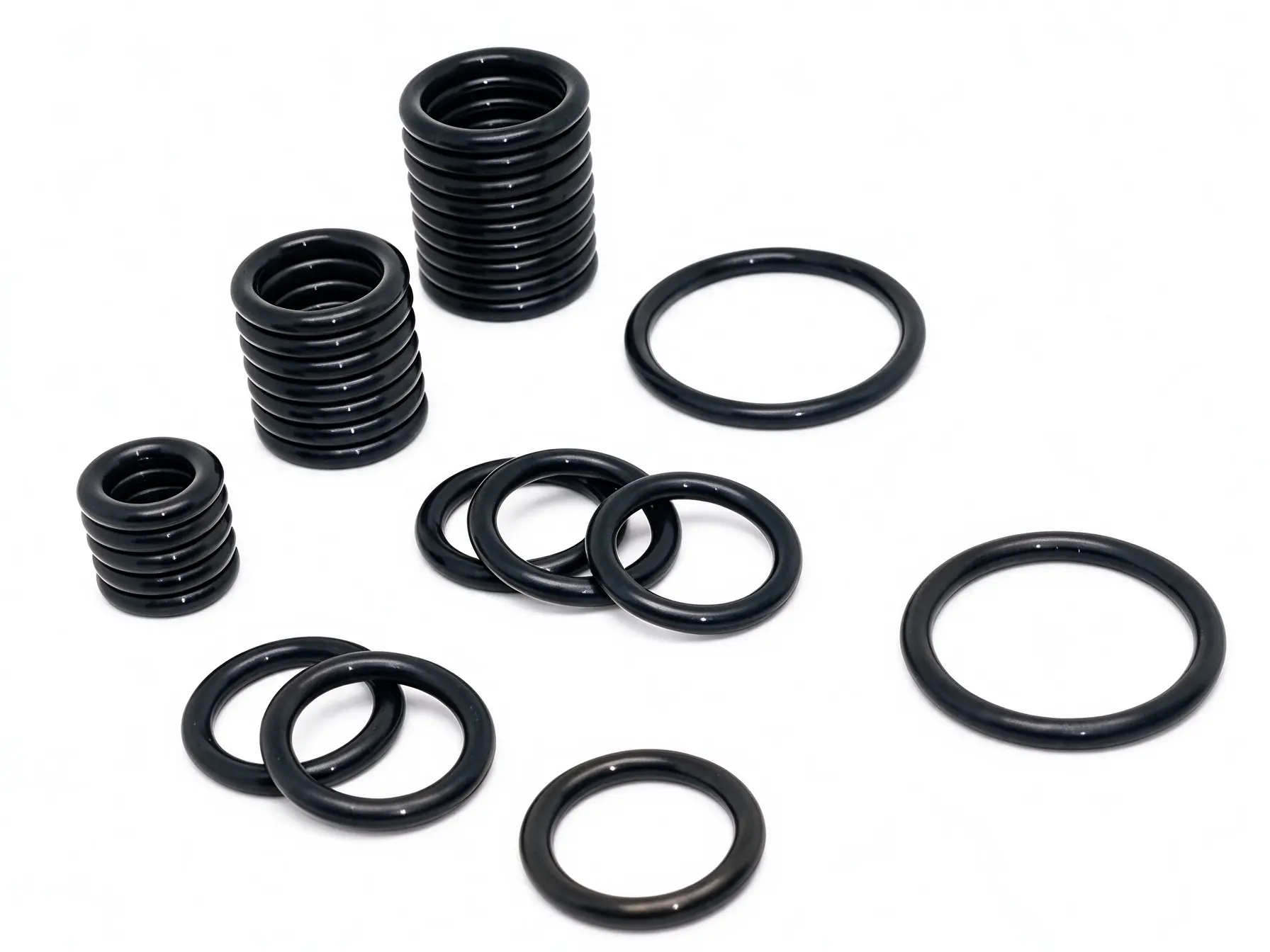
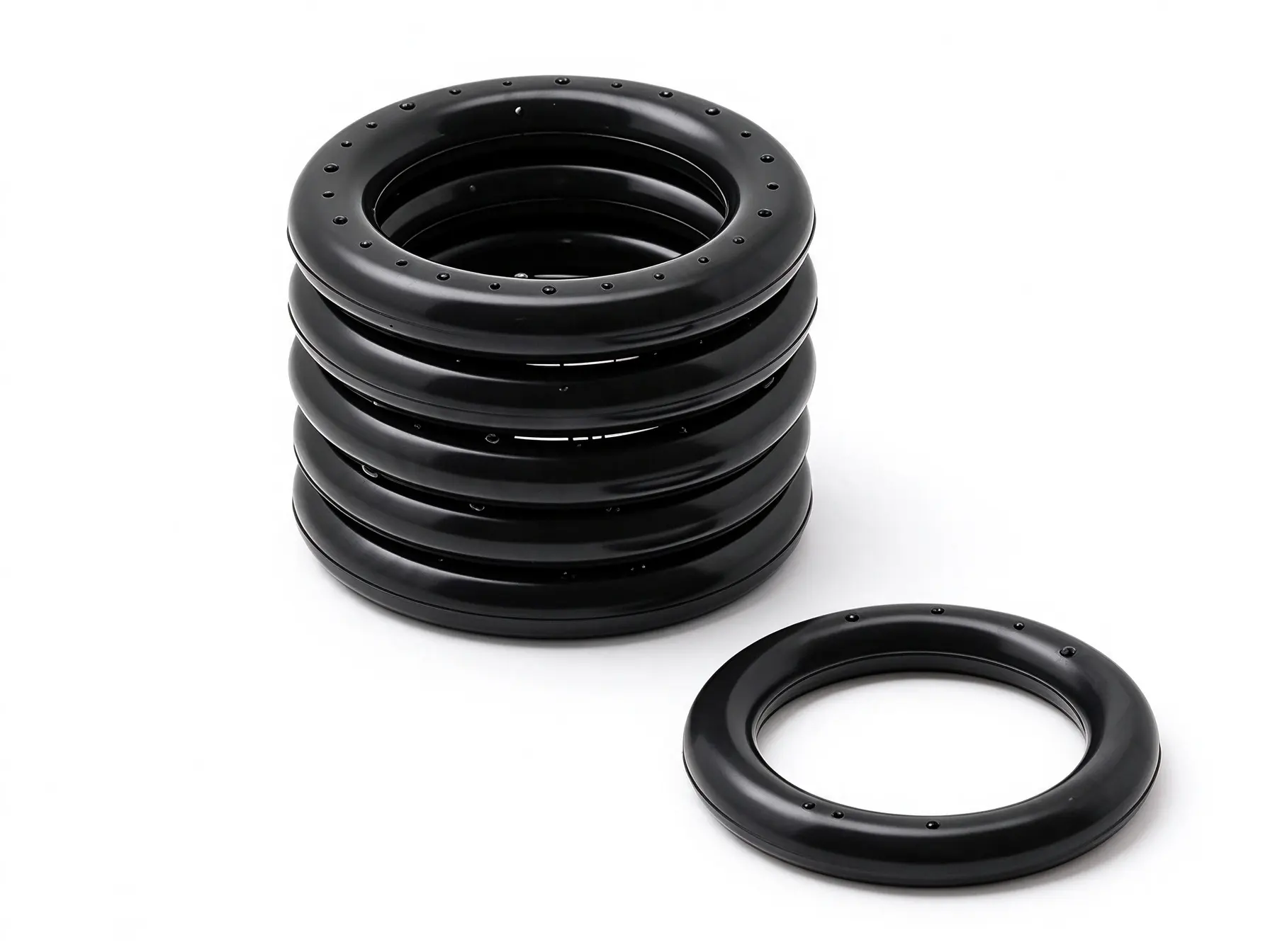
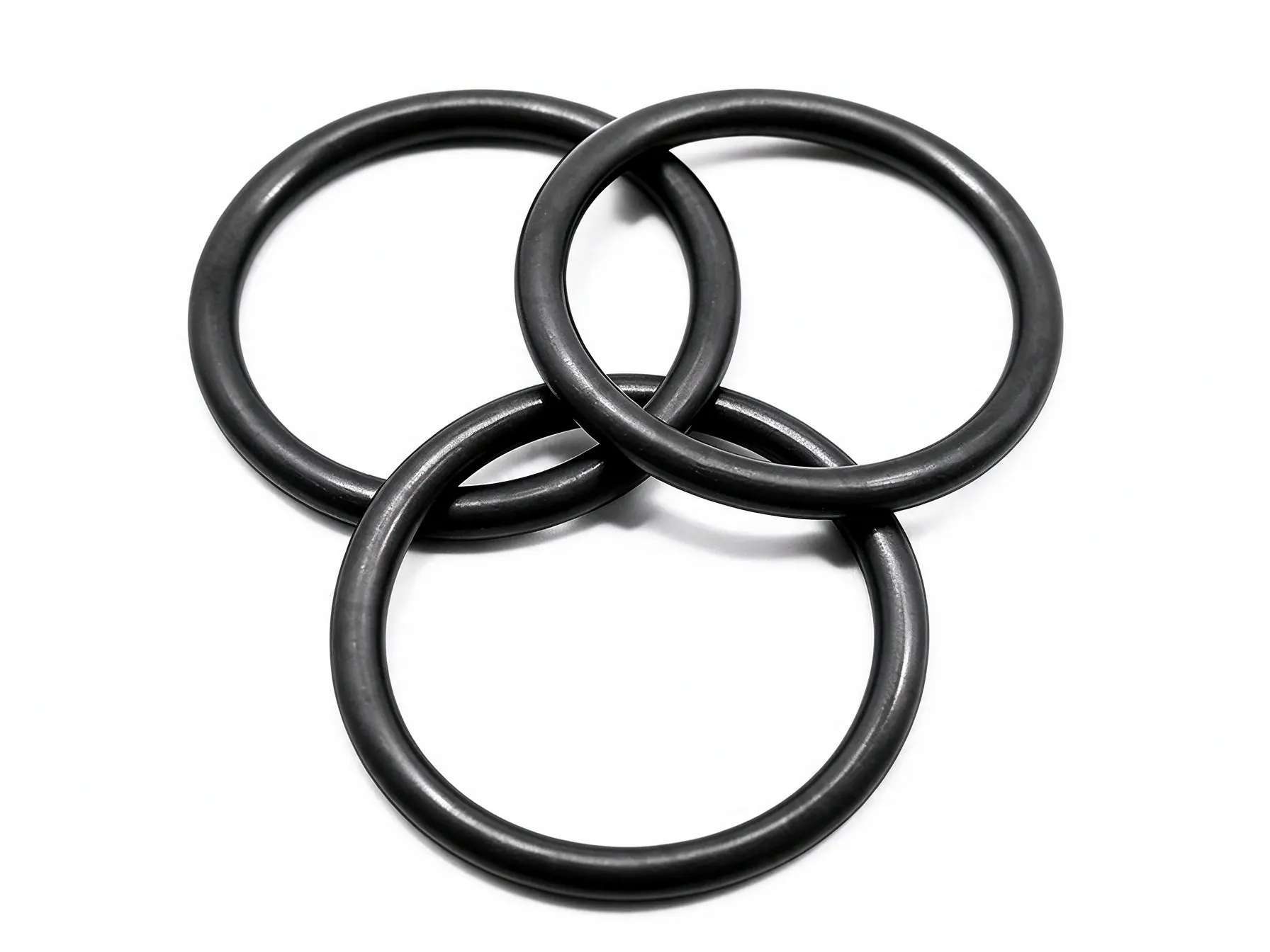
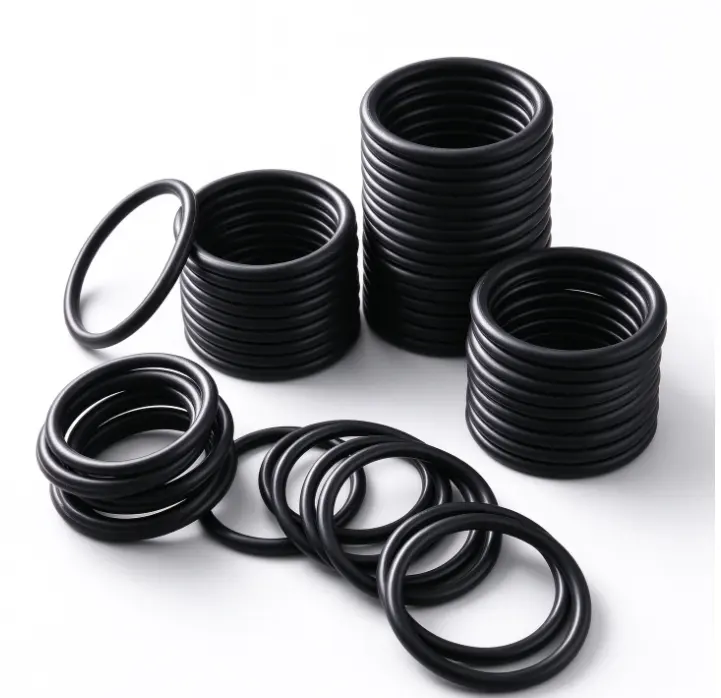
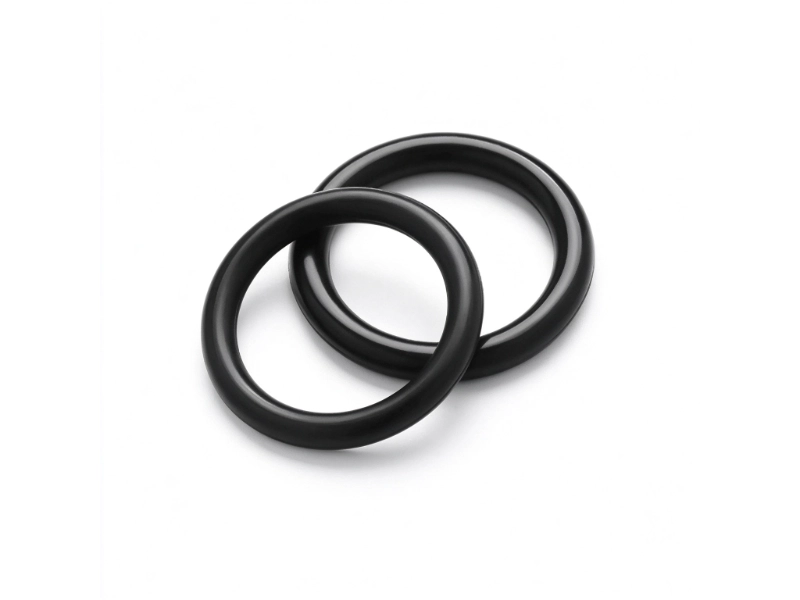
Black NBR O-rings are compression molded with a 3.2mm cord and outer diameters from 9mm to 400mm, offering good oil resistance and waterproof sealing performance.
-
Full-size customization is available; cord diameter, outer diameter and hardness can be confirmed to drawing or sample for hydraulic, pneumatic and pipeline sealing applications.
-
Factory supply includes sample testing and bulk orders; NBR compound and dimensional tolerance should be confirmed against the actual medium, temperature and compression ratio.
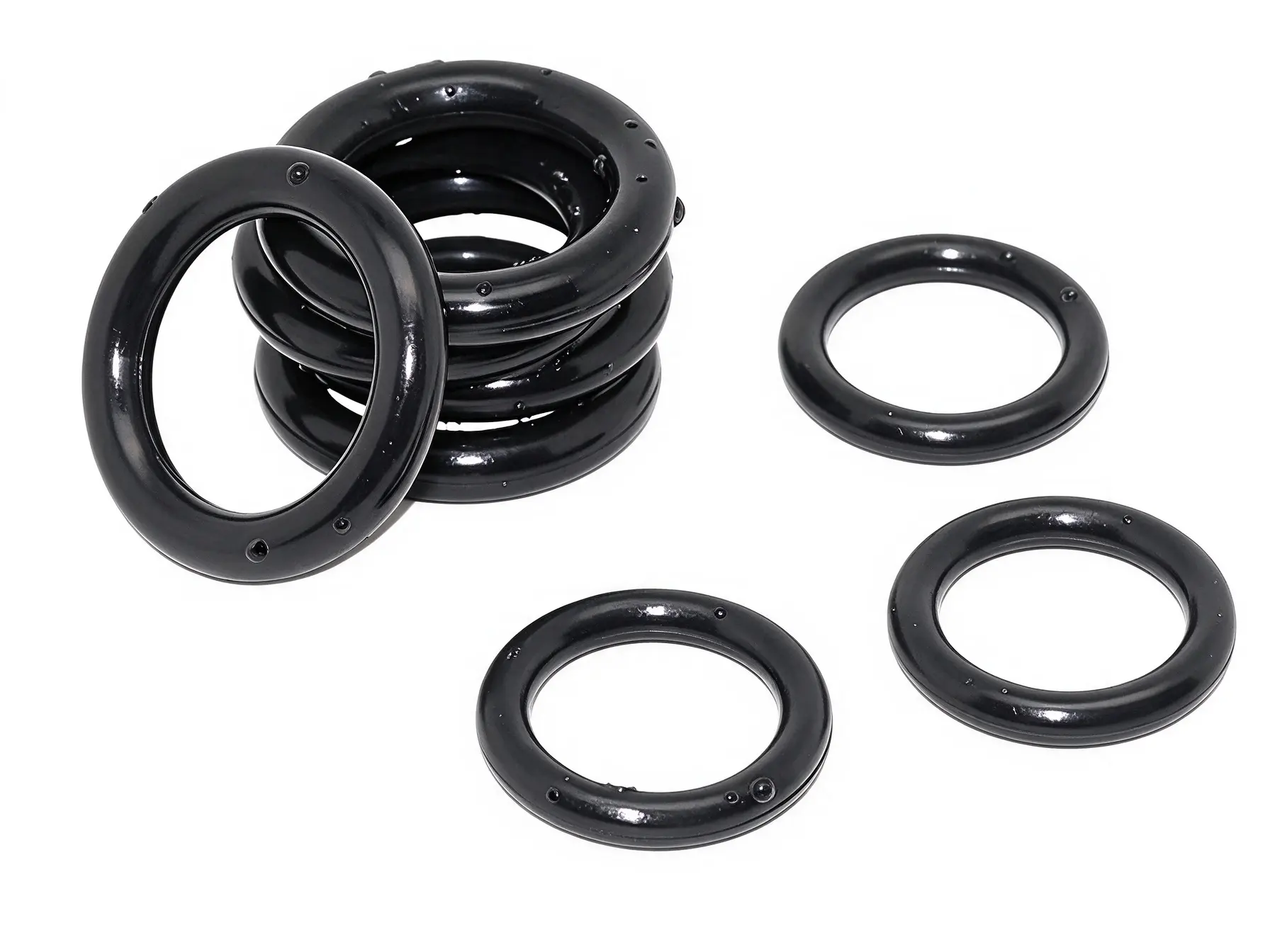
Joints toriques en NBR
Oil Resistant Waterproof NBR O-Ring 9mm to 400mm Factory
- Description
- Télécharger
-
Notre NBR O Rings (Nitrile Rubber O-Rings) are high-quality industrial rubber seals designed for reliable sealing performance in hydraulic, pneumatic, automotive, and industrial applications. Made from durable nitrile butadiene rubber, these oil-resistant O-rings offer excellent resistance to mineral oils, fuels, grease, and water. With good elasticity, compression recovery, and wear resistance, NBR rubber O-rings are suitable for both static and dynamic sealing applications under moderate temperature conditions.
En tant que professionnel NBR O-ring manufacturer and supplier, we offer standard NBR O-ring sizes in stock, as well as custom rubber O-rings in various inner diameters, cross-sections, hardness levels, and colors. Our custom NBR O-rings, nitrile rubber seals, waterproof O-rings, and hydraulic sealing rings provide cost-effective sealing solutions for pumps, valves, cylinders, pipelines, automotive systems, and pneumatic equipment. OEM and ODM services are available to meet different industrial sealing requirements.
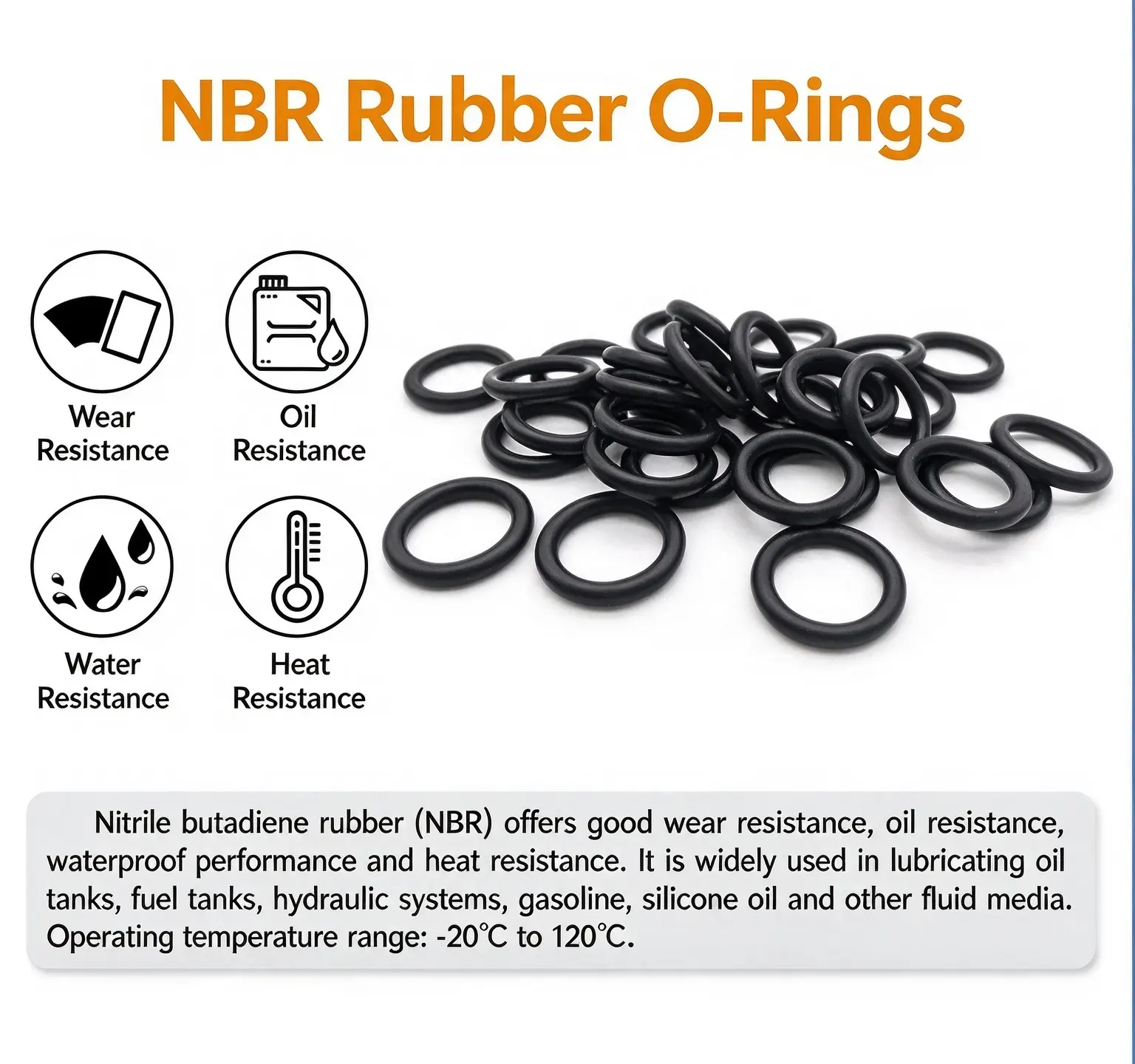
NBR O- Ring Technical Table
Article Spécification Material Name NBR (Nitrile Butadiene Rubber) O Ring Seals Common Hardness Shore A 40 – 90 (Standard: Shore A 70) Operating Temperature Range -40℃ to 120℃ Low Temperature Resistance Excellent flexibility at low temperature Résistance aux hautes températures Stable performance under continuous 100℃ working condition Résistance à l'huile Excellent resistance to mineral oil, engine oil, hydraulic oil and grease Résistance à l'eau Good waterproof and anti-leakage performance Abrasion Resistance Good wear resistance for dynamic sealing applications Compression Set Low compression deformation, long sealing stability Weather Aging Resistance Moderate aging resistance, not suitable for long-term outdoor UV exposure Chemical Compatibility Resistant to oil, water, fuel and common lubricants Incompatible Media Strong oxidants, ketones, esters, strong solvents Type d'étanchéité Static sealing & dynamic sealing Standard Sizes Metric sizes / AS568 inch standard sizes Personnalisation Custom hardness, size and color available Environmental Standard RoHS compliant Principales applications Hydraulic systems, pneumatic systems, pumps, valves, compressors, automotive parts, agricultural machinery, construction machinery, general industrial equipment Feature Most cost-effective, widely used, reliable industrial rubber sealing ring How to measure the O-Rings Size ?
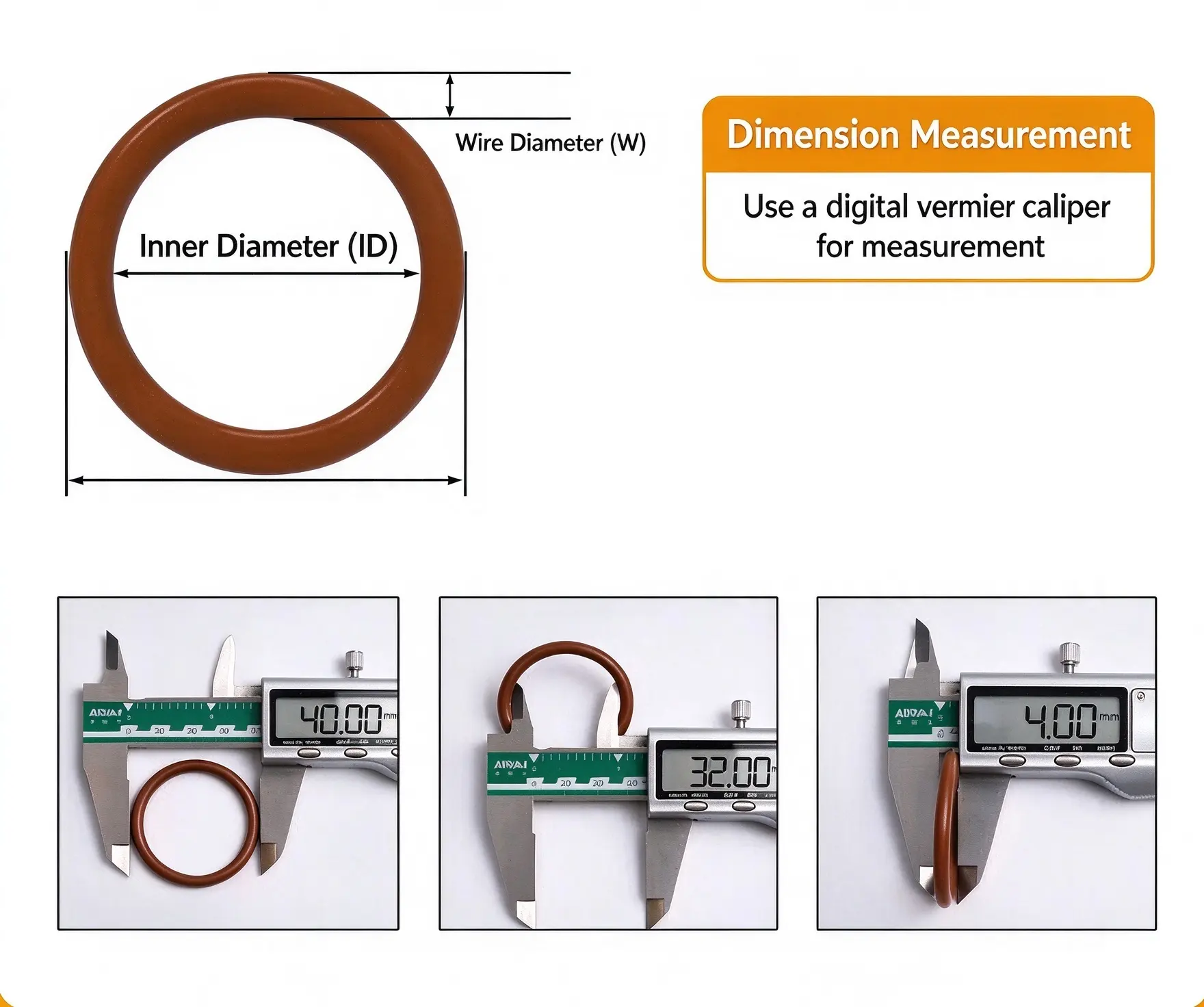
1. Ne mesurez pas les joints toriques avec une règle.
2. Utilisez un pied à coulisse pour obtenir avec précision le diamètre intérieur (DI), le diamètre extérieur (DE) et la section transversale (CS).
3. Les joints toriques en caoutchouc se déforment facilement. Une mesure précise garantit un ajustement parfait et empêche les fuites.
O-Ring ID size tolerance for GB/T 3452.1-2005 standard
Standard d₁(mm) G-Series Tolerance ±(mm) A-Series Tolerance ±(mm) 1.8~5.0 0.13 0.08 5.3~8.5 0.16~0.17 0.09~0.10 8.7~12.5 0.18~0.20 0.10~0.12 13.2~18.0 0.21~0.25 0.12~0.14 19.0~26.5 0.25~0.30 0.14~0.17 27.3~37.5 0.31~0.34 0.17~0.20 38.7~50.0 0.34~0.40 0.20~0.23 51.5~67.0 0.41~0.48 0.23~0.27 69.0~90.0 0.49~0.60 0.27~0.33 92.5~125 0.61~0.78 0.33~0.42 132~180 0.82~1.02 0.42~0.54 190~250 1.06~1.34 0.54~0.70 258~355 1.37~1.82 0.70~0.95 365~500 1.86~2.48 0.95~1.30 Remarque:
- G series: General purpose O-rings, looser tolerance for normal hydraulic & pneumatic applications
- A series: Aerospace grade O-rings, tighter ID tolerance for high-precision, high-reliability sealing
Cross-section tolerance:
1.8:±0.08mm 2.65:±0.09mm 3.55:±0.10mm 5.3:±0.13mm 7.0:±0.15 mm.We have strict size inspection for each order .Tight tolerance control guarantees consistent performance batch after batch.
Our NBR O-Rings Advantages
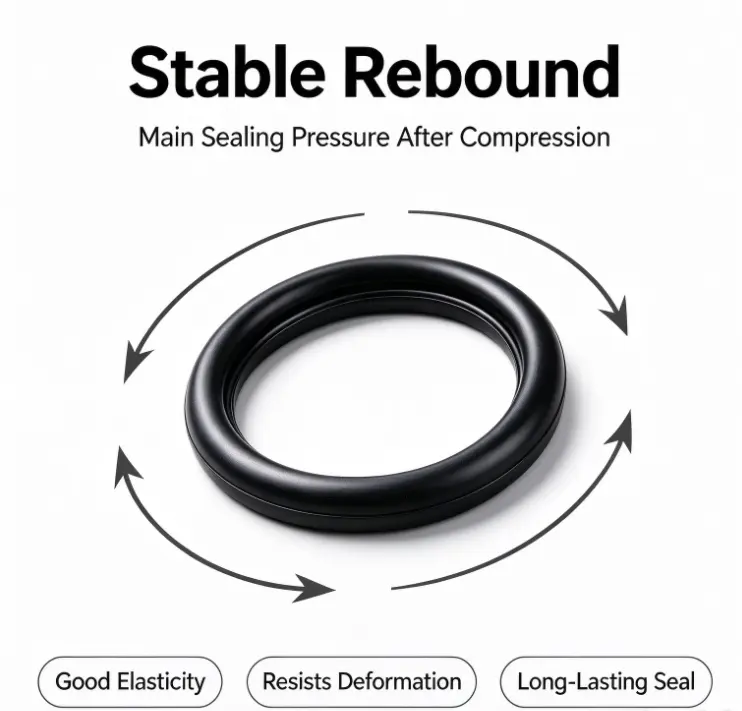
Our NBR nitrile rubber O-rings offer good rebound resilience, recovering quickly after repeated compression and under dynamic sealing conditions to help maintain stable sealing performance.
Made from premium NBR nitrile rubber, offering oil resistance, wear resistance, good rebound resilience and reliable sealing performance for hydraulic, pneumatic and pipeline sealing applications.
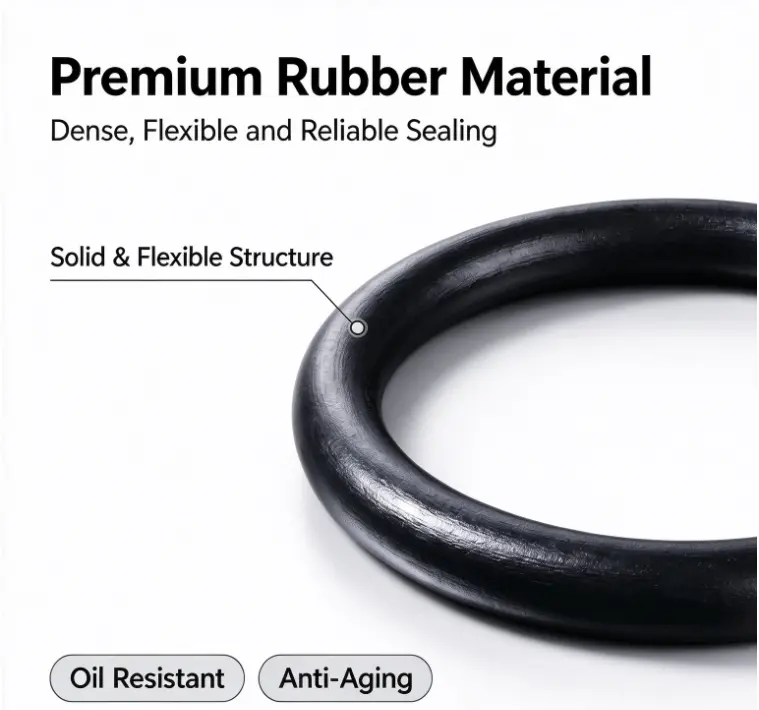
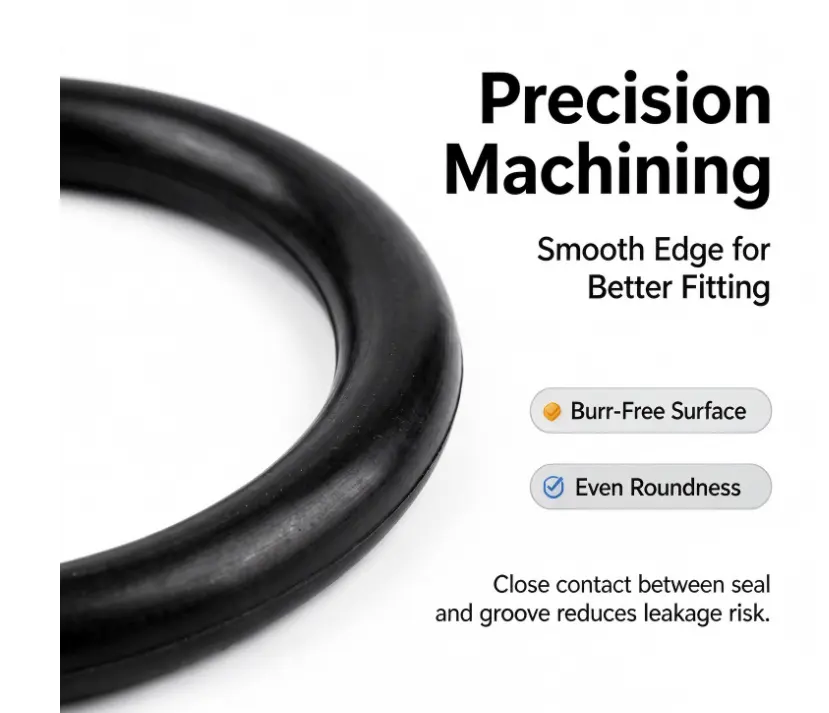
Smooth surface finish with no burrs, helping reduce friction and leakage risk.
Application Areas of NBR O-Rings
NBR O-rings are mainly valued for oil resistance, wear resistance, good rebound resilience and reliable sealing. Typical applications include:
- Hydraulic systems: static and dynamic sealing at hydraulic cylinders, valves, pumps and pipe joints.
- Pneumatic systems: sealing for cylinders, pneumatic valves, air line fittings and pneumatic actuators.
- Automotive industry: oil-resistant sealing points in engines, gearboxes, fuel systems, lubrication circuits, brake systems and air-conditioning lines.
- Industrial pumps and valves: sealing for water pumps, oil pumps, chemical pumps (non-highly corrosive media), valves, flanges and pipe connections.
- Mechanical equipment: bearing end covers, reducers, gearboxes, compressors and rotating/reciprocating parts.
- Oil and fuel systems: sealing for mineral oil, lubricating oil, diesel, hydraulic oil and similar media; not recommended for aromatic hydrocarbons, ketones, esters or strongly oxidizing media.
- Plumbing and general industry: medium- and low-pressure sealing for water, air and neutral media; for outdoor applications requiring high weather and ozone resistance, use with caution or switch to EPDM or other suitable materials.
Note de sélection : NBR typically serves from about -40°C to +100°C (short-term up to around 120°C). It has good oil resistance but limited resistance to ozone, weathering and polar solvents. For strong acids, strong alkalis, ketones, esters, aromatic hydrocarbons or long-term outdoor exposure, FKM, EPDM or other materials should be evaluated.

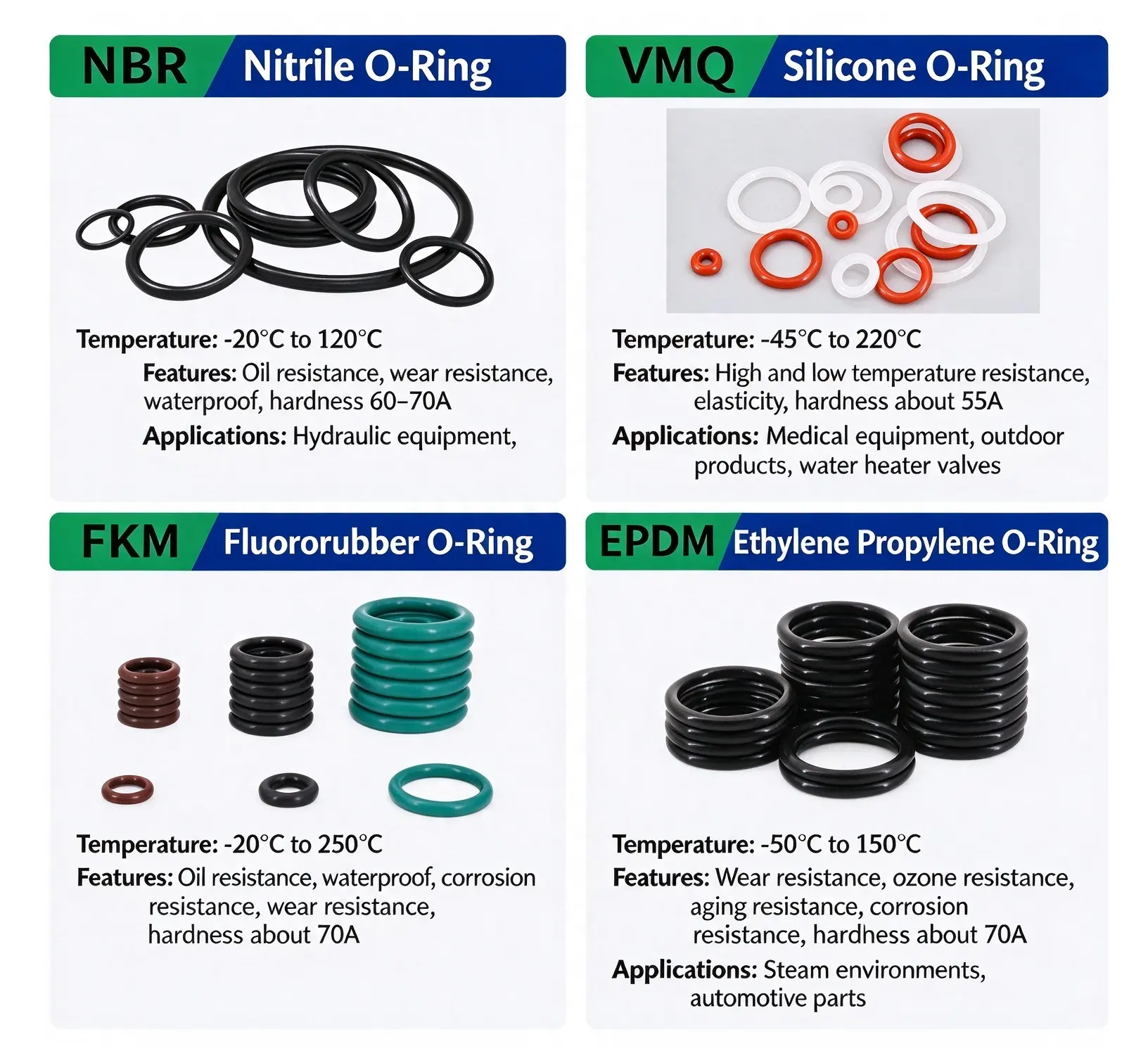
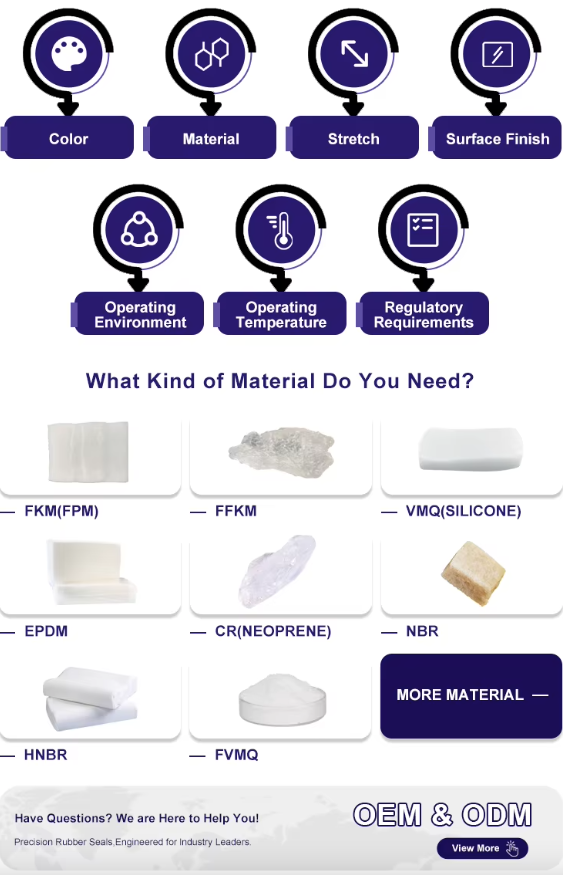
Common rubber O-rings (NBR ,EPDM,VMQ,FKM)
Brief Introduction:
This guide compares four common O-ring materials: FKM, VMQ, NBR and EPDM. FKM offers excellent heat and chemical resistance, making it suitable for fuels, oils and aggressive media. VMQ (silicone) provides a wide temperature range and good flexibility but limited oil resistance. NBR is the standard choice for oil and fuel sealing with good mechanical properties, while EPDM excels in water, steam and weather resistance but is not oil-resistant. Selecting the right material depends on the operating temperature, medium and sealing application.
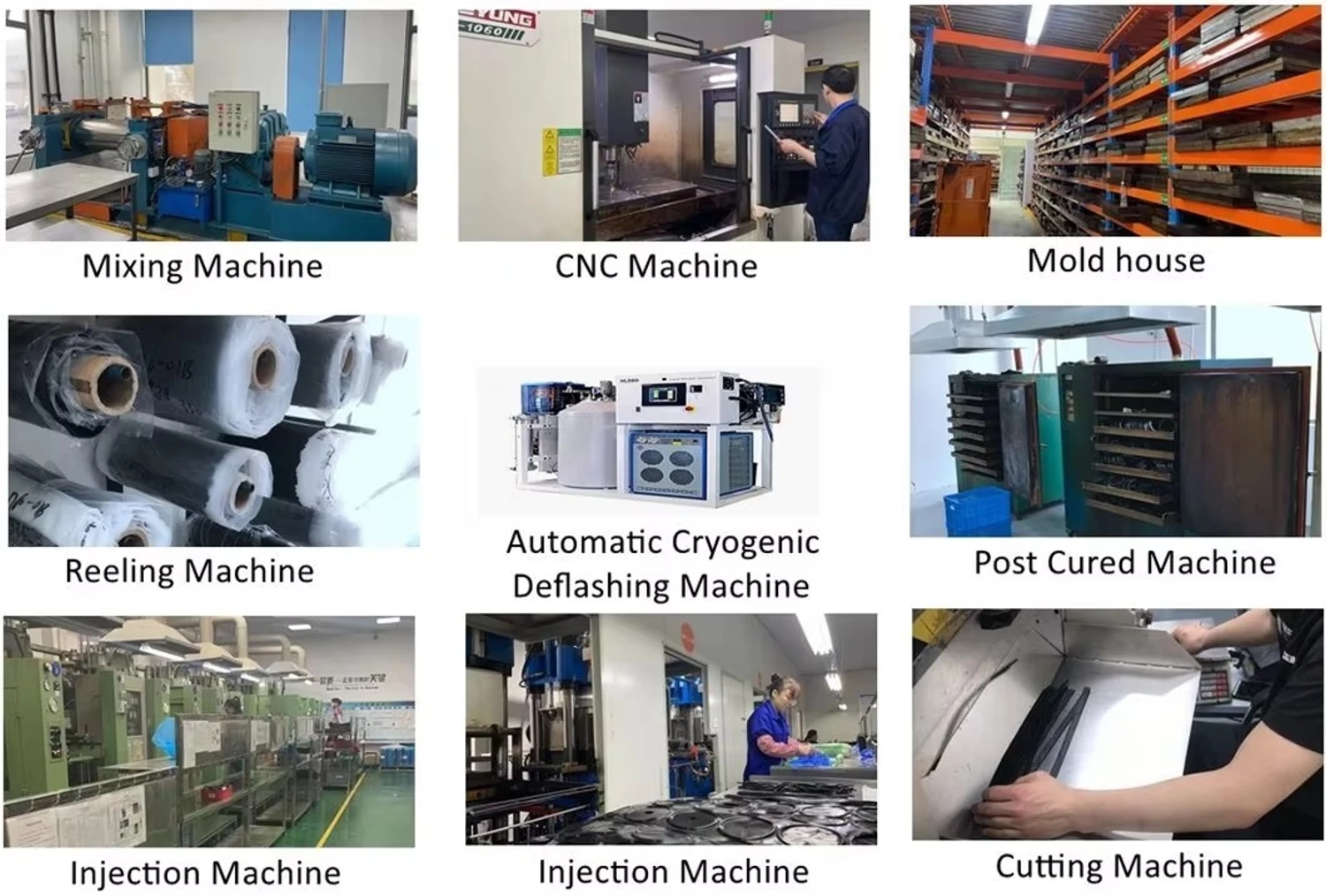
Our factory Production equipment
We are equipped with complete production facilities including mixing machines, CNC machines, injection molding machines, cryogenic deflashing machines and post-curing ovens. In-house mold making and automated workflows boost efficiency to support fast order delivery.
Service d'emballage, de paiement et d'expédition
- EmballerNous proposons des cartons, des palettes et des caisses en bois standard. Des emballages sur mesure sont disponibles sur demande afin de protéger efficacement les marchandises lors de différents types d'expédition.
- Modes de paiement :Règlement multidevises (CNY, USD, EUR, etc.). Plusieurs options de paiement, dont virement bancaire et PayPal. Le virement bancaire local est disponible dans certains pays pour des transactions plus rapides.
- Mode de livraison :Nous proposons des services de transport express international, de fret aérien, maritime et ferroviaire. Vous pouvez également faire appel à votre propre transporteur pour des modalités de livraison flexibles.

Nos joints en caoutchouc fournis
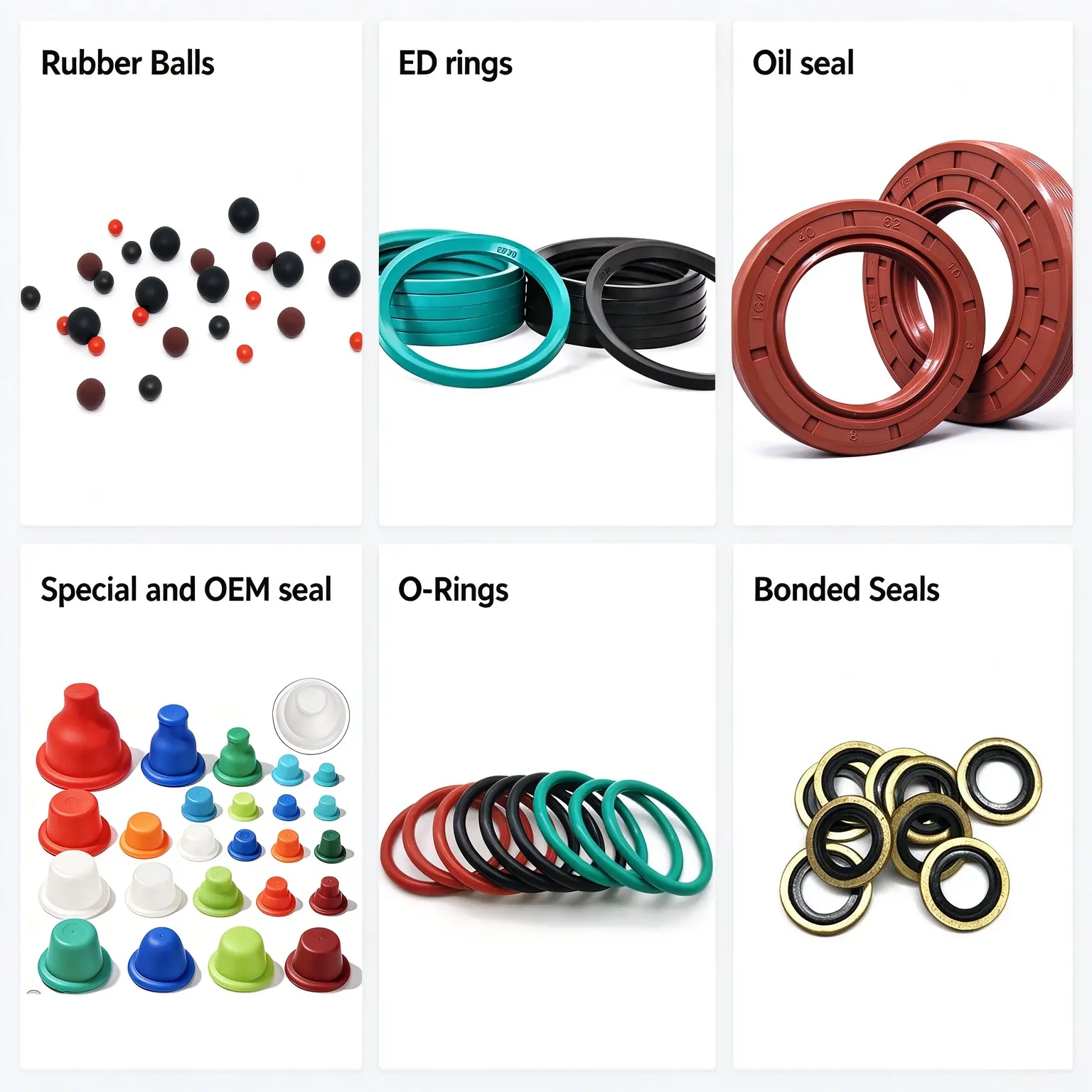
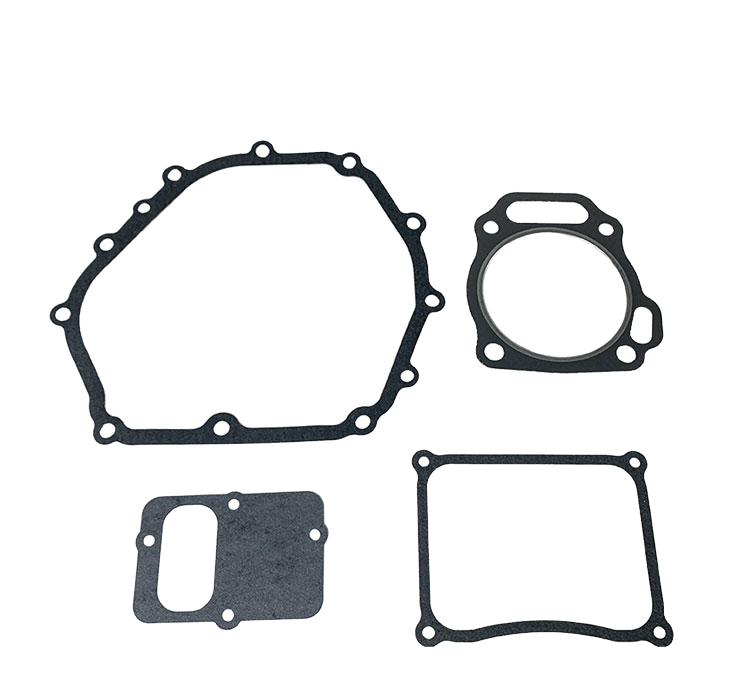
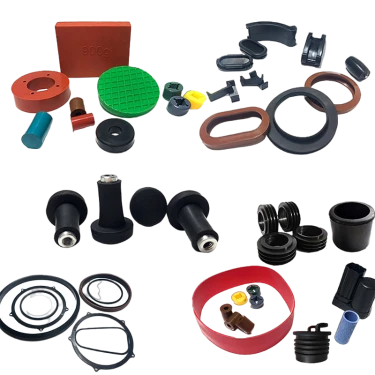
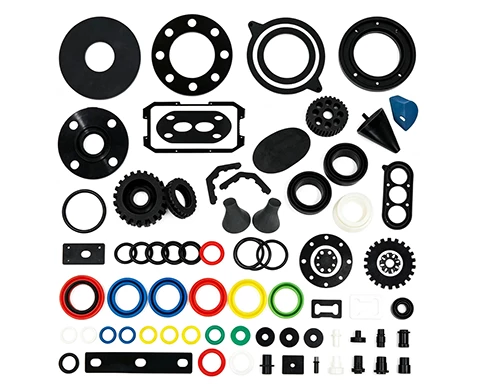
We manufacture a full range of sealing products: O-rings and X-rings in NBR, EPDM, FKM, FFKM, VMQ, HNBR; oil seals of various styles including TC, TG, VC, TB, TA, VB, SB, SA, VA, DC, HTC. We also supply ED seals, bonded seals, wiper seals, gaskets, washers, rubber balls, and custom special-shaped sealing profiles. Custom non-standard rubber seals are available to match your unique working conditions.
Services OEM et ODM
Nous proposons des services de collaboration OEM et ODM. En OEM, les clients fournissent les plans, les échantillons, les spécifications des matériaux et les dimensions, et nous fabriquons les produits selon leurs spécifications, avec un emballage personnalisé. Cette solution est idéale pour les commandes dont le design est clairement défini. En ODM, nous pouvons intervenir dans la sélection des matériaux, l'ajustement des composés, le développement des moules, la conception des dimensions et de la dureté en fonction des conditions d'utilisation du client, et assurer une production sous marque privée. Cette solution convient aux clients qui recherchent une solution clé en main, du développement produit à la production en série. Ces deux options sont disponibles pour les billes en caoutchouc, les joints toriques et autres pièces d'étanchéité en caoutchouc sur mesure. Les délais de livraison, les coûts d'outillage et les quantités minimales de commande sont confirmés pour chaque projet.
 FAQ
-
What is the normal service temperature of NBR O-rings? Can they be used at 120°C for short periods?
NBR typically serves from about -40°C to +100°C, with short-term peaks up to around 120°C, but service life will be noticeably reduced. For long-term use above 100°C or in hot oil, consider a higher-temperature material such as FKM, and validate heat aging performance against the actual temperature, medium and compression ratio.
-
What is the maximum size of molded parts you can produce?
Our 350-ton molding press supports large-size molding, with a maximum part dimension of 102” × 72” for oversized rubber and polyurethane components.
-
À quels fluides les joints toriques NBR résistent-ils, et à quels fluides sont-ils déconseillés ?
Le NBR présente une bonne résistance aux huiles minérales, aux huiles lubrifiantes, aux huiles hydrauliques, au diesel, à l'essence et à de nombreuses graisses. Son utilisation est déconseillée en présence de cétones (acétone, MEK), d'esters, d'hydrocarbures aromatiques (benzène, toluène), d'acides forts, de bases fortes, de milieux fortement oxydants ou en cas d'exposition prolongée à l'ozone ou aux intempéries. Dans ces conditions, il est préférable d'opter pour le FKM, l'EPDM, le PTFE ou d'autres matériaux adaptés.
-
What is the common hardness of NBR O-rings, and how should hardness be selected?
70 Shore A is the most common hardness, with 50–90 Shore A generally available. Lower hardness can improve contact in low-pressure static sealing; higher hardness is preferred for high-pressure, dynamic sealing or extrusion-resistant applications, together with backup rings or adjusted groove clearance. Hardness tolerance is usually controlled at ±5 Shore A.
-
What is the typical compression set of NBR O-rings?
Compression set depends on compound, hardness and test conditions. For a general-purpose 70 Shore A NBR, typical values under ASTM D395 at 70 h/100°C are about 20%–35%, and low-compression-set grades can be lower. Sealing applications should be validated against the actual compression ratio, temperature and time rather than judged by material grade alone.
-
What standards apply to NBR O-ring dimensional tolerances, and how are non-standard sizes handled?
Common standards include GB/T 3452.1, ISO 3601-1 and AS568. Standard parts should be checked against the cord diameter and inside diameter tolerances in the applicable standard; for non-standard sizes, cord diameter, inside diameter tolerance and roundness requirements should be separately agreed in drawings or technical agreements. For incoming inspection, cord diameter tolerance should be controlled first because it directly affects compression and sealing performance.
-
What should be noted during installation and storage of NBR O-rings?
Before installation, clean the groove and sealing surface, apply a lubricant compatible with NBR if needed, and avoid twisting, scratching or excessive stretching. Groove design should provide a static sealing compression ratio of about 15%–25% and a dynamic sealing compression ratio of about 10%–15%. Store in a dark, cool place away from ozone, motors and direct sunlight; keep original packaging unopened at room temperature and follow first-in, first-out.
-
Quels sont les modes de défaillance courants des joints toriques et comment les identifier ?
- Déformation par compression : section transversale aplatie et surfaces de contact planes, dues à la chaleur ou à une compression excessive ; - Extrusion (mordançage) : bords irréguliers et effilochés du côté basse pression, dus à un jeu ou une pression excessifs ; - Défaillance en spirale : entailles en spirale à 45° sur la surface, fréquentes dans les pistons à longue course lorsque les pièces glissent et roulent simultanément ; - Abrasion : surfaces rayées/usées dues à des surfaces d’accouplement rugueuses ou à une lubrification insuffisante ; - Attaque chimique : gonflement, fissuration ou ramollissement dus à des milieux incompatibles.
Produits associés
Nous avons développé un portefeuille diversifié de solutions produits pour répondre aux besoins et aux attentes des différents marchés.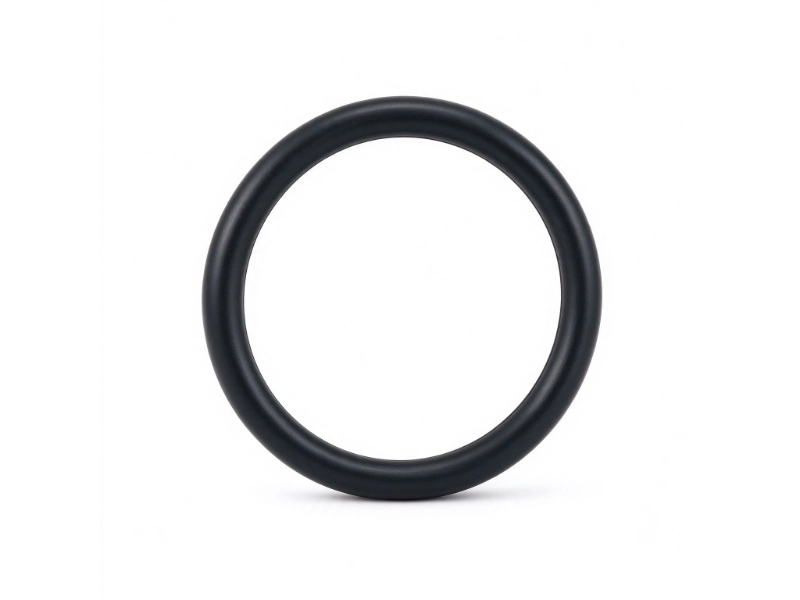

Bienvenue