






-
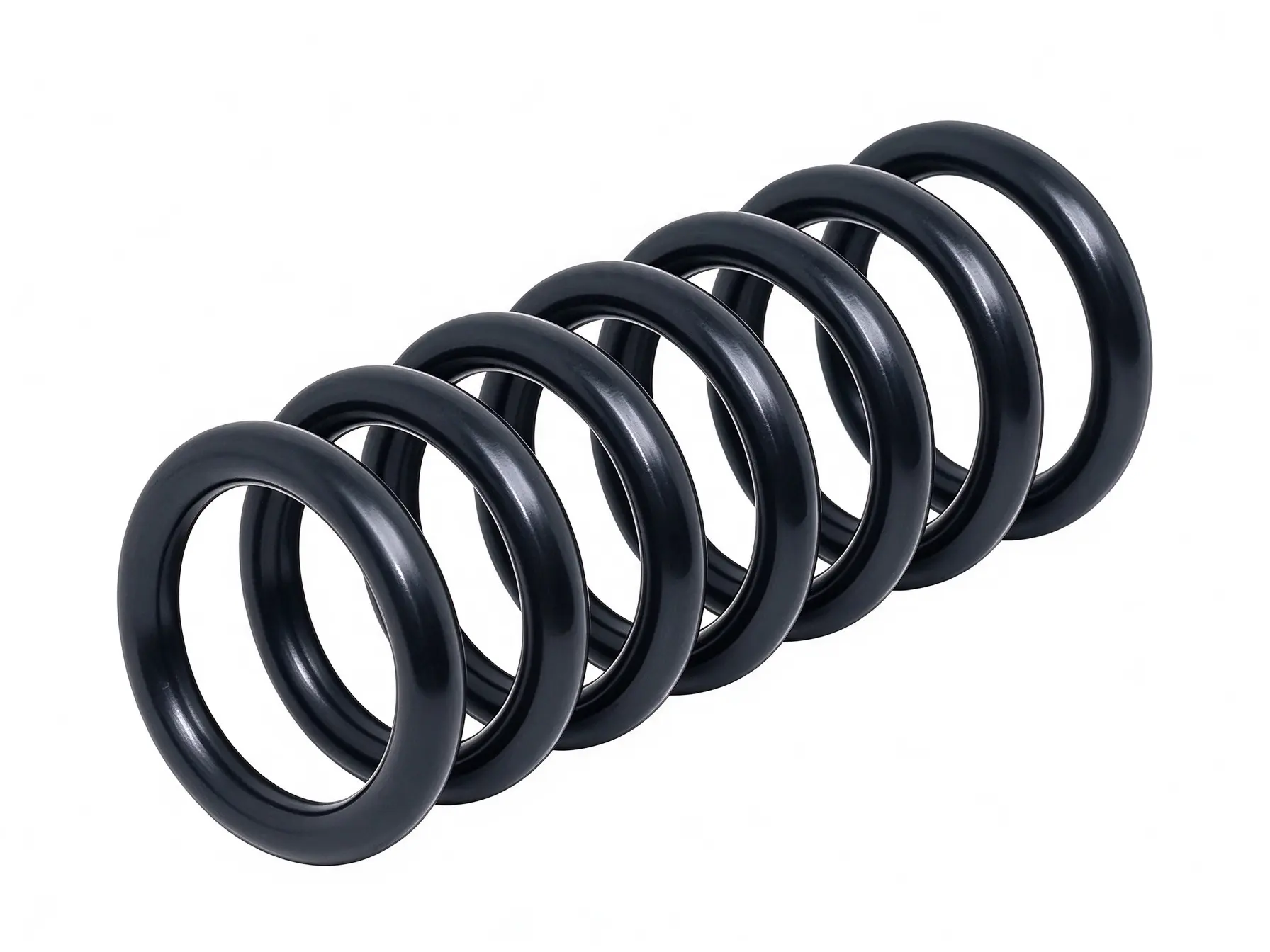
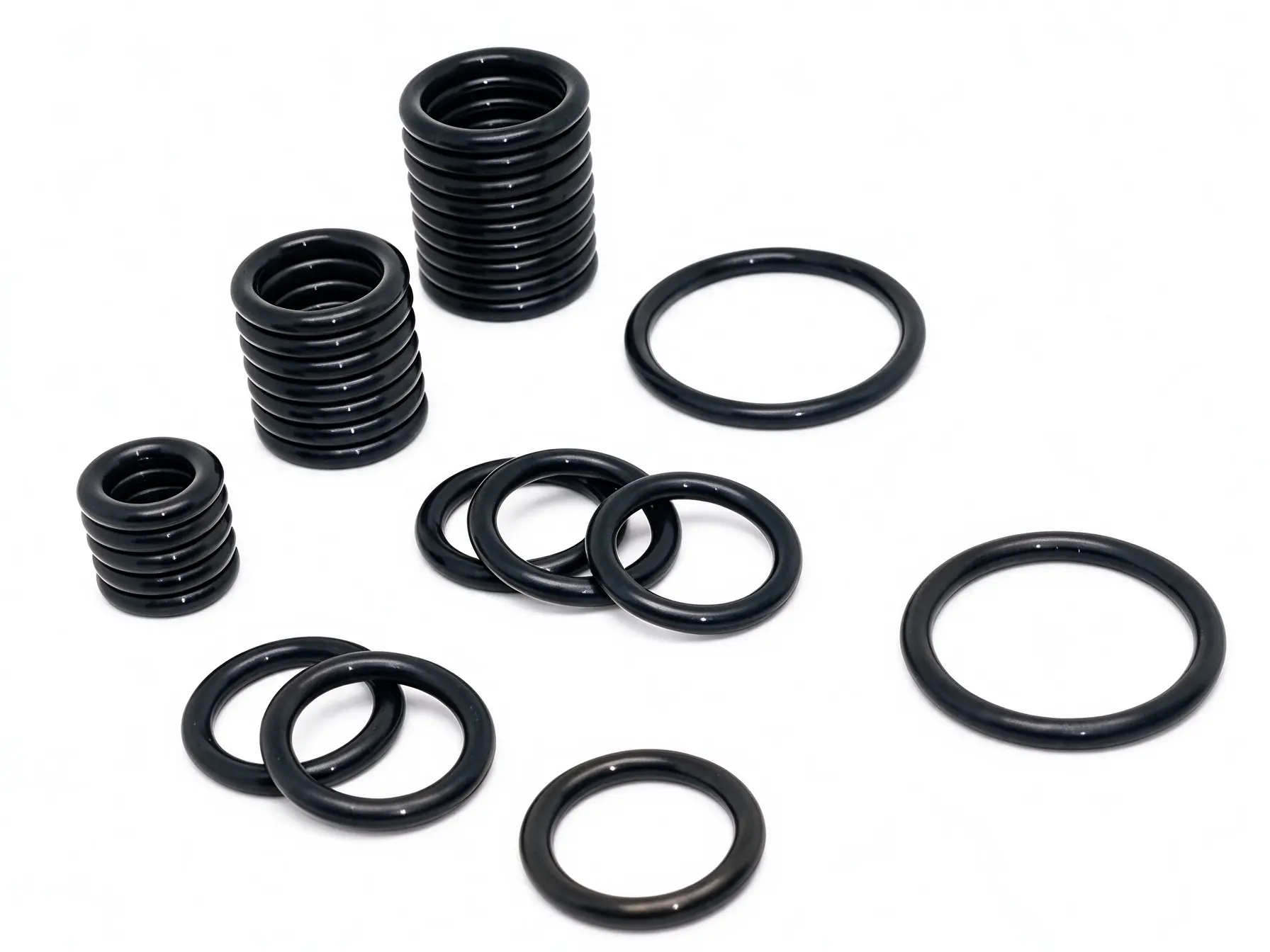
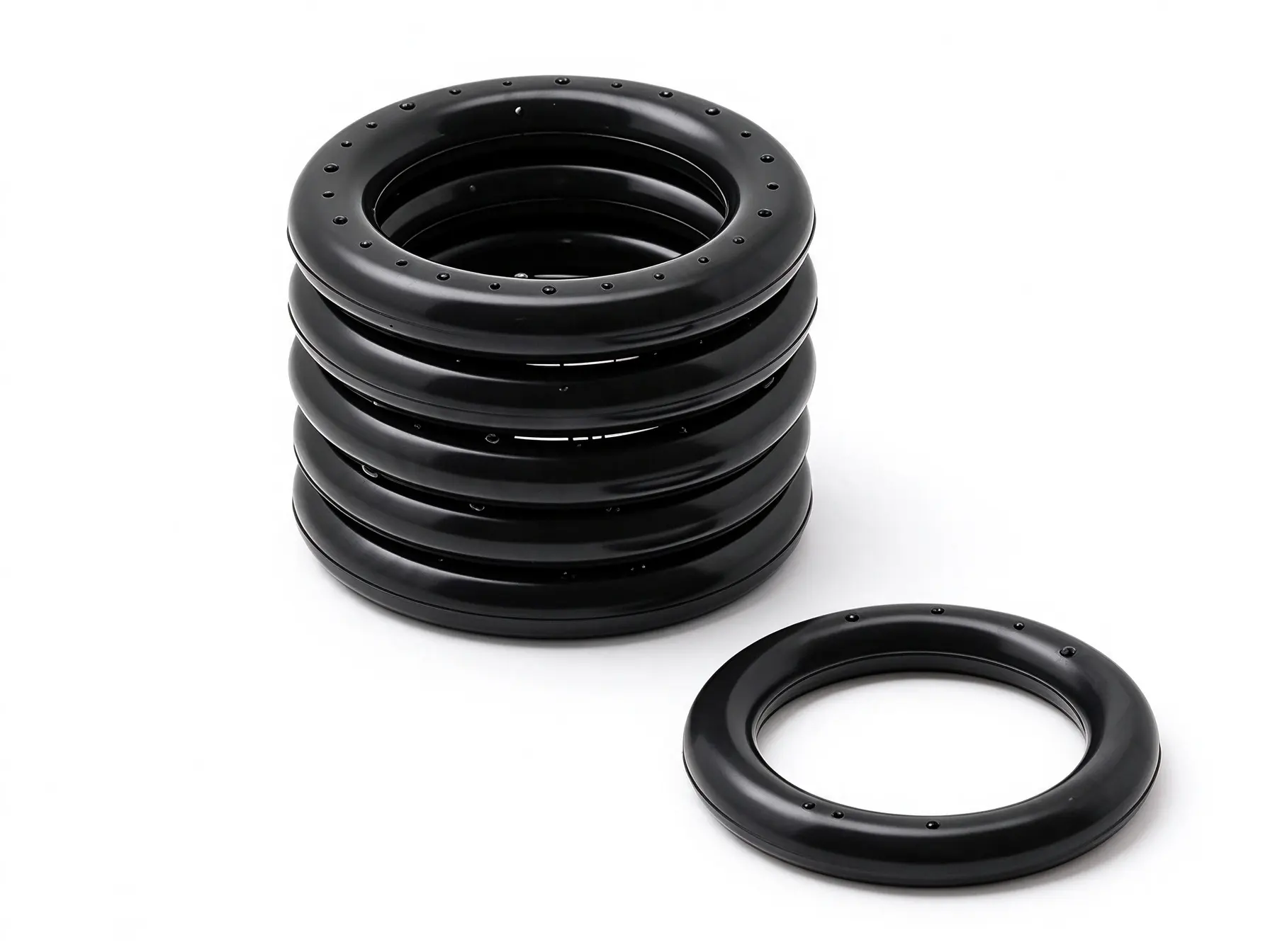
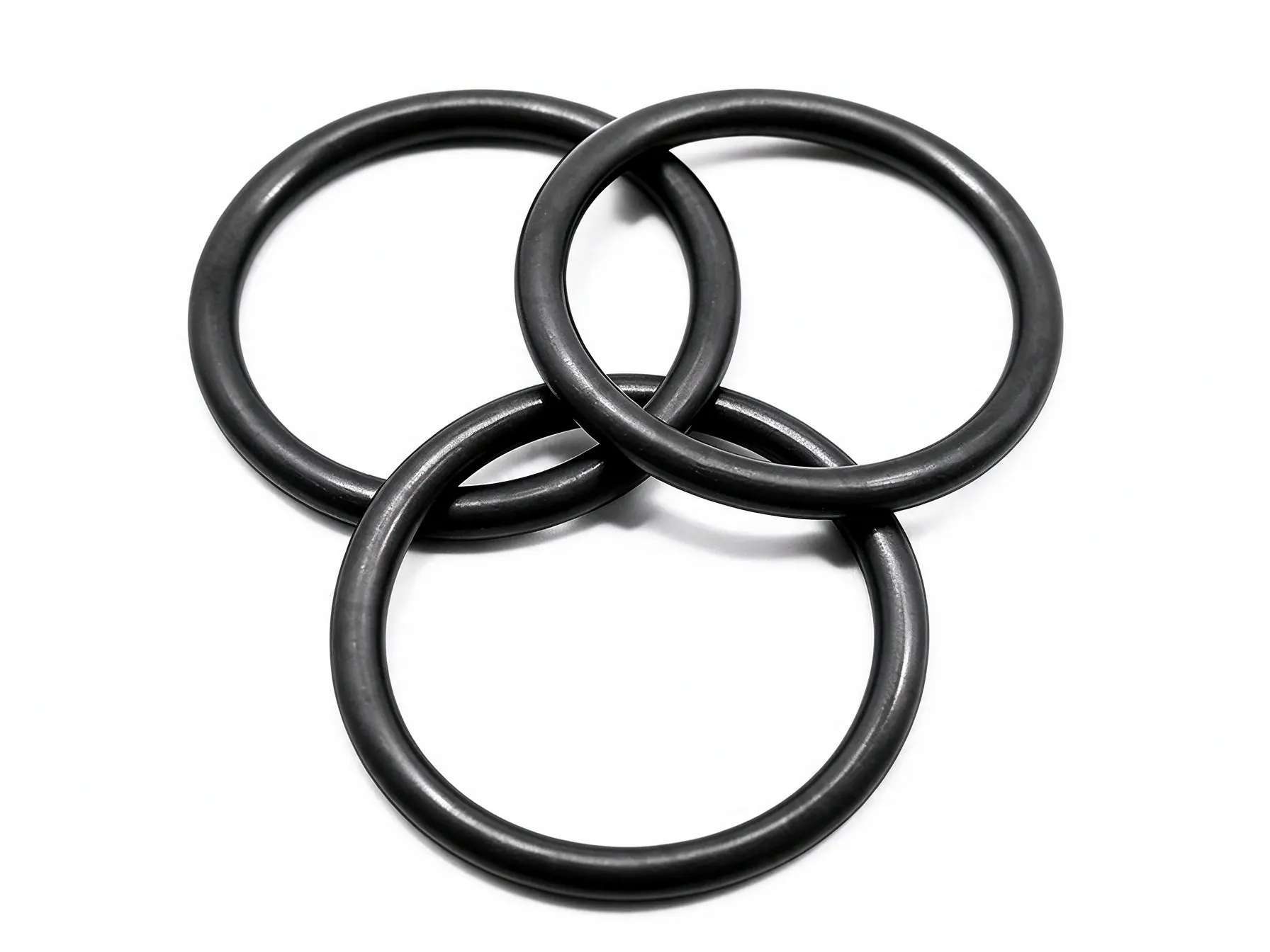
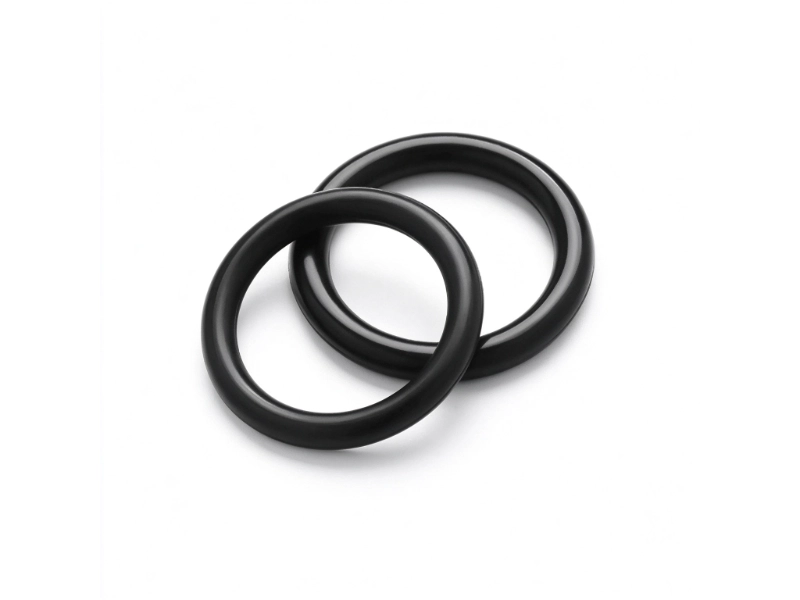
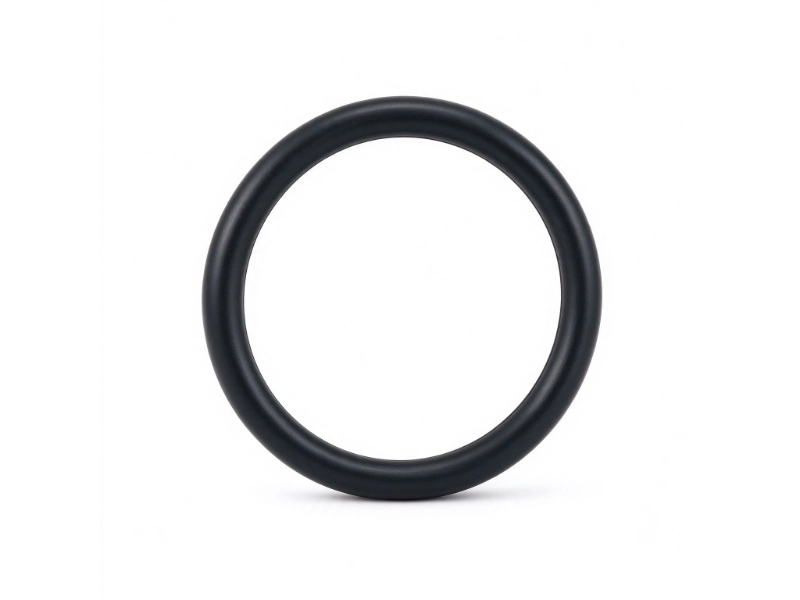
Black NBR O-rings are compression molded with a 3.2mm cord and outer diameters from 9mm to 400mm, offering good oil resistance and waterproof sealing performance.
-
Full-size customization is available; cord diameter, outer diameter and hardness can be confirmed to drawing or sample for hydraulic, pneumatic and pipeline sealing applications.
-
Factory supply includes sample testing and bulk orders; NBR compound and dimensional tolerance should be confirmed against the actual medium, temperature and compression ratio.
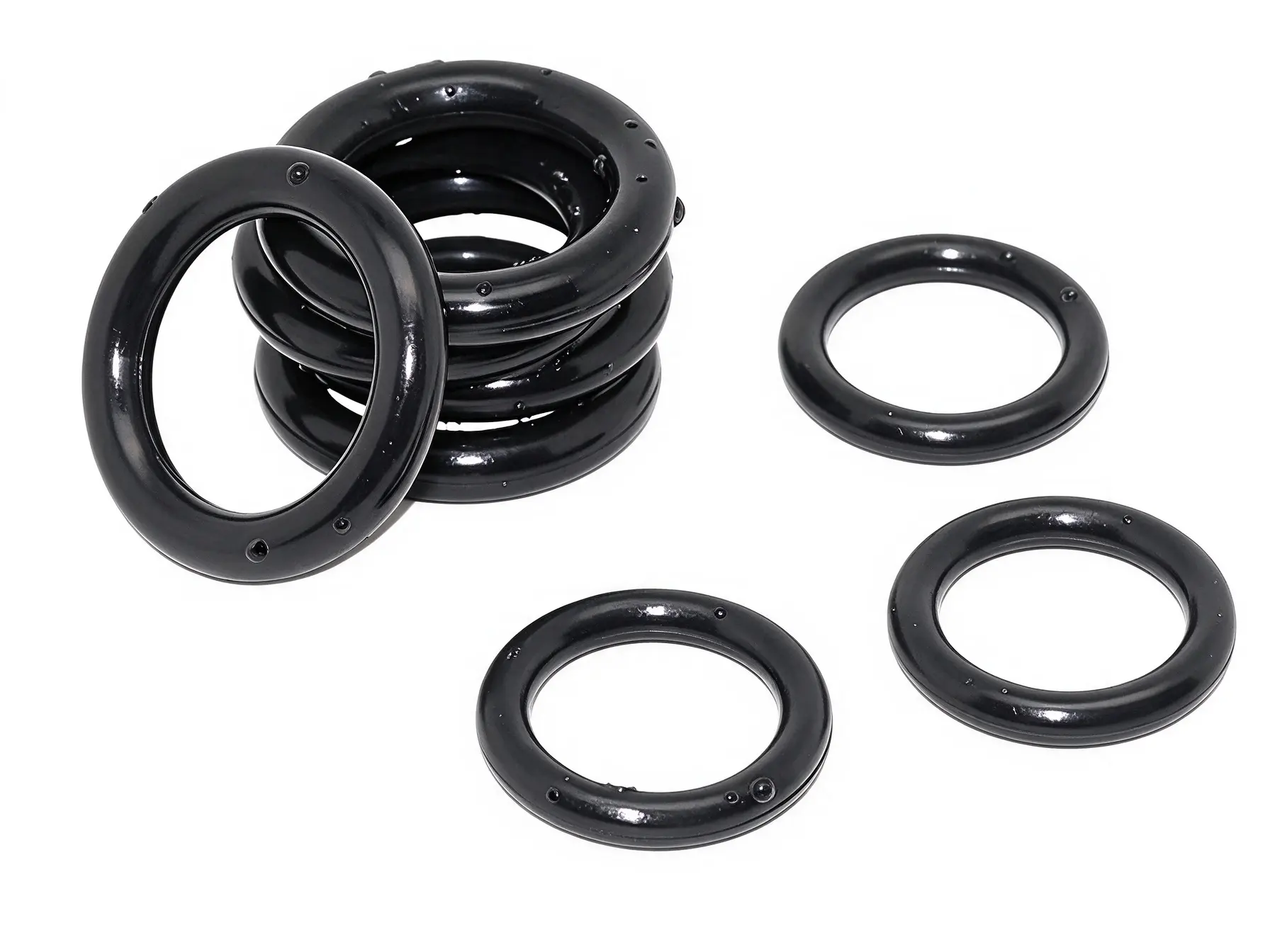
Anéis de vedação NBR
Oil Resistant Waterproof NBR O-Ring 9mm to 400mm Factory
- Descrição
- Download
-
Nosso NBR O Rings (Nitrile Rubber O-Rings) are high-quality industrial rubber seals designed for reliable sealing performance in hydraulic, pneumatic, automotive, and industrial applications. Made from durable nitrile butadiene rubber, these oil-resistant O-rings offer excellent resistance to mineral oils, fuels, grease, and water. With good elasticity, compression recovery, and wear resistance, NBR rubber O-rings are suitable for both static and dynamic sealing applications under moderate temperature conditions.
Como profissional NBR O-ring manufacturer and supplier, we offer standard NBR O-ring sizes in stock, as well as custom rubber O-rings in various inner diameters, cross-sections, hardness levels, and colors. Our custom NBR O-rings, nitrile rubber seals, waterproof O-rings, and hydraulic sealing rings provide cost-effective sealing solutions for pumps, valves, cylinders, pipelines, automotive systems, and pneumatic equipment. OEM and ODM services are available to meet different industrial sealing requirements.
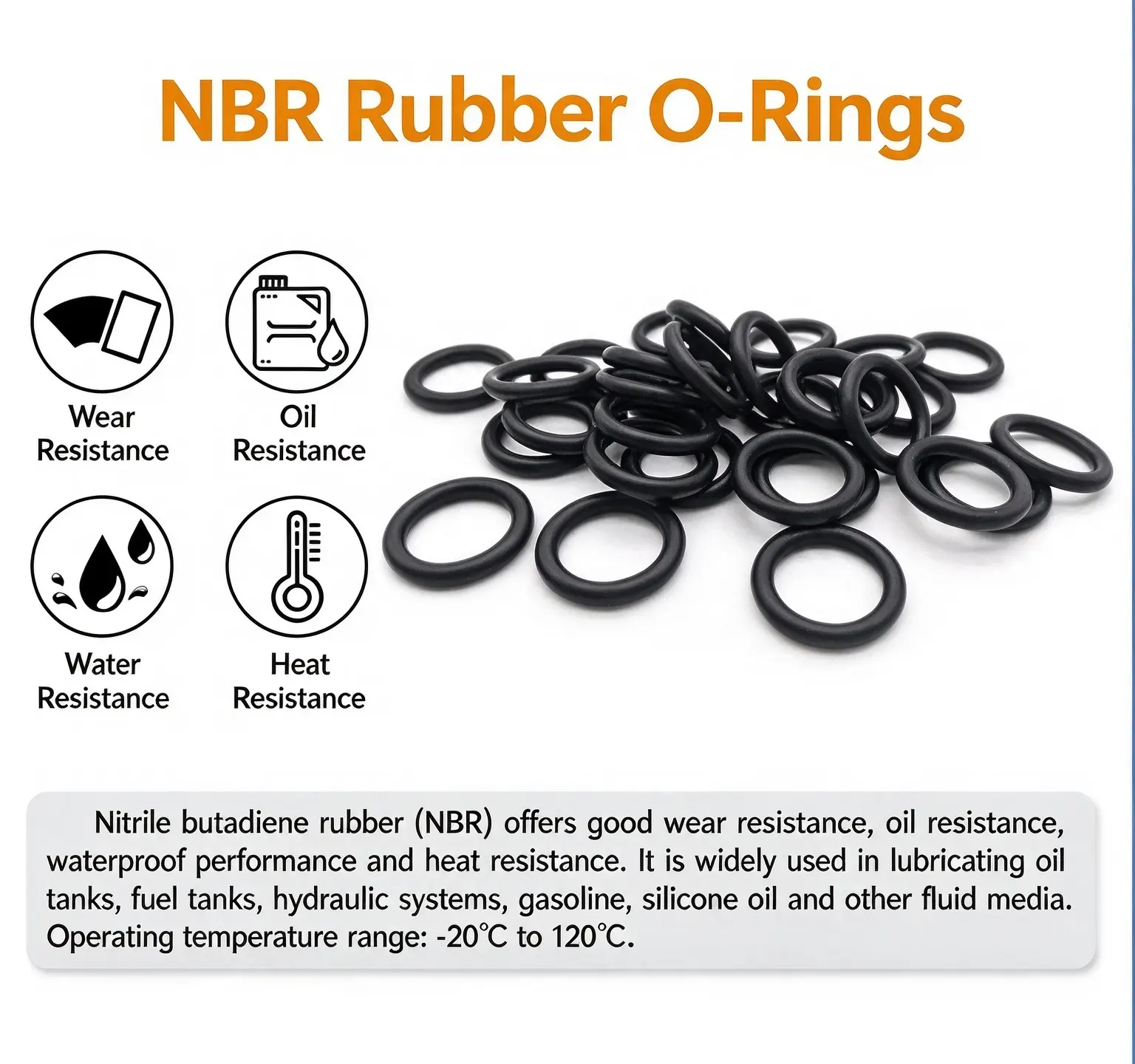
NBR O- Ring Technical Table
Item Especificação Material Name NBR (Nitrile Butadiene Rubber) O Ring Seals Common Hardness Shore A 40 – 90 (Standard: Shore A 70) Operating Temperature Range -40℃ to 120℃ Low Temperature Resistance Excellent flexibility at low temperature Resistência a altas temperaturas Stable performance under continuous 100℃ working condition Resistência ao óleo Excellent resistance to mineral oil, engine oil, hydraulic oil and grease Water Resistance Good waterproof and anti-leakage performance Abrasion Resistance Good wear resistance for dynamic sealing applications Compression Set Low compression deformation, long sealing stability Weather Aging Resistance Moderate aging resistance, not suitable for long-term outdoor UV exposure Chemical Compatibility Resistant to oil, water, fuel and common lubricants Incompatible Media Strong oxidants, ketones, esters, strong solvents Tipo de vedação Static sealing & dynamic sealing Standard Sizes Metric sizes / AS568 inch standard sizes Personalização Custom hardness, size and color available Environmental Standard RoHS compliant Principais aplicações Hydraulic systems, pneumatic systems, pumps, valves, compressors, automotive parts, agricultural machinery, construction machinery, general industrial equipment Feature Most cost-effective, widely used, reliable industrial rubber sealing ring How to measure the O-Rings Size ?
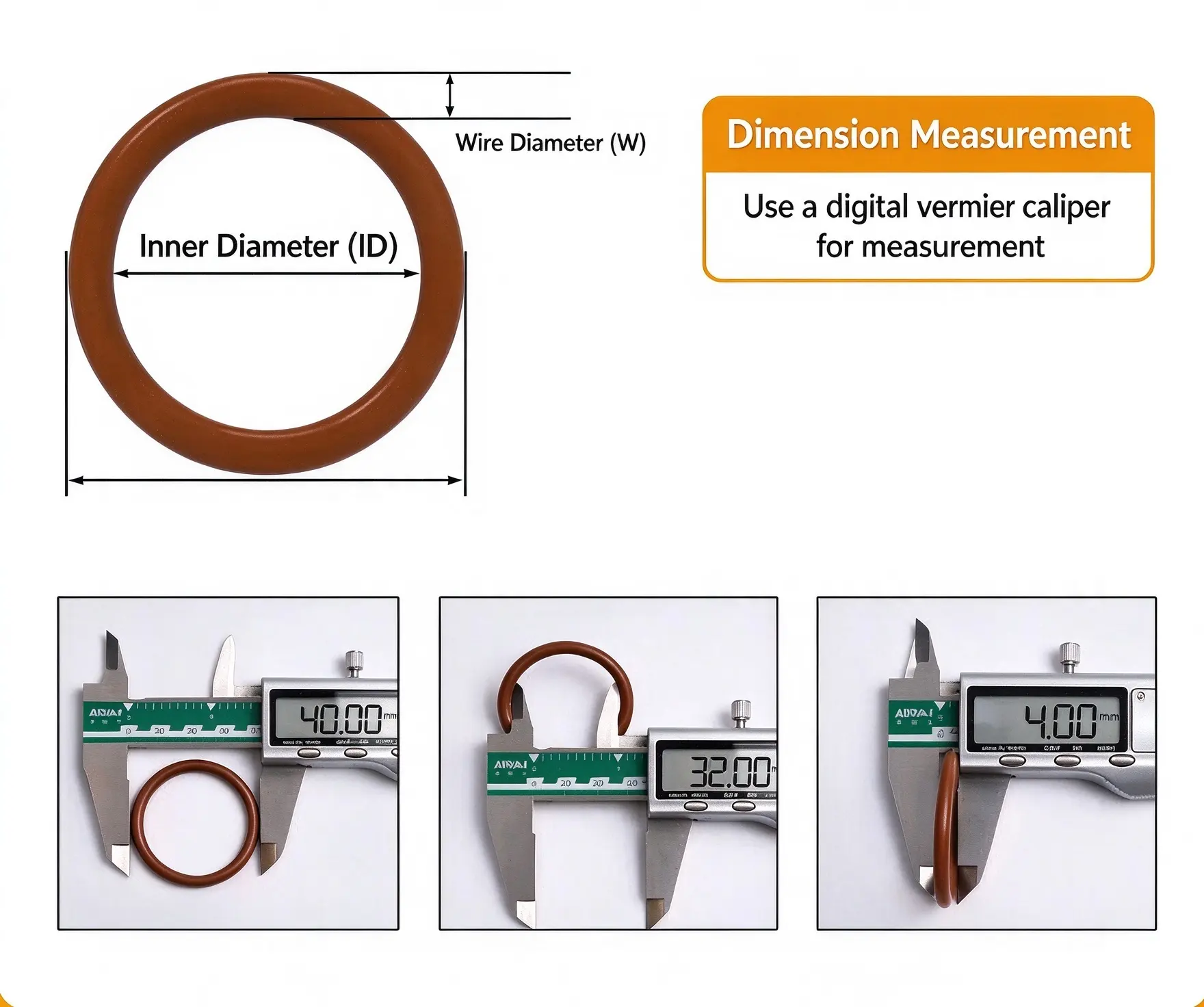
1. Não meça os anéis de vedação com uma régua.
2. Use um paquímetro para obter com precisão o diâmetro interno (DI), o diâmetro externo (DE) e a seção transversal (SC).
3. Os anéis de vedação de borracha deformam-se facilmente. Uma medição precisa garante o encaixe perfeito e evita vazamentos.
O-Ring ID size tolerance for GB/T 3452.1-2005 padrão
Standard d₁(mm) G-Series Tolerance ±(mm) A-Series Tolerance ±(mm) 1.8~5.0 0.13 0.08 5.3~8.5 0.16~0.17 0.09~0.10 8.7~12.5 0.18~0.20 0.10~0.12 13.2~18.0 0.21~0.25 0.12~0.14 19.0~26.5 0.25~0.30 0.14~0.17 27.3~37.5 0.31~0.34 0.17~0.20 38.7~50.0 0.34~0.40 0.20~0.23 51.5~67.0 0.41~0.48 0.23~0.27 69.0~90.0 0.49~0.60 0.27~0.33 92.5~125 0.61~0.78 0.33~0.42 132~180 0.82~1.02 0.42~0.54 190~250 1.06~1.34 0.54~0.70 258~355 1.37~1.82 0.70~0.95 365~500 1.86~2.48 0.95~1.30 Observação:
- G series: General purpose O-rings, looser tolerance for normal hydraulic & pneumatic applications
- A series: Aerospace grade O-rings, tighter ID tolerance for high-precision, high-reliability sealing
Cross-section tolerance:
1.8:±0.08mm 2.65:±0.09mm 3.55:±0.10mm 5.3:±0.13mm 7.0:±0.15 mm.We have strict size inspection for each order .Tight tolerance control guarantees consistent performance batch after batch.
Our NBR O-Rings Advantages
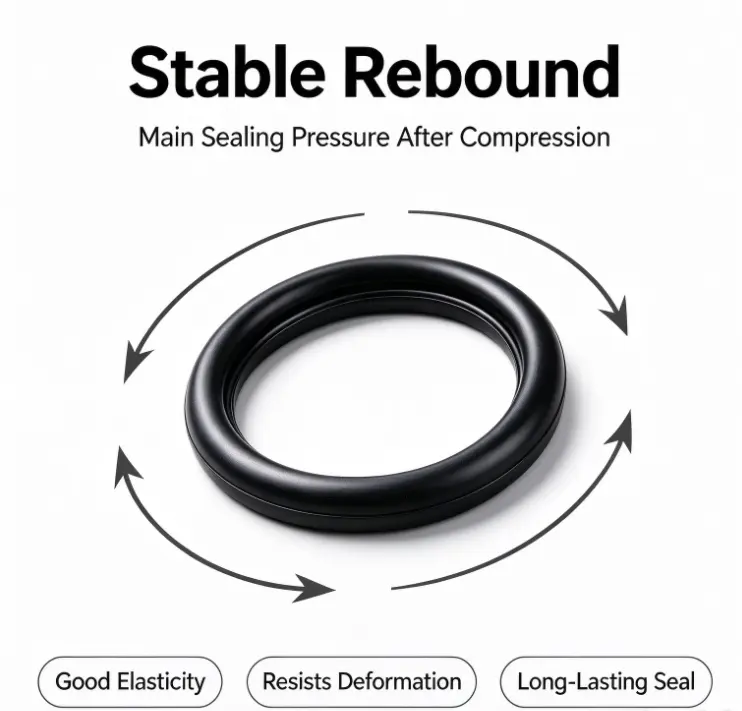
Our NBR nitrile rubber O-rings offer good rebound resilience, recovering quickly after repeated compression and under dynamic sealing conditions to help maintain stable sealing performance.
Made from premium NBR nitrile rubber, offering oil resistance, wear resistance, good rebound resilience and reliable sealing performance for hydraulic, pneumatic and pipeline sealing applications.
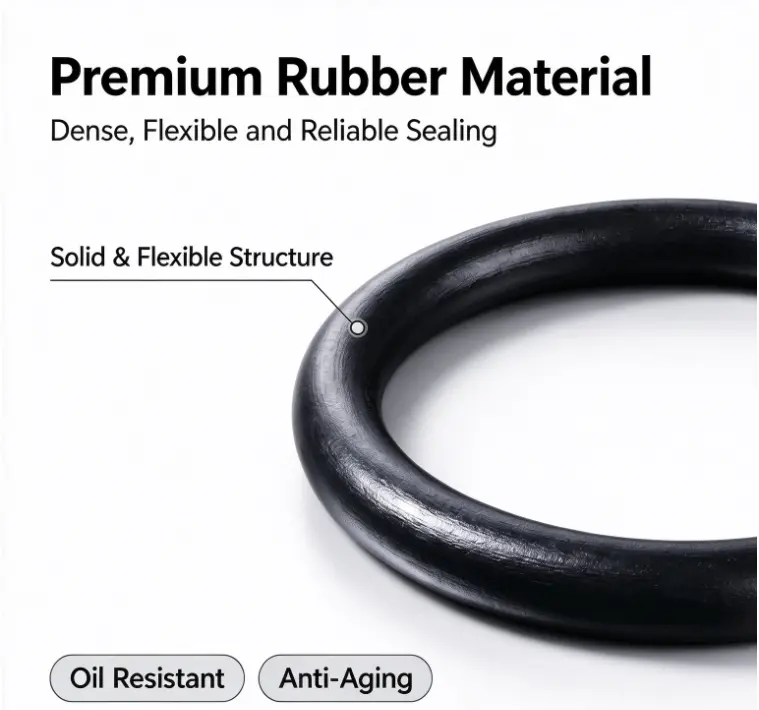
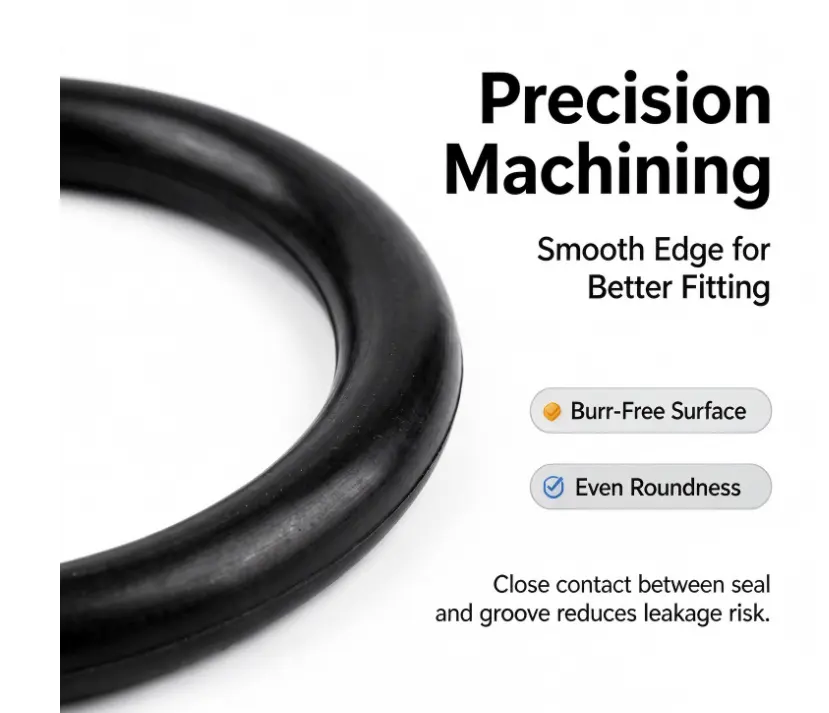
Smooth surface finish with no burrs, helping reduce friction and leakage risk.
Application Areas of NBR O-Rings
NBR O-rings are mainly valued for oil resistance, wear resistance, good rebound resilience and reliable sealing. Typical applications include:
- Hydraulic systems: static and dynamic sealing at hydraulic cylinders, valves, pumps and pipe joints.
- Pneumatic systems: sealing for cylinders, pneumatic valves, air line fittings and pneumatic actuators.
- Automotive industry: oil-resistant sealing points in engines, gearboxes, fuel systems, lubrication circuits, brake systems and air-conditioning lines.
- Industrial pumps and valves: sealing for water pumps, oil pumps, chemical pumps (non-highly corrosive media), valves, flanges and pipe connections.
- Mechanical equipment: bearing end covers, reducers, gearboxes, compressors and rotating/reciprocating parts.
- Oil and fuel systems: sealing for mineral oil, lubricating oil, diesel, hydraulic oil and similar media; not recommended for aromatic hydrocarbons, ketones, esters or strongly oxidizing media.
- Plumbing and general industry: medium- and low-pressure sealing for water, air and neutral media; for outdoor applications requiring high weather and ozone resistance, use with caution or switch to EPDM or other suitable materials.
Nota de seleção: NBR typically serves from about -40°C to +100°C (short-term up to around 120°C). It has good oil resistance but limited resistance to ozone, weathering and polar solvents. For strong acids, strong alkalis, ketones, esters, aromatic hydrocarbons or long-term outdoor exposure, FKM, EPDM or other materials should be evaluated.

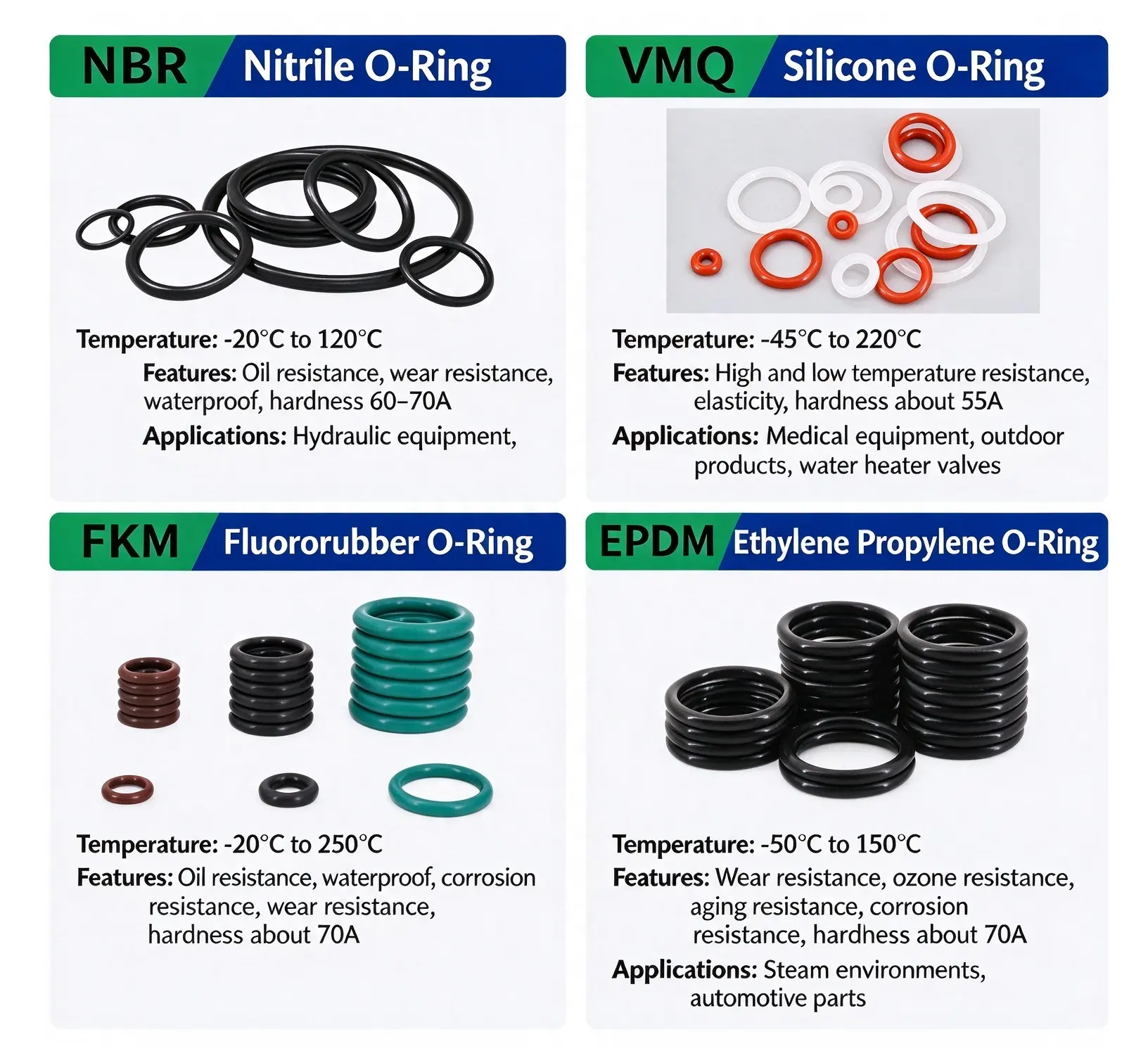
Common rubber O-rings (NBR ,EPDM,VMQ,FKM)
Brief Introduction:
This guide compares four common O-ring materials: FKM, VMQ, NBR and EPDM. FKM offers excellent heat and chemical resistance, making it suitable for fuels, oils and aggressive media. VMQ (silicone) provides a wide temperature range and good flexibility but limited oil resistance. NBR is the standard choice for oil and fuel sealing with good mechanical properties, while EPDM excels in water, steam and weather resistance but is not oil-resistant. Selecting the right material depends on the operating temperature, medium and sealing application.
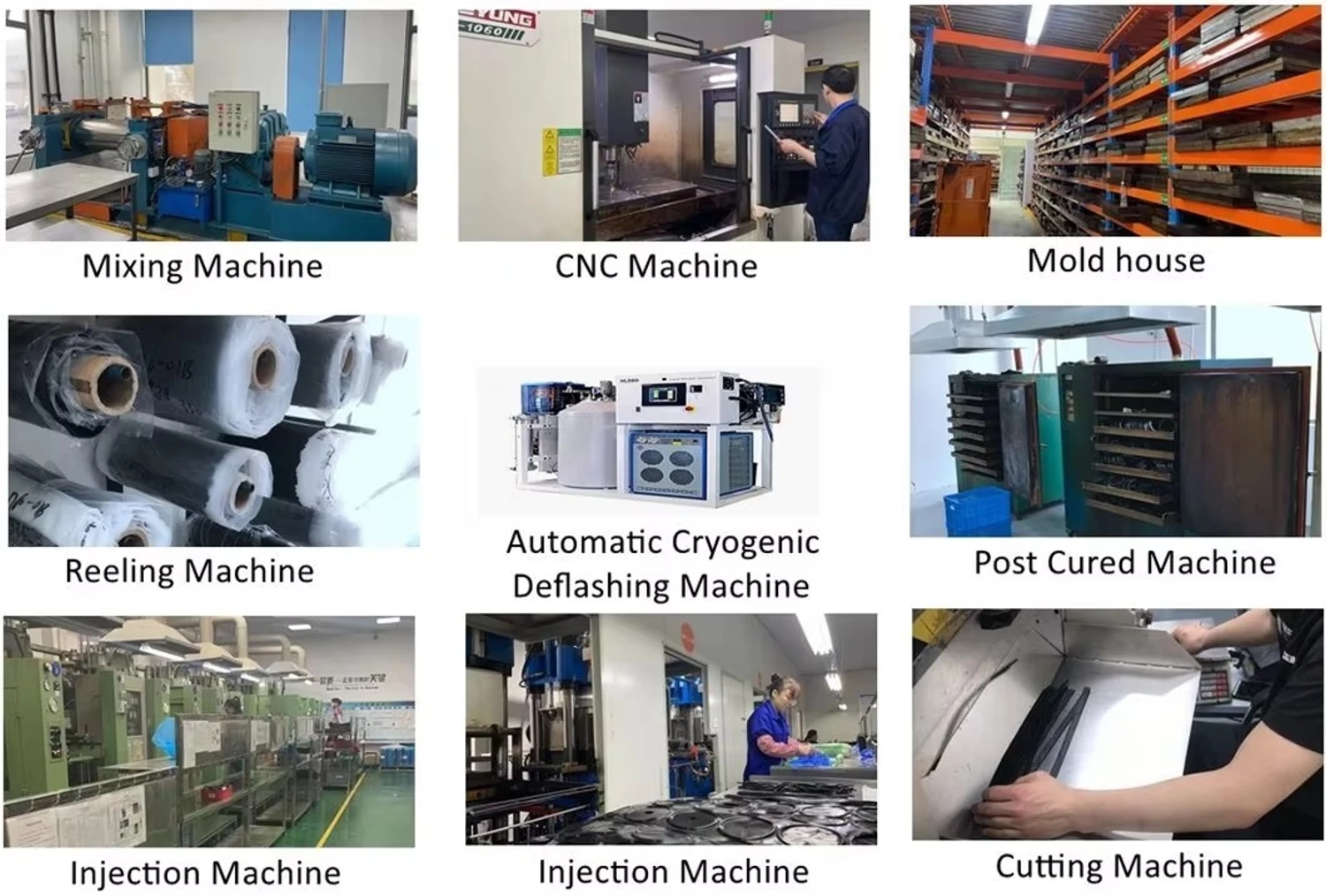
Our factory Production equipment
We are equipped with complete production facilities including mixing machines, CNC machines, injection molding machines, cryogenic deflashing machines and post-curing ovens. In-house mold making and automated workflows boost efficiency to support fast order delivery.
Serviço de embalagem/pagamento/envio
- PacoteFornecemos caixas de papelão, paletes e caixas de madeira padrão. Embalagens personalizadas estão disponíveis mediante solicitação para proteger adequadamente as mercadorias em diferentes tipos de envio.
- Métodos de pagamento:Pagamento em múltiplas moedas (CNY, USD, EUR, etc.). Diversas opções de pagamento, incluindo T/T e PayPal. Transferência bancária local disponível para alguns países para transações mais rápidas.
- Método de entrega:Oferecemos transporte expresso internacional, aéreo, marítimo e ferroviário. Você também pode indicar seu próprio agente de carga para maior flexibilidade nas entregas.

Nossos retentores de borracha fornecidos
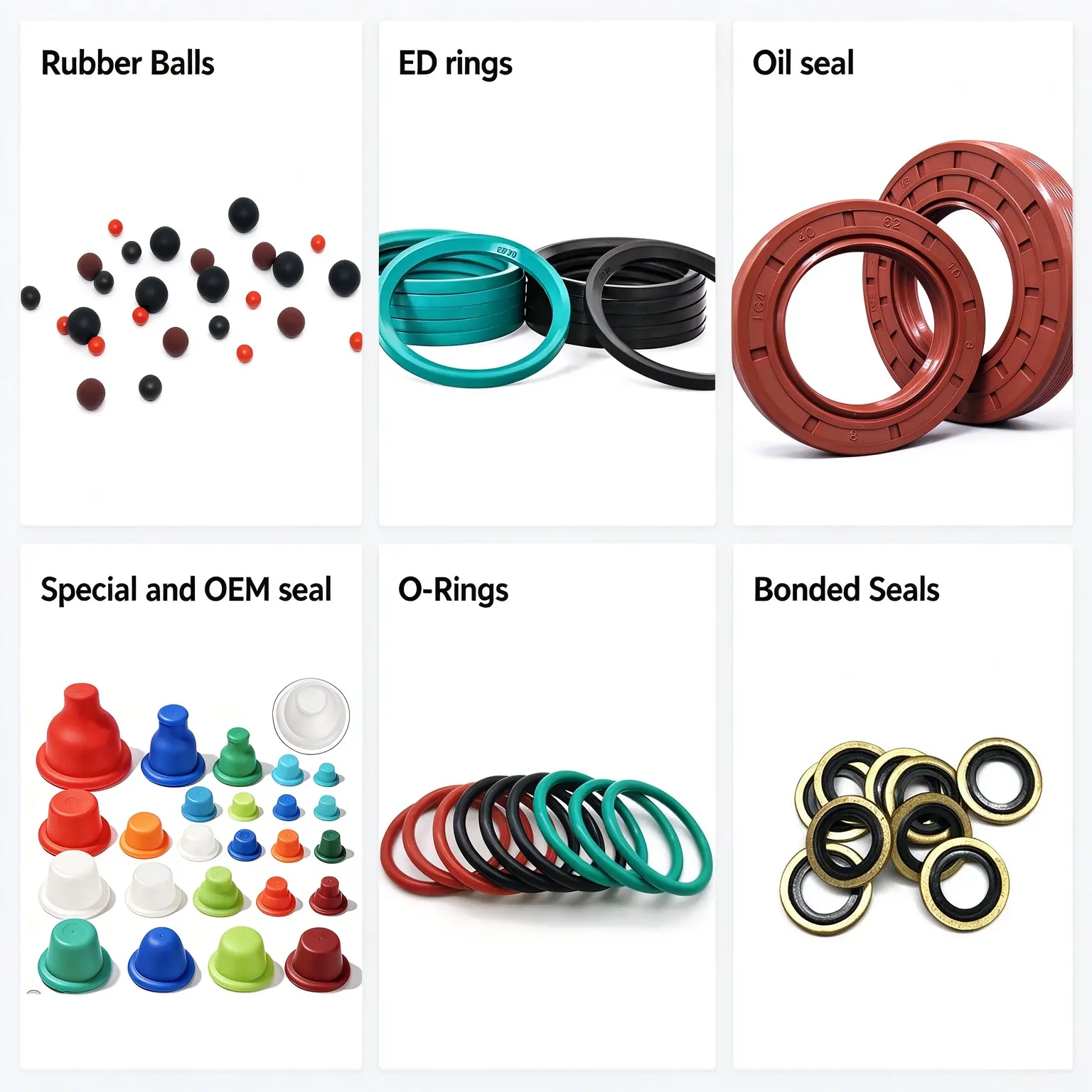
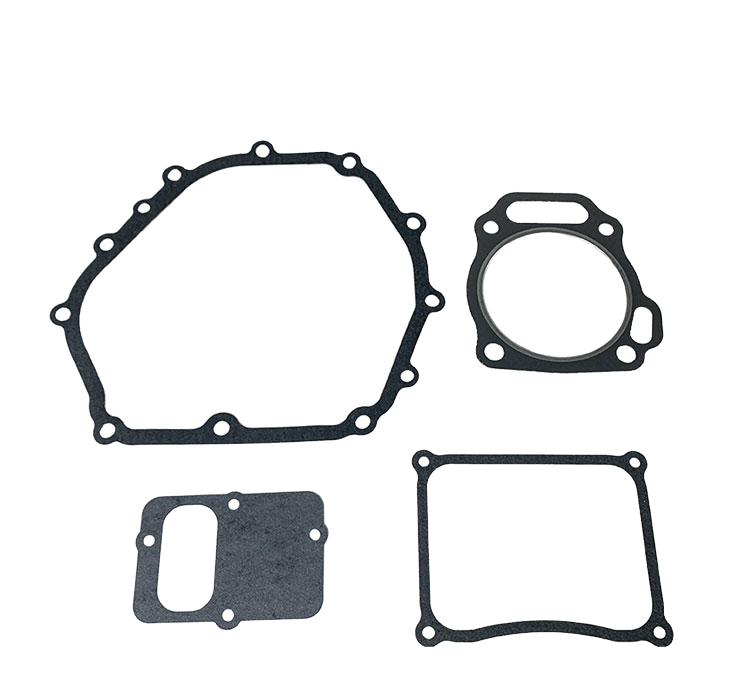
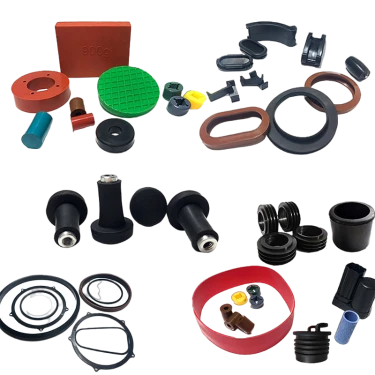
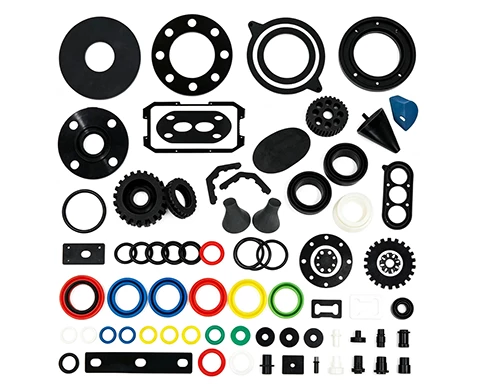
We manufacture a full range of sealing products: O-rings and X-rings in NBR, EPDM, FKM, FFKM, VMQ, HNBR; oil seals of various styles including TC, TG, VC, TB, TA, VB, SB, SA, VA, DC, HTC. We also supply ED seals, bonded seals, wiper seals, gaskets, washers, rubber balls, and custom special-shaped sealing profiles. Custom non-standard rubber seals are available to match your unique working conditions.
Serviços OEM e ODM
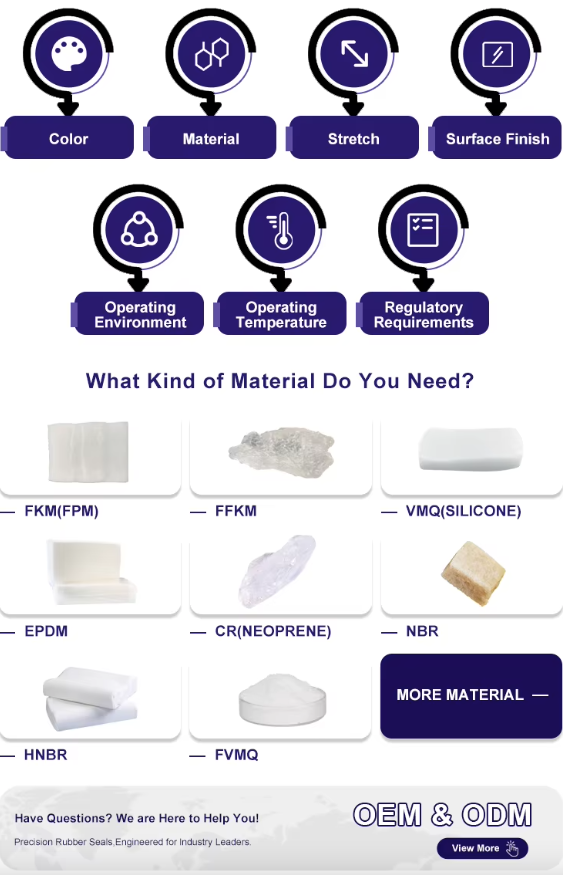
Apoiamos tanto a cooperação OEM quanto a ODM. No modelo OEM, os clientes fornecem desenhos, amostras, requisitos de materiais e dimensões, e nós fabricamos de acordo com as especificações, com embalagens personalizadas com a marca do cliente, sendo ideal para pedidos com um design claramente definido. No modelo ODM, podemos participar da seleção de materiais, ajuste de compostos, desenvolvimento de moldes, projeto de tamanho e dureza com base nas condições operacionais do cliente, além de oferecer produção de marca própria, ideal para clientes que necessitam de suporte completo, desde o desenvolvimento do produto até a produção em massa. Ambos os modelos estão disponíveis para esferas de borracha personalizadas, anéis de vedação e outras peças de vedação de borracha, com prazo de entrega, custo de ferramental e quantidade mínima de pedido (MOQ) confirmados para cada projeto.
 Perguntas frequentes
-
What is the normal service temperature of NBR O-rings? Can they be used at 120°C for short periods?
NBR typically serves from about -40°C to +100°C, with short-term peaks up to around 120°C, but service life will be noticeably reduced. For long-term use above 100°C or in hot oil, consider a higher-temperature material such as FKM, and validate heat aging performance against the actual temperature, medium and compression ratio.
-
What is the maximum size of molded parts you can produce?
Our 350-ton molding press supports large-size molding, with a maximum part dimension of 102” × 72” for oversized rubber and polyurethane components.
-
A que meios os anéis de vedação de NBR são resistentes e a quais meios não são recomendados?
O NBR possui boa resistência a óleos minerais, óleos lubrificantes, óleos hidráulicos, diesel, gasolina e muitas graxas. Não é recomendado para contato com cetonas (acetona, MEK), ésteres, hidrocarbonetos aromáticos (benzeno, tolueno), ácidos fortes, álcalis fortes, meios fortemente oxidantes ou exposição prolongada ao ozônio/ambientes externos. Para tais meios, considere o uso de FKM, EPDM, PTFE ou outros materiais adequados.
-
What is the common hardness of NBR O-rings, and how should hardness be selected?
70 Shore A is the most common hardness, with 50–90 Shore A generally available. Lower hardness can improve contact in low-pressure static sealing; higher hardness is preferred for high-pressure, dynamic sealing or extrusion-resistant applications, together with backup rings or adjusted groove clearance. Hardness tolerance is usually controlled at ±5 Shore A.
-
What is the typical compression set of NBR O-rings?
Compression set depends on compound, hardness and test conditions. For a general-purpose 70 Shore A NBR, typical values under ASTM D395 at 70 h/100°C are about 20%–35%, and low-compression-set grades can be lower. Sealing applications should be validated against the actual compression ratio, temperature and time rather than judged by material grade alone.
-
What standards apply to NBR O-ring dimensional tolerances, and how are non-standard sizes handled?
Common standards include GB/T 3452.1, ISO 3601-1 and AS568. Standard parts should be checked against the cord diameter and inside diameter tolerances in the applicable standard; for non-standard sizes, cord diameter, inside diameter tolerance and roundness requirements should be separately agreed in drawings or technical agreements. For incoming inspection, cord diameter tolerance should be controlled first because it directly affects compression and sealing performance.
-
What should be noted during installation and storage of NBR O-rings?
Before installation, clean the groove and sealing surface, apply a lubricant compatible with NBR if needed, and avoid twisting, scratching or excessive stretching. Groove design should provide a static sealing compression ratio of about 15%–25% and a dynamic sealing compression ratio of about 10%–15%. Store in a dark, cool place away from ozone, motors and direct sunlight; keep original packaging unopened at room temperature and follow first-in, first-out.
-
Quais são os modos de falha mais comuns dos anéis de vedação e como identificá-los?
- Deformação permanente por compressão: seção transversal achatada e superfícies de contato planas, devido ao calor ou compressão excessiva; - Extrusão (mordida): bordas irregulares e desgastadas no lado de baixa pressão, devido a folga ou pressão excessivas; - Falha espiral: cortes espirais de 45° na superfície, comuns em pistões de longo curso quando as peças deslizam e rolam simultaneamente; - Abrasão: superfícies arranhadas/desgastadas devido a superfícies de contato ásperas ou lubrificação inadequada; - Ataque químico: inchaço, rachaduras ou amolecimento devido a meios incompatíveis.
Produtos relacionados
Desenvolvemos um portfólio diversificado de soluções de produtos para atender a diferentes mercados e necessidades.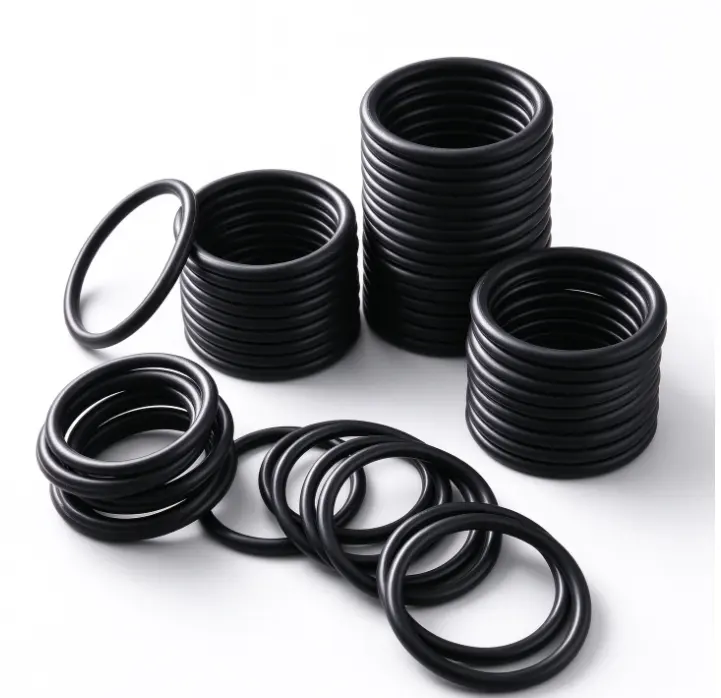

Boas-vindas